SUMMARY
Snow days are more than just a lucky break — they are the result of a careful, multi-layered decision-making process involving school administrators, transportation directors, local meteorologists, and public safety officials. This article, 7 Things Schools Check Before a Snow Day breaks down describes the seven critical factors school districts evaluate before announcing a snow day, from road conditions and temperature readings to storm timing and staff availability. Whether you’re a parent checking the forecast or a student hoping for a day off, understanding what goes into a snow day call gives you a clearer picture of the science and strategy behind it. We also explore how modern tools and historical weather data are changing the way schools predict and plan for winter weather closures.
TABLE OF CONTENTS
- The Snow Day Decision Isn’t Random
- Factor #1 – Road and Street Conditions
- Factor #2 – Temperature and Wind Chill
- Factor #3 – Timing of the Storm
- Factor #4 – Snowfall Accumulation Forecasts
- Factor #5 – Visibility and Blizzard Conditions
- Factor #6 – Staff and Transportation Availability
- Factor #7 – Local Infrastructure and District History
- How Schools Use Weather Data and Technology Today
- What Parents and Students Can Do the Night Before
- Conclusion
The Snow Day Decision Isn’t Random
For most students, a snow day feels like pure magic — waking up to a notification that school is canceled and the day is suddenly yours. But behind every school closure is a superintendent or district official who has been awake since 3 a.m., poring over weather radar, calling road crews, and running through a mental checklist that most families never see.
The truth is, calling a snow day is one of the most high-stakes decisions a school district makes all year. Call it too early, and you lose precious instructional time — in many states, those hours must be made up. Call it too late, and you risk putting thousands of students and bus drivers in genuinely dangerous conditions. Get it wrong in either direction, and the phones start ringing.
School closures due to winter weather are officially known as unscheduled school closures (USCs), and they follow a set of carefully considered criteria that vary by district, region, and even school year. Understanding these criteria helps parents anticipate the decision, helps students calibrate their hopes, and helps communities understand why school officials sometimes make choices that seem puzzling from the outside.
Let’s walk through the seven most critical factors school administrators examine before making the call.
Factor #1 – Road and Street Conditions
Why Roads Matter More Than Snow Depth
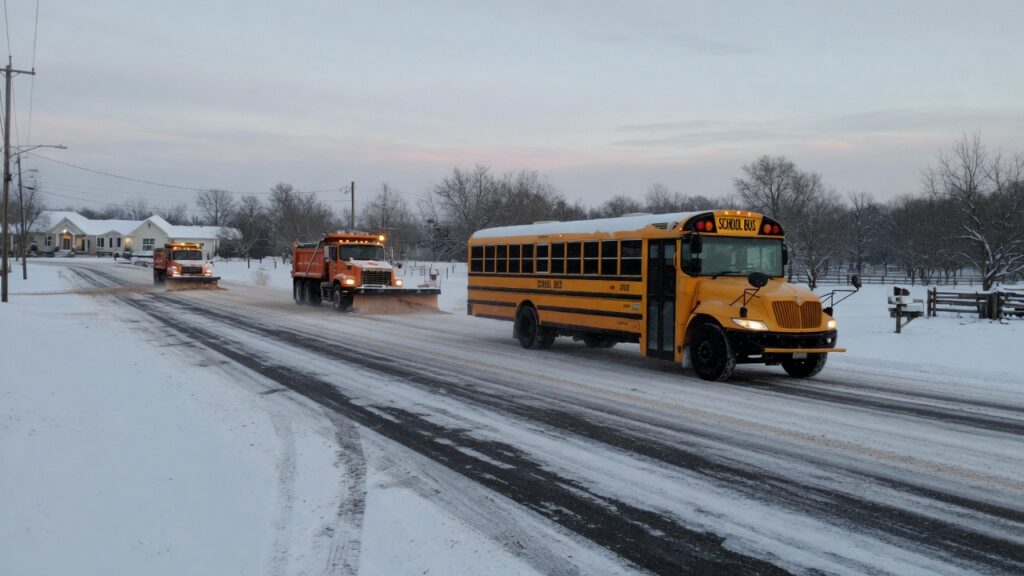
The single most important factor in the snow day equation is road and street conditions — not how much snow has fallen, but whether vehicles can safely travel on it. A school district that serves a rural area with winding back roads operates under completely different constraints than an urban district with plowed city streets and a subway system.
Superintendents are in regular contact with local public works departments, county highway crews, and state DOT officials throughout the night of a potential storm. The key questions they ask include:
- Have primary routes been plowed and treated?
- Are secondary roads — the ones school buses actually use — passable?
- Is there black ice present on bridges and overpasses?
- Are rural dirt roads safe for heavy school buses?
School buses are large, heavy vehicles with a high center of gravity. They cannot brake as quickly as cars on icy roads, and a bus accident is catastrophically more serious than a fender-bender in a personal vehicle. This is why road surface condition, not just snowfall totals, is the dominant trigger for school closures.
Salt and sand trucks are often deployed the night before a storm, but if temperatures drop fast enough, treated roads can re-freeze within hours. Districts that serve hilly terrain are especially cautious, as even a light glaze of ice on a downhill approach can make bus routes impassable.
Factor #2 – Temperature and Wind Chill
When Cold Itself Becomes the Hazard
Snow days are not always triggered by snow. Extreme cold temperatures and dangerous wind chill values can independently cause school closures even when roads are perfectly clear. This is especially true in northern states, mountain regions, and the upper Midwest, where polar vortex events can send temperatures plummeting to -20°F or lower.
Wind chill is the “feels like” temperature — a measure that accounts for how quickly exposed skin loses heat in windy conditions. The National Weather Service (NWS) publishes wind chill charts that help officials determine when outdoor exposure becomes medically dangerous. Most school districts use a threshold somewhere between -25°F and -35°F wind chill as a baseline for considering closures, though local norms vary significantly.
The concern is twofold:
- Student safety at bus stops: Children waiting outdoors for buses can develop frostbite on exposed skin in as little as 10–30 minutes at extreme wind chills.
- Mechanical failures: School buses and vehicles are prone to starting problems, hydraulic failures, and brake issues in extreme cold.
Even if schools remain open, districts may implement delayed starts when temperatures are dangerous in the early morning but expected to rise to safer levels by mid-morning. This is one of the most underappreciated tools in the school administrator’s toolkit.
Factor #3 – Timing of the Storm
It’s Not Just About How Much — It’s About When
Weather forecasters use the phrase “timing is everything,” and nowhere is that more true than in snow day decisions. A storm that dumps six inches of snow between noon and 6 p.m. on a school day creates very different problems than the same storm that arrives between 2 a.m. and 7 a.m.
Here’s how storm timing influences the call:
- Overnight storms: If snow falls heavily overnight and roads are unplowed at 5 a.m. when buses begin running, a closure or delay is highly likely.
- Early morning storms: Rapid accumulation during the morning commute window is extremely dangerous. Even a few inches during rush hour, combined with untreated roads, can cause widespread accidents.
- Afternoon storms: These are the trickiest. School may open normally in the morning, but face an emergency early dismissal if a storm intensifies mid-day. Early dismissals create their own logistical nightmare — parents must be reachable, students need rides, and buses must navigate worsening roads.
- Evening storms: These tend to cause fewer disruptions unless they persist into the next morning.
School administrators often have to commit to a decision by 5:00–6:00 a.m. to allow time for the robocall notification system, social media alerts, and local news coordination — all before buses begin their routes. This tight window means they are often making calls based on forecasted conditions, not observed ones.
Factor #4 – Snowfall Accumulation Forecasts
Reading the Forecast with a Skeptical Eye
Total expected snowfall is, perhaps surprisingly, not the top factor — but it is one of the most publicly visible ones, and it matters a great deal as a baseline. School officials don’t just look at the total accumulation number; they look at the rate of fall, which determines how quickly roads deteriorate and how hard plows must work to keep up.
A slow, steady snowfall of six inches over twelve hours is far more manageable than three inches falling in two hours. The latter can overwhelm highway departments and create whiteout conditions even as the total accumulation stays relatively modest.
Districts track accumulation forecasts from multiple sources, including:
- The National Weather Service (NWS) is the gold standard for official government forecasts
- Commercial services like Weather.com, AccuWeather, and DTN
- Local TV meteorologists, who often have hyper-local expertise
- School district weather contracts — larger districts sometimes pay for premium meteorology services
Forecast accuracy also degrades with distance from the storm event. A forecast made 24 hours in advance is significantly less reliable than one made six hours out, which is why administrators often watch radar intensely through the night.
If you want to understand how predictive models work to estimate snow accumulation and school closure likelihood, the article Behind the Scenes of a Snow Day Prediction offers an excellent breakdown of the meteorological and algorithmic processes involved.
Factor #5 – Visibility and Blizzard Conditions
When You Can’t See Ahead — You Can’t Go Ahead
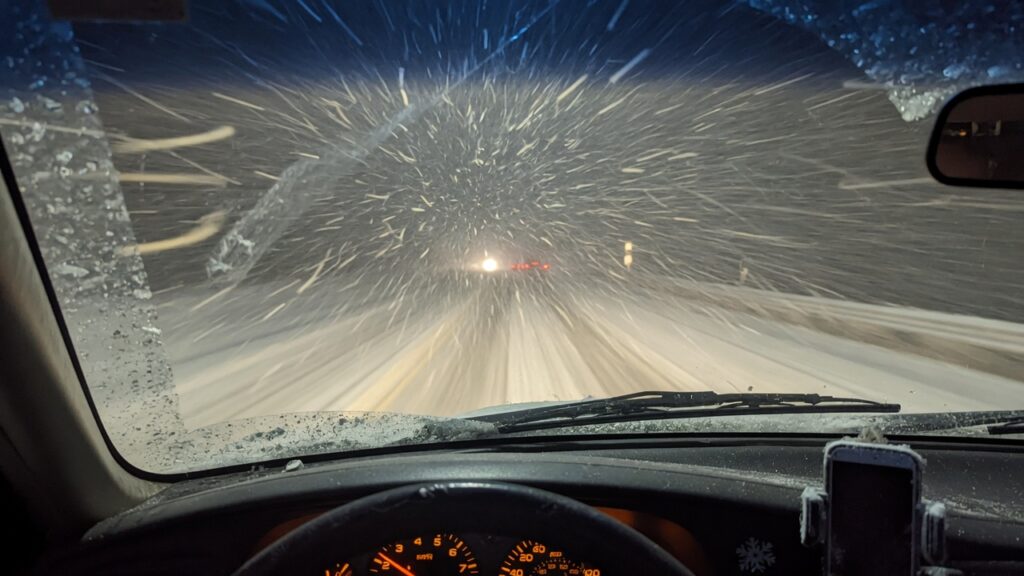
Heavy snow doesn’t just create accumulation hazards — it creates visibility hazards. A blizzard, officially defined by the NWS as sustained winds of 35 mph or greater combined with snow that reduces visibility to a quarter mile or less for at least three hours, is an automatic red flag for school administrators.
Poor visibility affects both bus drivers navigating routes and students walking to bus stops. A pedestrian or cyclist can be nearly invisible to a vehicle driver in whiteout conditions, dramatically increasing accident risk.
Key visibility-related considerations include:
- Blowing and drifting snow: Even after a storm passes, high winds can pick up light, dry snow and create near-zero visibility — a phenomenon called a ground blizzard.
- Fog combined with light snow: This can be more dangerous than heavy snow because it’s less expected and harder to detect on radar.
- Black ice formation: As temperatures fluctuate around the freezing mark (32°F / 0°C), precipitation can toggle between rain, sleet, and freezing rain — creating black ice, which is often invisible on roadways and among the most hazardous winter driving conditions.
Visibility conditions are typically assessed in real time through road cameras, pilot reports (PIREPs), and ground-level weather station data — many of which are now accessible to administrators through digital dashboards.
Factor #6 – Staff and Transportation Availability
Schools Can’t Run Without the People Who Run Them
Even if roads are technically passable, a school cannot function safely without its staff. Staff availability is a factor that rarely makes the headlines but is critically important to administrators — especially in rural or suburban districts where teachers and bus drivers commute significant distances.
Key considerations include:
- Bus driver availability: If a large percentage of bus drivers cannot safely reach the bus depot or call in due to local road conditions in their neighborhoods, routes cannot be covered. This can trigger a closure even when main roads are clear.
- Teacher and staff commutes: Teachers traveling from surrounding municipalities or rural areas may face road conditions that are worse than those inside the district itself.
- Custodial and maintenance staff: Schools need to be physically prepared — pathways cleared, boilers running, parking lots salted — before students and staff can arrive safely. If the facilities team cannot get in early enough, that creates a safety gap.
- Special education transportation: Districts with significant special education populations often run specialized buses and vehicles that require additional staffing and longer route times. The risk calculus for these routes is especially high.
Superintendents often hold emergency staff availability calls at 4–5 a.m. to assess how many drivers and key personnel can report. This human factor is one reason why snow day decisions sometimes surprise communities where local roads appear navigable.
Factor #7 – Local Infrastructure and District History
Every District Has Its Own Snow Day Fingerprint
No two school districts approach winter weather exactly the same way, and that’s by design. Local infrastructure, geography, and institutional history shape a district’s tolerance for winter weather in ways that outsiders rarely appreciate.
Consider the following examples:
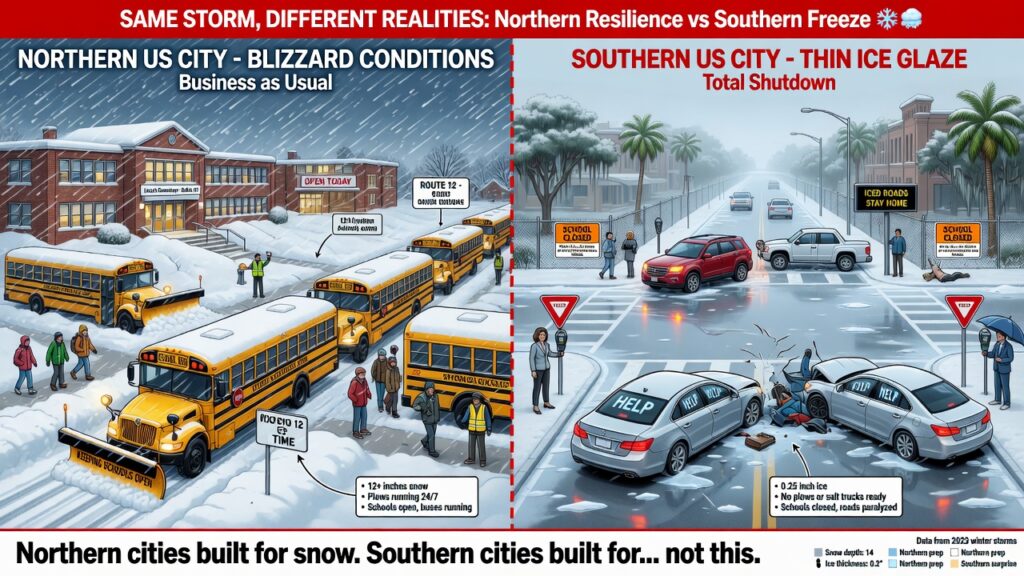
- A district in Buffalo, New York, or Minneapolis, Minnesota — where residents are accustomed to heavy lake-effect snow, and infrastructure is built for it — may stay open in conditions that would close schools in Charlotte, North Carolina, or Atlanta, Georgia, where a single inch of ice can paralyze a city with limited salt trucks and untrained drivers.
- Districts near mountains or valleys face topographic microclimates where conditions can be drastically different across just a few miles.
- Urban districts with walking populations may prioritize sidewalk conditions and crossing guard safety over bus routes.
- Smaller rural districts may have elderly bus fleets that are more susceptible to cold-weather mechanical failures.
In fact, Some States Get More Snow Days Than Others — and the reasons are rooted in exactly these kinds of structural, geographic, and climatological differences. Understanding regional norms helps contextualize why your district reacts to storms the way it does.
Additionally, districts build institutional memory over time. A superintendent who experienced a bus accident during a “borderline” storm years ago will carry that lesson forward. Conversely, a district that has been criticized for excessive closures may set a higher threshold in subsequent years.
How Schools Use Weather Data and Technology Today
The Digital Revolution in Snow Day Decision-Making
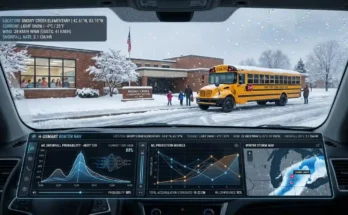
The days of superintendents relying solely on a single TV meteorologist are long gone. Modern school districts leverage a sophisticated suite of meteorological tools, data platforms, and predictive analytics to improve the accuracy and timeliness of their closure decisions.
Some of the key tools and technologies now in use include:
- Integrated weather dashboards that pull data from multiple forecasting models simultaneously (GFS, NAM, ECMWF)
- Road weather information systems (RWIS): Embedded road sensors that measure pavement temperature, surface moisture, and ice formation in real time
- Automated notification systems: Platforms like SchoolReach, ParentSquare, and Infinite Campus that can push closures to thousands of parents simultaneously via text, email, and app notification
- AI-enhanced forecast models: Machine learning systems trained on historical storm data to improve hyper-local precipitation and timing predictions
At the consumer level, parents and students increasingly turn to tools like the Snow Day Predictor to get a probabilistic estimate of whether school will be canceled — based on current forecast data, location, and historical closure patterns for their region. While these tools are not used by school officials themselves, they reflect the same multi-variable thinking that professionals apply.
For deeper insight into how professional-grade meteorological models inform snow day probabilities, the National Weather Service Winter Weather page is an authoritative resource on hazard classifications, warning thresholds, and the science behind winter precipitation forecasting.
What Parents and Students Can Do the Night Before
Preparing Smart Instead of Just Hoping
Even with all the uncertainty involved in snow day decisions, there are smart steps families can take to stay informed and prepared:
- Sign up for district alerts: Most districts have opt-in text and email alert systems. Make sure your contact information is current.
- Monitor local news: TV meteorologists who cover your market typically have strong local forecasting expertise and often break closure news before official district announcements.
- Check the district website and social media: Official channels are always the authoritative source for closure and delay information.
- Prepare a backup plan: Even if school is open, a deteriorating storm may cause early dismissal. Always have a contingency arrangement for childcare.
- Use predictive tools: While not official, tools like the Snow Day Predictor can give you a probability-based heads-up so you can plan accordingly.
- Prepare the night before: Lay out warm clothes, stock hot beverages, and charge devices — whether school happens or not, being ready is always smart.

CONCLUSION
The Snow Day Is a System, Not a Surprise
A snow day is never as simple as it looks. Behind every school closure notification is a web of meteorological data, infrastructure assessments, human judgment calls, and community considerations that most families never see. School administrators are not trying to keep kids in school against all odds — nor are they quick to cancel for a light dusting. They are working within a framework built on safety, accountability, and experience, balancing the real risks of winter travel against the equally real consequences of losing instructional time.
The seven factors covered in this article — road conditions, temperature, storm timing, snowfall accumulation, visibility, staff availability, and local infrastructure — represent the core of that decision-making framework. Understanding them won’t guarantee you’ll predict every snow day correctly, but it will give you a far better appreciation for the complexity and care that goes into each call.
And the next time you wake up to that magical notification? You’ll know exactly what it took to get there.