Summary
This article What Is Black Ice & Why It Causes Snow Days explains what black ice is, how it forms, why it is nearly invisible and extremely dangerous, and how it leads to unexpected school closures and snow days. It covers the science behind black ice formation, the conditions that create it, how meteorologists and school officials factor it into closure decisions, and what drivers and pedestrians can do to stay safe.
Table of Contents
- What Is Black Ice?
- How Does Black Ice Form?
- Why Is Black Ice So Dangerous?
- Black Ice vs. Regular Ice: Key Differences
- How Black Ice Causes Surprise Snow Days
- How School Districts Decide to Close for Black Ice
- Where and When Black Ice Is Most Common
- How to Detect Black Ice Before It’s Too Late
- Driving and Walking Tips for Black Ice Conditions
- How Technology Helps Predict Black Ice
- Conclusion
What Is Black Ice?
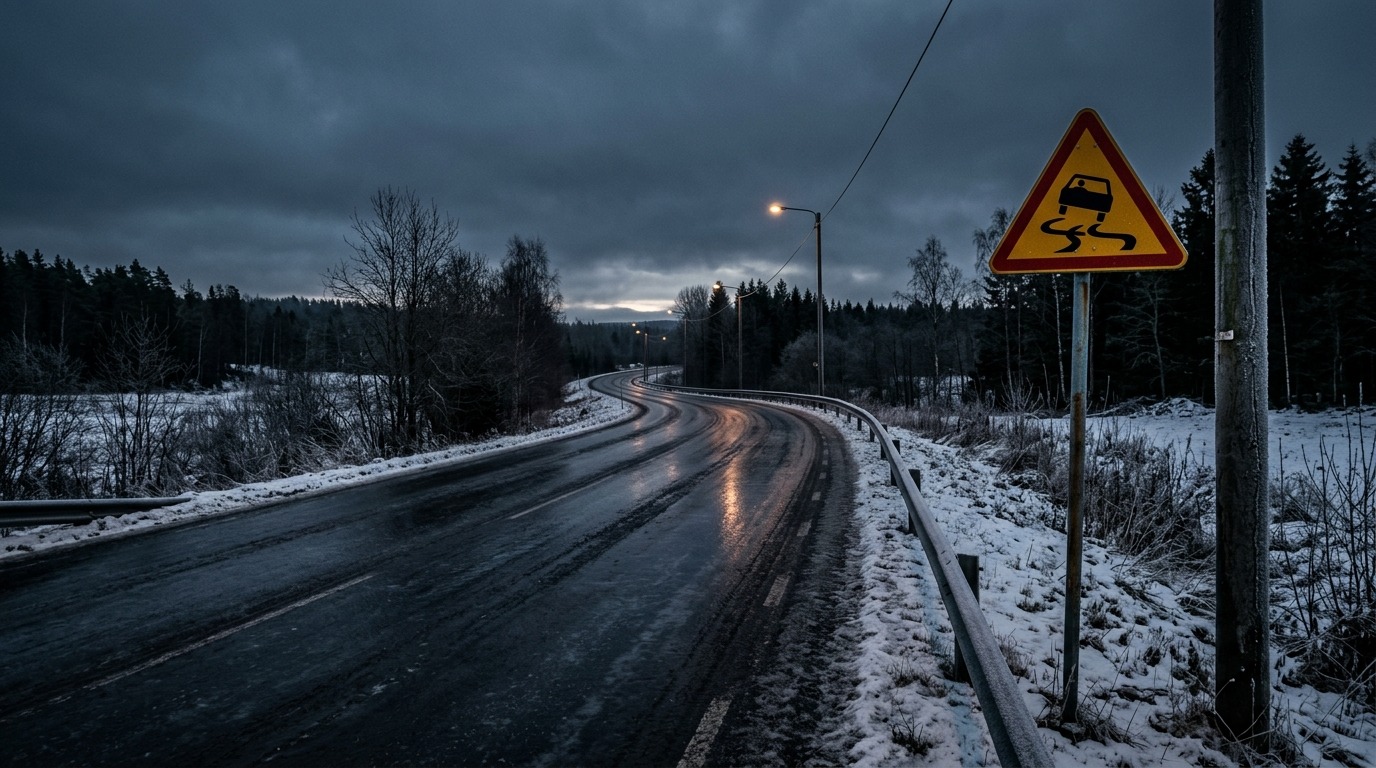
Black ice is one of winter’s most dangerous and misunderstood weather phenomena. Despite its name, black ice is not actually black — it is transparent, nearly colorless ice that forms on road surfaces and blends in almost perfectly with the dark asphalt beneath it. This near-invisible quality is precisely what makes it so treacherous for drivers, cyclists, and pedestrians alike.
Technically speaking, black ice is a thin coating of glazed ice that forms when water freezes rapidly on a surface, typically a road or sidewalk, without trapping any air bubbles. Because no air is trapped, the ice is completely clear, allowing the dark pavement to show through, which is how it earned the name “black” ice. It looks like a wet patch on the road, which many drivers mistake for harmless moisture.
Weather scientists, meteorologists, and traffic safety professionals classify black ice as a significant road hazard, and its sudden appearance has been responsible for thousands of vehicle accidents every winter season across the United States, Canada, and northern Europe.
How Does Black Ice Form?
Understanding black ice starts with understanding the atmospheric and surface conditions that give rise to it. Black ice does not require snowfall to form — and that is exactly what makes it so surprising.
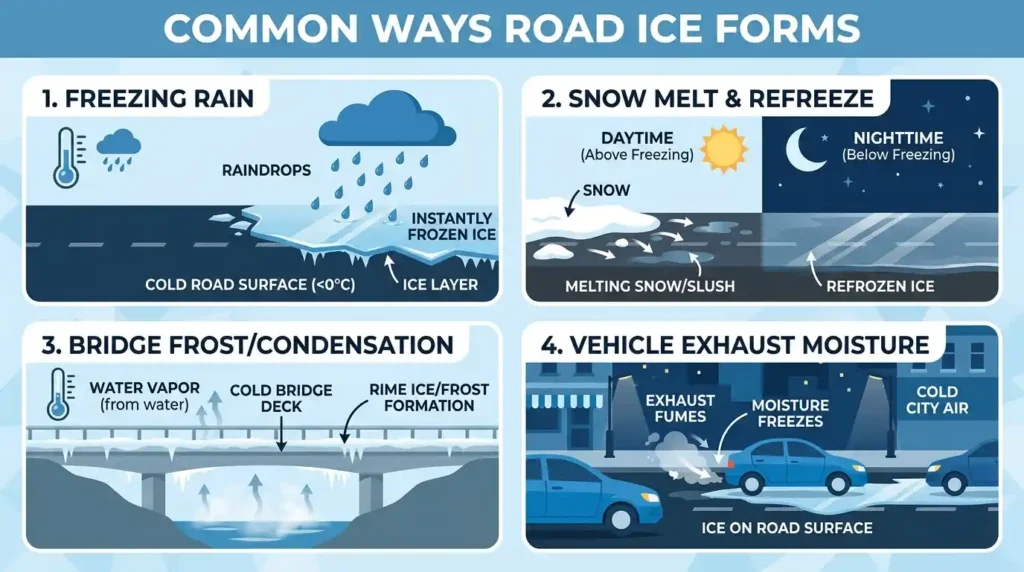
The most common formation conditions include:
Freezing Rain and Drizzle
When rain or light drizzle falls from the atmosphere and the surface temperature of the ground is at or below 32°F (0°C), the moisture freezes instantly upon contact with roads, bridges, overpasses, and sidewalks. This is the most classic black ice scenario. The air temperature might actually be above freezing, so people step outside and feel relatively comfortable — yet the road surface is a sheet of glass.
Melting and Refreezing Cycles
During late winter and early spring, daytime temperatures often climb above freezing, melting snow and ice. As temperatures drop again in the evening or overnight, that meltwater refreezes. This thaw-freeze cycle is one of the most common causes of black ice in regions experiencing variable winter weather.
Dew and Frost Freeze
In certain microclimatic conditions, water vapor from the atmosphere condenses on the road surface as dew and subsequently freezes when temperatures drop. This is particularly common in the late-night and early-morning hours when surface temperatures often dip below the air temperature.
Exhaust and Moisture Runoff
In urban environments, vehicle exhaust and roadway drainage can contribute moisture to road surfaces. When temperatures dip overnight, this moisture freezes into thin, transparent layers of ice.
Why Is Black Ice So Dangerous?
The danger of black ice lies not just in its physical slipperiness, but in its psychological invisibility. When drivers see snow on the road, their brains automatically register danger, and they adjust their behavior — slowing down, increasing following distance, gripping the wheel more carefully. Black ice offers no such warning.
A vehicle traveling at highway speed on black ice loses traction almost instantaneously. Braking becomes nearly useless on a transparent ice surface, and steering control is severely compromised. The coefficient of friction for black ice is estimated to be as low as 0.1, compared to 0.7 to 0.8 for dry asphalt. This means a car on black ice is effectively gliding on a surface with almost no resistance.
Bridges and overpasses are especially notorious black ice zones because cold air circulates both above and below the deck, causing these elevated surfaces to freeze faster than ground-level roads. This is why you often see road signs warning: “Bridge Freezes Before Road Surface.”
Pedestrians are equally at risk. A thin sheet of transparent ice on a sidewalk or parking lot can send someone to the ground with no warning, causing serious injuries, including fractures, head trauma, and sprains.
Black Ice vs. Regular Ice: Key Differences
Many people confuse black ice with ordinary winter ice, but there are meaningful differences that affect both risk level and detection.
| Feature | Black Ice | Regular Ice/Snow Ice |
| Visibility | Nearly invisible, transparent | White or opaque, visible |
| Texture | Perfectly smooth | Often rough or layered |
| Formation Speed | Rapid, can form within minutes | Gradual accumulation |
| Warning Signs | Almost none | Visible accumulation |
| Risk Level | Extremely high | High but more predictable |
| Common Locations | Bridges, shaded areas, curves | Everywhere snow falls |
How Black Ice Causes Surprise Snow Days
Here is the central question many parents, students, and school administrators ask every winter: Why would schools close when there is no visible snow on the ground?
The answer, very often, is black ice.
School closures are not exclusively triggered by snowfall totals. Road surface conditions — particularly the presence of black ice — are frequently the deciding factor in whether schools open, delay, or close entirely. A forecast calling for just a quarter inch of freezing rain can prompt the same emergency response as a foot of snow, because freezing rain creates widespread black ice across every road in a district.
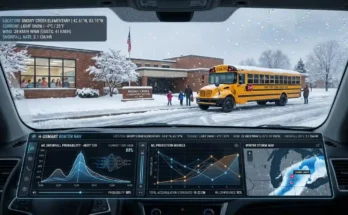
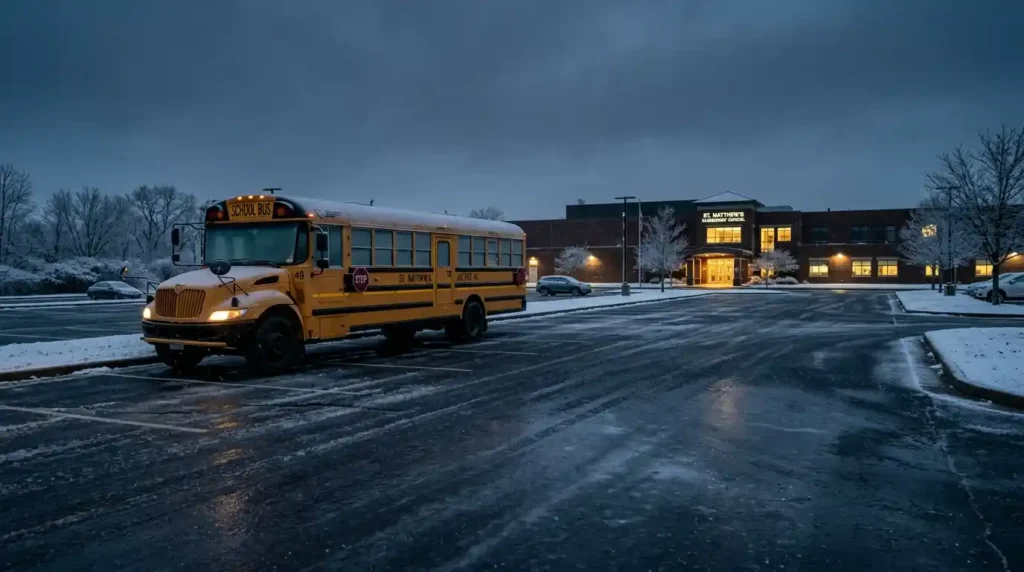
School bus drivers navigate dozens of road miles each morning through neighborhood streets, rural routes, and steep grades. These roads are not always the first to be treated by municipal salting and sanding crews. Even if the main highways are passable, the back roads where buses travel may be coated in invisible ice. One school bus sliding on a slick road surface is enough to prompt a district-wide closure.
Additionally, parents driving children to school or students who drive themselves represent a massive daily movement of private vehicles on secondary roads where black ice treatment is inconsistent. Superintendents and district safety officers weigh all of these factors before sunrise every time a freezing weather event occurs.
This is also why decisions are sometimes made at 4:00 or 5:00 AM — before most roads have been fully assessed, but while there is still time to notify families. Tools like the Snow Day Calculator have become popular with families looking to get an early sense of whether school is likely to close based on local weather conditions, helping parents and students plan ahead on the most unpredictable winter mornings.
How School Districts Decide to Close for Black Ice
The decision-making process behind school closures is more complex than most people realize. Superintendents, transportation directors, and safety coordinators typically evaluate several key factors:
Road Surface Temperature Reports
Modern meteorological services provide road surface temperature forecasts distinct from air temperature. A forecast of 38°F air temperature with a road surface temperature of 28°F is a black ice warning scenario.
Coordination with Public Works and DOT
School officials work closely with their local Department of Transportation and public works crews to understand treatment schedules and road conditions. If salt trucks have not yet reached rural routes, those areas remain dangerous regardless of air temperature.
Timing of the Freeze Event
A freeze event that occurs at 3:00 AM gives crews more time to treat roads before buses roll at 6:30 AM. A freeze event predicted for 5:30 AM may leave roads untreated at the critical moment.
Regional Experience and Risk Culture
As highlighted in Why Texas Schools Shut Down With Less Snow Than Northern States, different regions have vastly different infrastructure, equipment, and public preparedness for winter road events. Southern states with limited snow removal equipment are far more vulnerable to black ice disruption than northern states, where salting operations begin hours before a storm.
Where and When Black Ice Is Most Common
Black ice does not discriminate by geography, but certain locations and timeframes carry significantly higher risk.
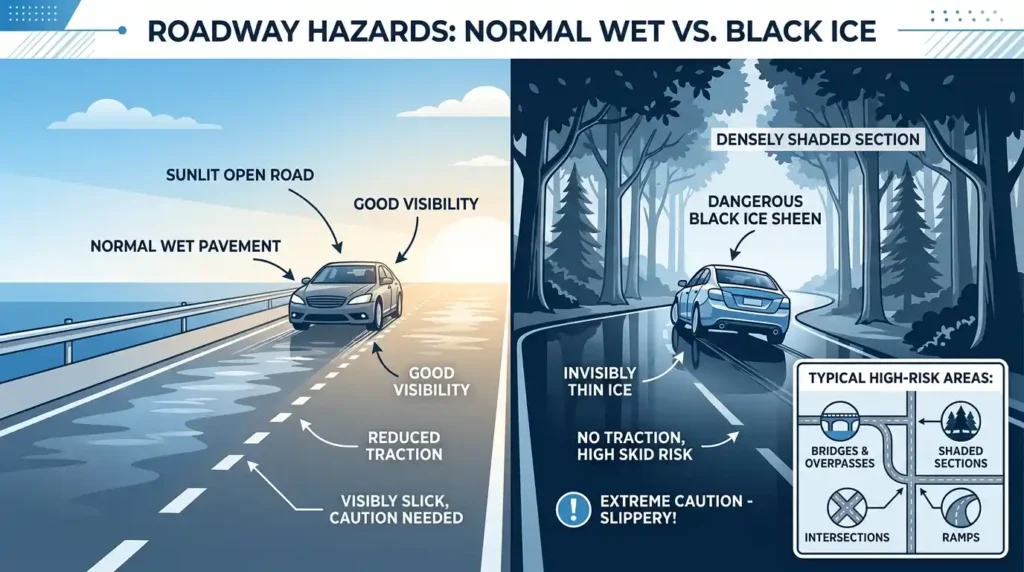
High-Risk Locations:
- Bridges and overpasses (freeze first due to air exposure on all sides)
- Shaded road sections where sunlight cannot melt surface ice
- Intersections where vehicles have polished ice smooth with braking
- Rural roads with limited exposure to traffic heat
- Mountain passes and elevation changes where temperature inversions occur
High-Risk Time Windows:
- Pre-dawn hours between 2:00 AM and 7:00 AM
- Evening hours after sunset, when surface temperatures drop rapidly
- Late winter and early spring, when thaw-freeze cycles are most active
- Immediately following a light rain or drizzle event during freezing temperatures
The National Weather Service issues specific advisories for freezing rain and black ice events, including Winter Weather Advisories, Ice Storm Warnings, and Freezing Rain Advisories, each carrying different thresholds for ice accumulation and road impact. Checking the NWS forecast before winter travel is always recommended.
How to Detect Black Ice Before It’s Too Late
Since black ice is nearly invisible, detection requires awareness of conditions rather than direct visual confirmation.
Warning Signs to Watch For:
- The road looks wet, but no rain is currently falling
- Temperatures are at or near 32°F (0°C)
- Other drivers ahead are braking unexpectedly or fishtailing
- Your vehicle’s outside temperature gauge reads freezing
- The road appears to have a subtle sheen or gloss rather than matte wetness
Driving Cues:
- If your car radio antenna or side mirrors have ice on them, the road likely does too
- If you see frost on grassy areas alongside the road, that is a strong indicator of surface freezing
The best detection strategy is preventive: check forecasts, monitor road surface temperature data, and adjust travel plans accordingly.
Driving and Walking Tips for Black Ice Conditions
For Drivers:
- Reduce speed significantly and increase following distance to at least double the normal gap
- Avoid sudden braking — apply brakes gently and progressively
- If you feel the car beginning to slide, steer into the skid and avoid overcorrecting
- Use winter tires or chains where conditions warrant
- Do not use cruise control in cold, wet conditions
For Pedestrians:
- Wear footwear with rubber soles and good traction
- Take shorter, shuffling steps on potentially icy surfaces
- Keep your hands out of your pockets to help balance and break a potential fall
- Use handrails wherever available
- Approach all surfaces with caution after overnight freezing temperatures
How Technology Helps Predict Black Ice
The forecasting of black ice has improved significantly in recent years thanks to advances in road weather information systems (RWIS), thermal mapping, and connected vehicle data. Modern state DOTs deploy pavement sensors that report surface temperature, moisture, and freezing point data in real time.
Predictive algorithms now combine air temperature, humidity, dew point, cloud cover, and road surface heat retention models to provide localized forecasts of black ice probability. Weather services like the National Weather Service, Weather.com, and specialized road weather platforms like Weather Decision Technologies offer detailed winter road forecasts for transportation agencies and school districts.
Families and educators can also use publicly available tools to stay ahead of winter weather decisions. The Snow Day Calculator aggregates local weather data to provide families with a probability-based estimate of school closure likelihood — a useful starting point for planning on those unpredictable winter mornings when black ice may be lurking on the roads before anyone has confirmed it.
For deeper reading on road ice dynamics and freezing precipitation science, the Federal Highway Administration’s Road Weather Management Program at ops.fhwa.dot.gov is an authoritative resource for understanding how transportation agencies respond to winter hazards, including black ice events.
Conclusion
Black ice is winter’s most deceptive hazard — invisible, fast-forming, and disproportionately dangerous compared to other forms of frozen precipitation. Its transparency fools both drivers and pedestrians into a false sense of security, and its ability to form without any visible snowfall is precisely why it so often triggers surprise snow days and unexpected school closures.
Understanding when and where black ice forms, recognizing the environmental warning signs, and knowing how to respond when you encounter it are skills that can genuinely save lives. School districts do not close for black ice as an overreaction — they close because the risk calculus is clear: invisible ice on unplowed back roads at 6:00 AM is not a gamble worth taking with children on buses.
The next time your district cancels school on a morning with no snow visible through your window, look closer. The roads may be telling a very different story — one written in a transparent, nearly invisible film of frozen water that goes by the name black ice.