Summary
When a winter storm rolls in, not every school community faces the same decision. Urban school districts and rural school districts operate in vastly different environments — different infrastructure, different transportation challenges, different risk tolerances. This article, Urban vs Rural Schools: Who Gets More Snow Days, takes a deep dive into why rural schools tend to rack up more snow days than their urban counterparts, what factors drive those decisions, and how geography, bus routes, road conditions, and administrative policies all play a role. Whether you’re a parent, educator, or just a curious student crossing your fingers for a day off, this guide breaks it all down with clarity and authority.
Table of Contents
- Introduction: The Great Snow Day Divide
- How Snow Day Decisions Are Made
- Urban Schools and Snow Days: The City Advantage
- Rural Schools and Snow Days: Why the Country Gets Hit Harder
- Key Factors That Influence Snow Day Calls
- State-by-State Differences in Snow Day Policies
- The Role of Technology and Remote Learning
- How Parents and Students Can Stay Prepared
- Conclusion
1. Introduction: The Great Snow Day Divide
Every winter, millions of students wake up and do the same ritual — check their phones, watch the local news ticker, and hold their breath waiting for their school district’s name to scroll across the screen. But while that anxiety is universal, the outcome is not.
A six-inch snowfall in Chicago might barely earn a delayed start. That same storm in a rural township in upstate New York or rural Wisconsin could shut schools down for two or three days straight. The gap between how urban and rural schools respond to winter weather is striking — and deeply rooted in geography, logistics, economics, and administrative philosophy.
So who gets more snow days: urban schools or rural schools? The answer, backed by years of district-level data and educator experience, is almost always rural schools. But the reasons why are more nuanced than you might think.
2. How Snow Day Decisions Are Made
Before comparing urban and rural school systems, it’s important to understand how a snow day decision actually happens. It’s not a coin flip — it’s a calculated judgment call made by school superintendents, transportation directors, and sometimes local emergency management officials.
2.1 The Decision-Making Process
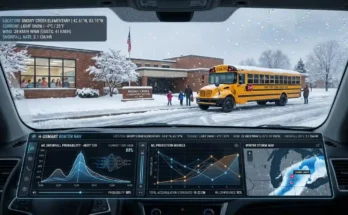
Most school districts begin monitoring weather forecasts 24 to 48 hours before a predicted storm. By early morning — typically between 4:00 AM and 6:00 AM — the superintendent makes the final call after consulting:
- Local weather reports and National Weather Service alerts
- Road condition reports from highway departments
- Bus driver and transportation coordinator feedback
- Temperature and wind chill data
- Visibility conditions
The decision is then communicated through automated phone systems, school websites, local radio and TV stations, and increasingly, mobile apps and social media.
If you’re trying to predict whether school will be cancelled before the official announcement comes in, a Snow Day Calculator Tool can help you estimate the likelihood of a cancellation based on local weather conditions.
2.2 Liability and Safety Thresholds
One often-overlooked factor is legal liability. School districts are responsible for the safety of students during transport and on school grounds. If a bus slides off an icy rural road or a student slips on an unsalted sidewalk, the district can face serious consequences. This liability consciousness shapes the risk threshold that different districts apply — and rural districts, managing more unpredictable terrain, often set that threshold lower.

3. Urban Schools and Snow Days: The City Advantage
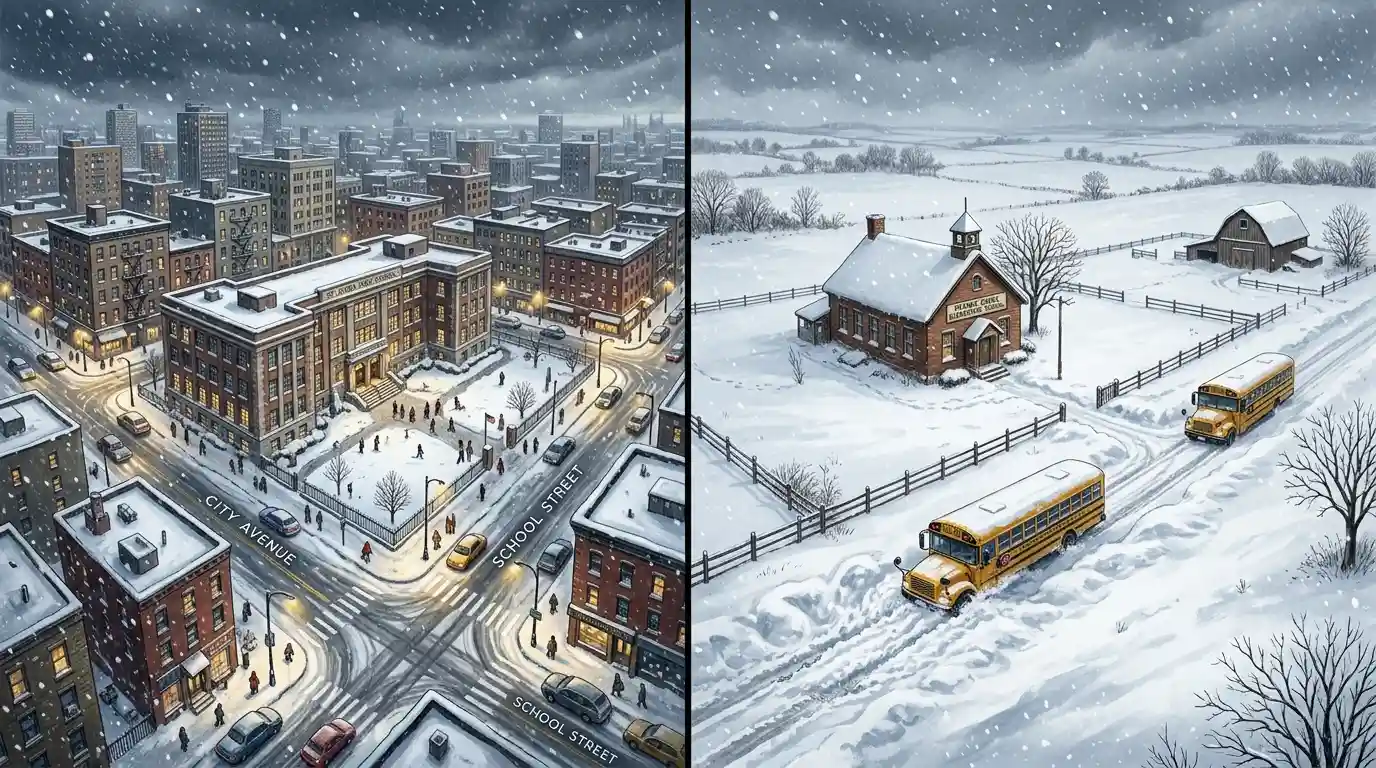
Urban school districts operate in environments that are fundamentally better equipped to handle winter weather. This doesn’t mean city schools are immune to closures — but it does mean their threshold for calling a snow day is significantly higher.
3.1 Infrastructure That Works in Their Favor
Cities invest heavily in winter road maintenance. Major metropolitan areas like New York City, Boston, Minneapolis, and Denver deploy hundreds of snowplows and salt trucks throughout the night during a storm. By the time school buses are scheduled to run, main roads and arterial streets are typically passable.
Urban students also benefit from shorter, more predictable commutes. Many walk to school or use public transit. The concentration of schools within a dense geographic footprint means fewer transportation variables.
3.2 Larger Budgets, More Resources
Large urban school districts also have larger operational budgets, which often include dedicated staff for facilities maintenance, de-icing sidewalks and parking lots, and ensuring heating systems are functional even in extreme cold. These resources allow urban schools to stay open in conditions that might force a smaller district to close.
3.3 The Urban Heat Island Effect
Here’s a fascinating environmental factor most people don’t consider: urban heat islands. Dense cities generate significant heat from buildings, vehicles, and human activity. This phenomenon causes temperatures in urban cores to run 2–5°F warmer than surrounding rural areas during winter storms — sometimes the difference between rain and snow, or between slushy roads and icy ones.
4. Rural Schools and Snow Days: Why the Country Gets Hit Harder
Rural school districts face a perfect storm — no pun intended — of challenges that make snow day decisions both more frequent and more consequential.
4.1 Transportation: The Biggest Variable
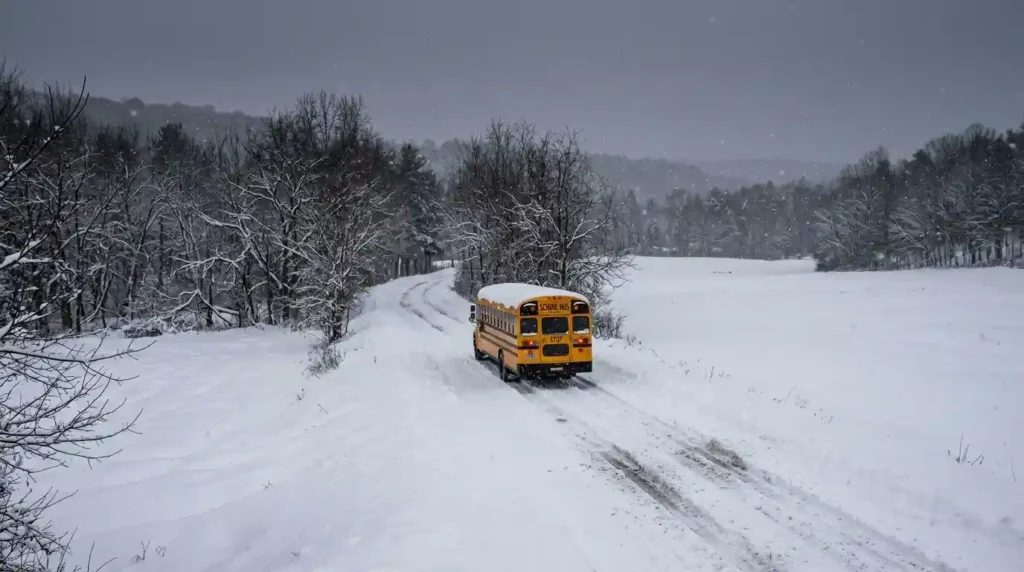
In rural districts, school buses travel long distances on unpaved, hilly, or winding roads that are maintained by county or township governments — not state highway departments. These secondary roads are often the last to be plowed and salted, sometimes hours after a storm ends.
A bus route that covers 40–60 miles across back-country roads in icy conditions is an entirely different safety calculation than navigating six city blocks. Rural transportation directors must assess dozens of micro-conditions: bridge ice, creek-bottom fog, steep grades, and farm access roads with no guardrails.
4.2 Heating and Building Vulnerability
Many rural schools operate in older buildings with aging HVAC systems. When temperatures drop sharply, these facilities may struggle to maintain safe indoor temperatures. Boiler failures are more common in older rural school buildings, and repair resources may be hours away.
4.3 Socioeconomic and Community Factors
Rural communities often have higher rates of poverty, which means many students rely on school meals as a primary food source. While this creates pressure not to cancel school, it also means that when conditions are truly dangerous, the stakes of putting children on icy buses are even higher.
Additionally, rural families are more likely to work in agriculture or essential services where they cannot stay home to supervise children on unexpected snow days — adding a layer of community complexity to each decision.
5. Key Factors That Influence Snow Day Calls
Whether urban or rural, every school district weighs a similar set of variables. The difference lies in how those variables manifest in each environment.
5.1 Snowfall Accumulation vs. Snow Rate
Total snowfall matters, but the rate of snowfall is equally important. A rapid accumulation of 3 inches in one hour can be more disruptive than 8 inches that falls slowly over 12 hours, because road crews can’t keep pace with fast-falling snow.
5.2 Wind Chill and Temperature
Extreme cold — even without significant snowfall — can trigger school closures. Wind chill values below -20°F create dangerous conditions for students waiting at bus stops, particularly in rural areas where exposed fields amplify wind chill dramatically.
5.3 Timing of the Storm
A storm that peaks between midnight and 6:00 AM is far more likely to cause a cancellation than one that arrives at noon. Road crews need time to respond, and superintendents need road condition reports before making a morning decision.
5.4 Day of the Week
Interestingly, Mondays and Fridays statistically see higher closure rates. On Mondays, weekend maintenance crews may not have kept up with Sunday-night storms. On Fridays, administrators may be more conservative, knowing the weekend offers recovery time.
For a data-driven look at how these factors intersect, the dynamics between different school types are also explored in Public Schools vs Private Schools – Who Calls Snow Days Earlier? — A fascinating companion analysis worth reading alongside this one.
6. State-by-State Differences in Snow Day Policies
Snow day frequency isn’t just about geography — it’s also about state-level regulations, academic calendar requirements, and regional culture.
6.1 Required School Days and Make-Up Policies
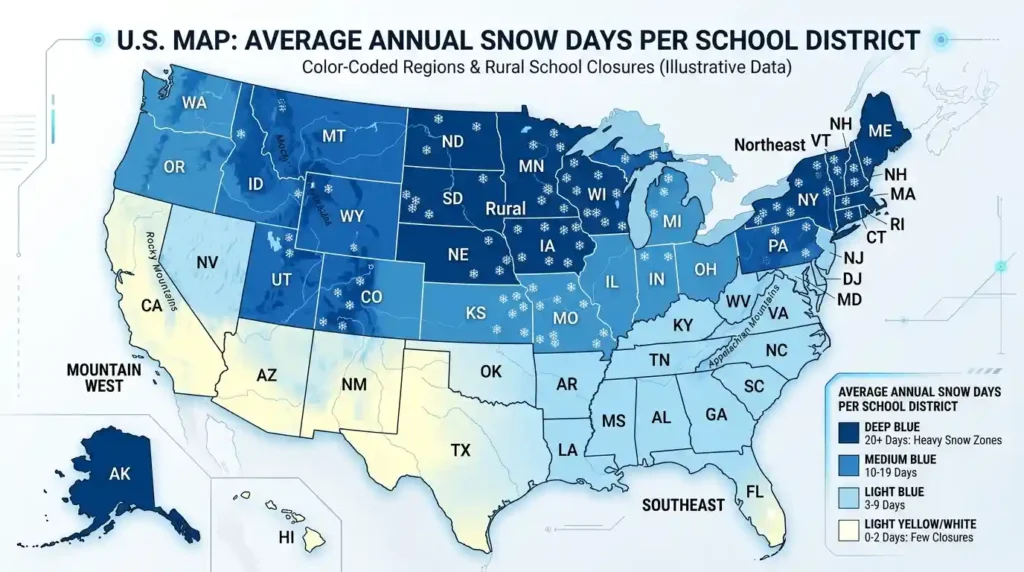
Most U.S. states require between 175 and 180 instructional days per year. States like Ohio, Michigan, and Pennsylvania build in a set number of “calamity days” — typically five — before schools must begin making up missed time. Once those are exhausted, make-up days are added to the end of the school year, cutting into summer break.
Rural districts in states with harsh winters — Minnesota, Vermont, Maine, and Montana — tend to use their full allotment of calamity days nearly every year.
6.2 Regional Norms and Cold Weather Culture
Culture plays a surprisingly significant role. Districts in the Upper Midwest or Northern New England, where snowfall is a near-daily reality from November through March, have a much higher bar for closures than districts in the Mid-Atlantic or Southeast, where a few inches of snow can be genuinely exceptional, and infrastructure is not prepared for it.
According to the National Center for Education Statistics (NCES), rural school districts make up approximately 57% of all school districts in the United States but serve only about 20% of students — meaning the administrative decisions of thousands of small rural districts rarely make national headlines, even when their snow day totals far exceed urban counterparts. For more data on how weather events affect school schedules, the National Weather Service Winter Weather Resources provide comprehensive storm impact guidance used by district officials nationwide.
7. The Role of Technology and Remote Learning
The COVID-19 pandemic fundamentally changed how school districts think about snow days. With the rapid adoption of remote learning infrastructure, many districts — particularly well-funded urban ones — have begun converting traditional snow days into virtual learning days.
7.1 E-Learning Days: Urban Districts Lead the Shift
Urban districts, with better access to broadband internet and 1:1 device programs, were quicker to implement e-learning day policies. In Illinois, Indiana, and Michigan, dozens of suburban and urban districts now have state-approved virtual day plans that eliminate snow days entirely in favor of online instruction.
7.2 Rural Districts Face a Digital Divide
Rural districts lag significantly behind. The Federal Communications Commission (FCC) Broadband Deployment Reports have consistently shown that rural Americans have significantly lower rates of high-speed internet access. When a rural school district can’t guarantee that its students can log onto a learning management system from home, a virtual snow day isn’t a viable option.
This digital divide is one more reason why rural schools continue to rely on traditional cancellations — and accumulate more snow days — compared to their urban counterparts.
8. How Parents and Students Can Stay Prepared
Regardless of whether you’re in a city or the countryside, winter weather disruptions are a reality of American school life. Here’s how families can stay ahead of the chaos.
8.1 Sign Up for District Alerts
Every school district offers some form of automated notification — whether by text, email, or robocall. Make sure your contact information is current in the school’s system.
8.2 Use Predictive Tools
Before the official announcement, predictive platforms can give you a real-time probability of school closure based on current weather data, storm forecasts, and historical patterns. A Snow Day Calculator Tool is one of the most useful resources available for parents and students trying to plan ahead the night before a storm.
8.3 Have a Backup Childcare Plan
Especially for working parents in rural areas, an unexpected snow day can create serious logistical problems. Having a backup caregiver arranged — a neighbor, grandparent, or local daycare — before winter arrives can prevent a crisis.
9. Conclusion
The data, the logistics, and the lived experience of educators all point in the same direction: rural schools get more snow days than urban schools, and for deeply structural reasons. From unpaved bus routes and aging boilers to the digital divide and smaller highway maintenance budgets, rural districts operate at a disadvantage when winter strikes.
Urban schools benefit from robust infrastructure, warmer microclimates, more walkable student populations, and greater access to technology that enables virtual learning alternatives. Rural schools, despite serving smaller communities, face outsized challenges that make every winter storm a high-stakes logistical puzzle.
Understanding these differences matters — not just for planning your next snow day, but for broader conversations about educational equity, infrastructure investment, and what it truly means to keep every student safe, regardless of their zip code.