Summary
Knowing how to Talk to Young Kids About Why School Is Closed can help parents reduce confusion, prevent unnecessary fear, and give children a sense of safety during an unexpected change. The best explanation is usually brief, honest, age-appropriate, and focused on what adults are doing to keep everyone safe. Whether the closure is caused by snow, severe weather, illness, a building problem, or another emergency, children benefit from calm communication, predictable routines, and opportunities to ask questions.
Table of Contents
- Why School Closures Can Be Confusing for Children
- How to Talk to Young Kids About Why School Is Closed
- Match the Explanation to Your Child’s Age
- Words to Use When You Talk to Young Kids About Why School Is Closed
- How to Answer Common Questions
- Create a Predictable School-Closure Routine
- Mistakes Parents Should Avoid
- Discussing Homework and Snow-Day Predictions
- Helping Children Cope With Stress
- Conclusion
- Frequently Asked Questions
Why School Closures Can Be Confusing for Children
Adults understand that schools may close because of dangerous roads, extreme temperatures, illness outbreaks, power failures, building maintenance, or public safety concerns. Young children do not always understand these systems.
To a preschooler or early elementary student, school is simply a place that is supposed to open every weekday. When it suddenly closes, the change may feel exciting, confusing, disappointing, or frightening.
A child may wonder:
- Did something bad happen at my school?
- Is my teacher safe?
- Did I do something wrong?
- Will school ever open again?
- Can I still see my friends?
- Are we in danger?
- What will happen to my homework?
Some children celebrate an unexpected day at home. Others become unsettled because their normal schedule has changed. Both reactions are reasonable.
Children rely on familiar routines to understand what will happen next. School provides a predictable sequence of waking up, getting dressed, traveling to class, seeing teachers, completing activities, eating lunch, and returning home. When that sequence disappears without warning, children may need help organizing the situation in their minds.
Parents do not need to deliver a detailed explanation of weather systems, public health policy, or school district procedures. Children mainly need to know why the change happened, whether they are safe, and what the family will do next.
How to Talk to Young Kids About Why School Is Closed
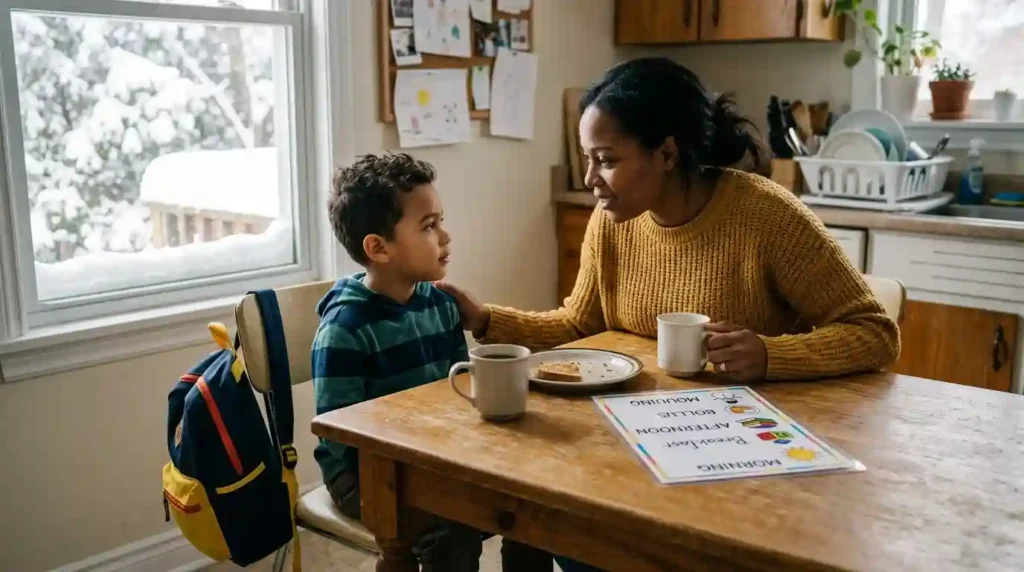
A useful school-closure conversation can often be completed in a few calm sentences. The goal is not to explain every detail. The goal is to give the child enough accurate information to feel informed and secure.
Begin With What Your Child Already Knows
Before explaining the closure, ask a simple question:
“What have you heard about school today?”
Your child may already know that snow is falling, the lights went out, or several classmates were sick. Asking first allows you to identify misunderstandings before adding more information.
A child might say, “The school is broken,” when the actual problem is a temporary heating failure. Another child might believe school is closed because everyone is in danger when the district is simply responding cautiously to icy roads.
Listen without immediately correcting every word. Once the child finishes, offer a clear explanation.
State the Reason in One Simple Sentence
Start with a direct statement:
“School is closed today because the roads are too icy for buses and cars.”
This sentence gives the child three important pieces of information:
- School is closed.
- There is a specific reason.
- Adults made the decision for safety.
Avoid beginning with a long description of everything that could go wrong. Too much information can make a manageable situation sound more dangerous than it is.
For young children, one accurate reason is usually enough.
Explain What Adults Are Doing
Children often feel safer when they understand that responsible adults are handling the problem.
You might say:
“The school leaders checked the weather and decided it would be safer for everyone to stay home.”
Or:
“The people who take care of the school are fixing the water problem. The building will open again after they know everything is working properly.”
This shifts the focus from danger to protection. It teaches the child that adults notice problems, make plans, and take action.
Reassure Without Making Promises You Cannot Keep
Reassurance should be honest rather than absolute.
Instead of saying:
“Nothing bad will happen.”
Try:
“We are safe at home, and I am paying attention to the updates.”
Instead of saying:
“School will definitely open tomorrow.”
Try:
“The school hopes to open tomorrow. We will check the message when the adults in charge make a decision.”
Honest reassurance builds trust. Children can become more anxious when adults make confident promises that later turn out to be wrong.
Tell the Child What Will Happen Next
After explaining why school is closed, describe the immediate plan:
“We will have breakfast, get dressed, check whether your teacher sent any work, and then choose an activity.”
A simple plan restores predictability. It also helps the child understand that a school closure changes the schedule but does not remove all structure from the day.
Match the Explanation to Your Child’s Age
Children at different developmental stages understand causes, time, risk, and uncertainty differently. Adjusting your language can prevent confusion.
Talking to Preschoolers Ages Three to Five
Preschoolers think in concrete terms. They benefit from short sentences, familiar words, and immediate information.
A suitable explanation might be:
“School is closed because there is a lot of snow. The roads are slippery, so everyone is staying home today.”
Avoid technical language such as “transportation conditions,” “district-wide emergency procedures,” or “infrastructure failure.” These terms do not help a preschooler understand the situation.
Preschoolers may ask the same question repeatedly. Repetition does not necessarily mean they ignored the answer. They may be testing whether the answer remains the same.
Respond consistently:
“Yes, school is still closed today. We are staying home because the roads are slippery.”
Talking to Children Ages Six to Eight
Early elementary children can understand a little more about cause and effect. They may want to know who made the decision, how long the closure will last, and what will happen to assignments.
You could explain:
“The school district checked the roads early this morning. Some roads are not safe for buses, so all the schools in the district are closed today.”
At this age, children may also compare their situation with friends or neighboring schools. Explain that different areas can have different conditions and safety rules.
Talking to Children Ages Nine and Older
Older elementary children can usually understand more detail, but they still need emotional reassurance. They may hear rumors through friends, group chats, videos, or social media.
Give them accurate information and correct misinformation without criticizing them for believing it.
You might say:
“I understand why that message worried you. The official school notice says the building is closed because of a water problem. It does not say that anyone was hurt.”
Encourage older children to distinguish between official information and rumors.
Words to Use When You Talk to Young Kids About Why School Is Closed
The reason for a closure affects how parents should explain it. The following scripts can be adapted to fit your child’s age and the information available.
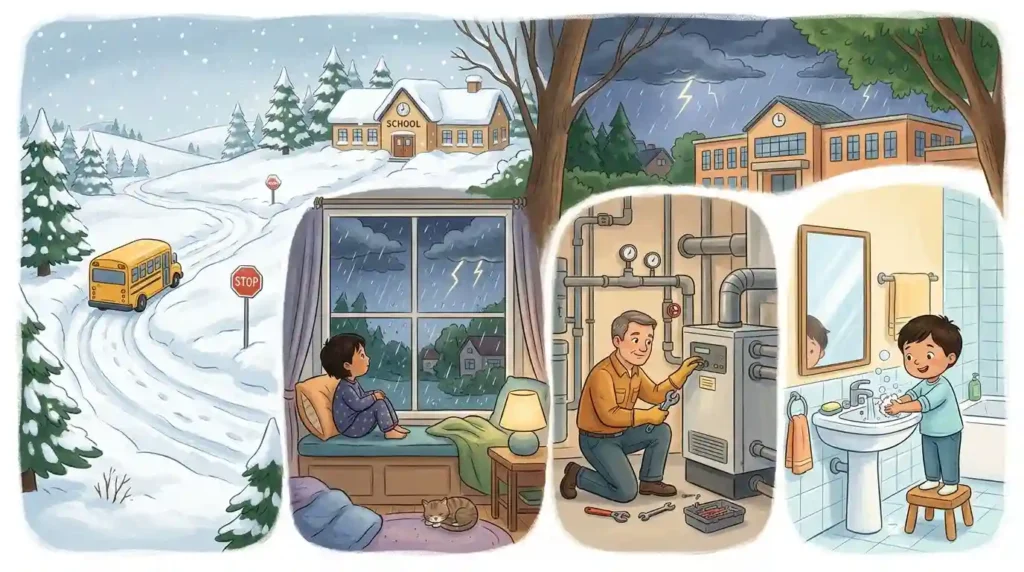
When School Is Closed Because of Snow or Ice
“School is closed because the snow and ice have made some roads unsafe. The buses need safe roads to carry children. We will stay home until the school says it is safe to return.”
This explanation connects the closure to transportation and safety without making the weather sound terrifying.
When School Is Closed Because of Extreme Cold
“It is much colder outside than usual. The school decided that children should stay home because waiting for buses and traveling could be unsafe.”
You can add practical information:
“We will stay inside, wear warm clothes if we go outdoors, and check for another school message later.”
When School Is Closed Because of Severe Weather
“A strong storm may come through our area, so the school wants everyone to stay in a safe place. We have a plan at home, and I will tell you what we need to do.”
Children should know what action to take, but they do not need a dramatic list of worst-case possibilities.
When School Is Closed Because of Illness
“Many people in the school community are sick, so the school is closing for a short time. Staying apart gives people time to rest and helps stop the illness from spreading.”
Be careful not to suggest that every sick person is in serious danger. Young children may become frightened by normal coughing, sneezing, or minor symptoms.
You can explain basic prevention measures such as handwashing, covering coughs, resting, and following healthcare advice.
When School Is Closed Because of a Building Problem
“The school has a problem with the heat, water, electricity, or another part of the building. Workers need time to fix it before students return.”
Children may take phrases literally. Saying “the school is broken” could make a young child imagine that the entire building has collapsed. Name the specific problem when possible.
When School Is Closed Because of an Emergency
In a serious emergency, give the child truthful information without exposing them to unnecessary details, distressing images, or repeated news coverage.
You might say:
“Something happened near the school, and the adults in charge decided students should stay home while they make sure the area is safe.”
Then explain the family’s next step:
“We are together, we are following the safety instructions, and I will tell you when I learn something important.”
Parents dealing with a natural disaster or major emergency may also find the CDC’s guidance on helping children cope with a disaster useful.
When the Reason Is Not Yet Clear
Sometimes parents receive a closure notice before they receive a full explanation.
It is acceptable to say:
“I know that school is closed, but I do not know the complete reason yet. The school will send more information. I will tell you when I learn more.”
This response models honesty and patience. It is better than guessing or repeating an unverified rumor.
How to Answer Common Questions
Children often need more than a single explanation. Their follow-up questions reveal what they are actually worried about.
“Did I Do Something Wrong?”
Respond directly:
“No. School is not closed because of anything you did. The decision was made for everyone.”
Young children sometimes connect unrelated events. A child who complained about school the previous evening may believe the closure happened because of that complaint.
“Is My Teacher Safe?”
If you have no reason to believe otherwise, say:
“The school has not told us that your teacher is in danger. Teachers are following the safety plan too.”
Avoid claiming that you know exactly where the teacher is unless you actually have that information.
“When Will School Open Again?”
Use concrete but flexible language:
“The school is closed today. The adults will check the roads again before deciding about tomorrow.”
For preschoolers, phrases such as “for the foreseeable future” are too abstract. Focus on today, tomorrow, or the next official update.
“Will We Have to Make Up the Day?”
Explain that schools have plans for missed instructional time:
“The school will decide whether the day needs to be made up. Your teacher will tell us what to do.”
Children do not need to worry about school calendars, attendance requirements, or administrative decisions that adults are still reviewing.
“Can I Play All Day?”
A school closure may include free time, but expectations should be clear:
“You will have time to play. First, we will check whether your teacher sent an assignment and finish our morning routine.”
“Why Is My Friend’s School Open?”
Explain that conditions vary:
“Your friend’s school may have safer roads or different rules. Each school makes a decision based on its own area.”
This is especially useful when private schools, neighboring districts, or childcare centers make different decisions.
Create a Predictable School-Closure Routine
A school closure does not need to copy a normal school day. However, some structure can reduce uncertainty and prevent conflict.
Keep Basic Routines Consistent
Try to maintain familiar times for:
- Waking up
- Getting dressed
- Eating meals
- Completing schoolwork
- Playing
- Resting
- Going to bed
Children generally handle change more easily when the main parts of the day remain recognizable.
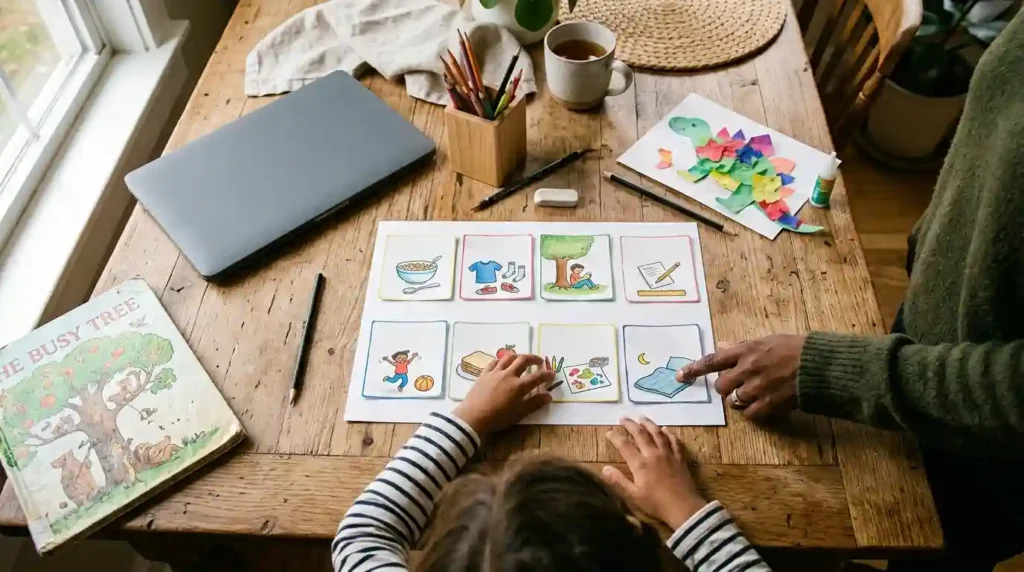
Use a Simple Visual Schedule
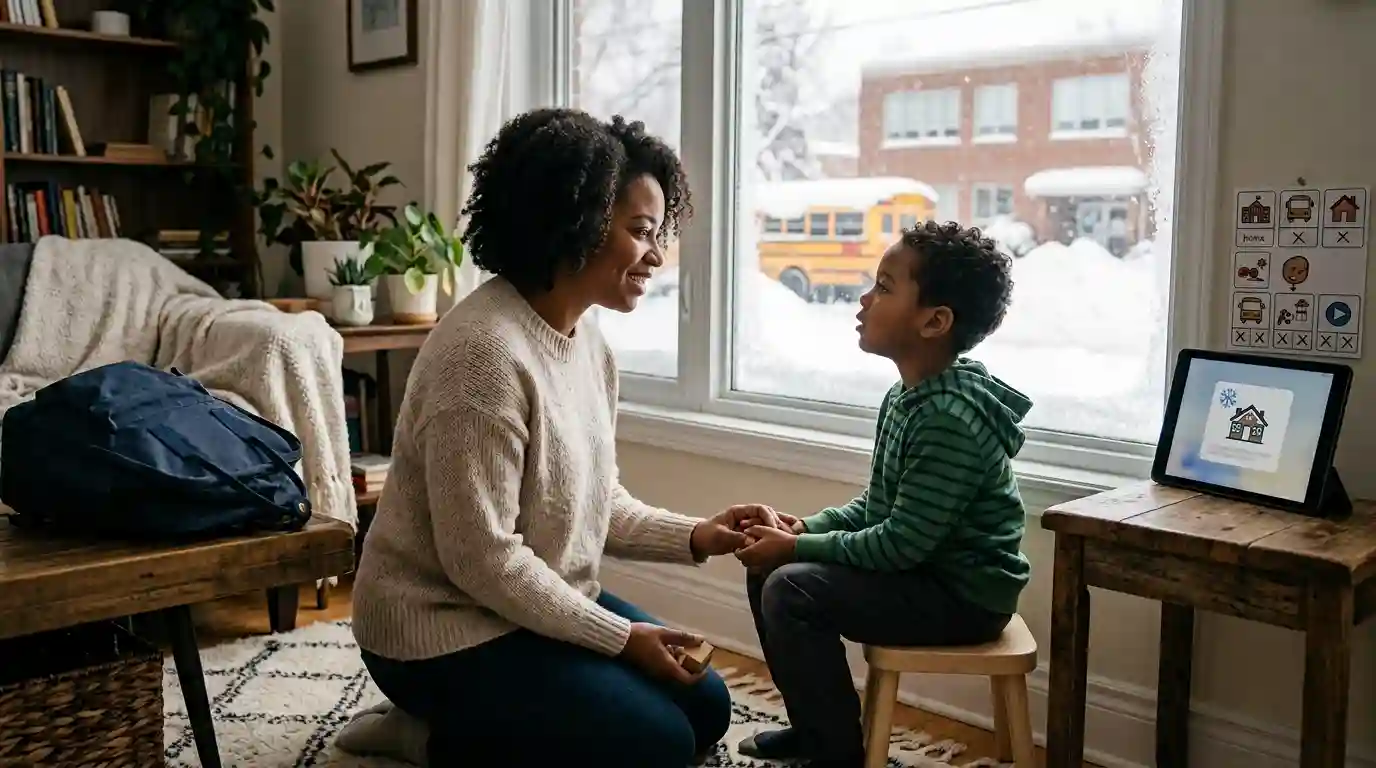
For younger children, create a schedule using pictures or basic words:
- Breakfast
- Get dressed
- School activity
- Snack
- Playtime
- Lunch
- Quiet time
The purpose is not to control every minute. It is to show the child what comes next.
Include Movement and Outdoor Time When Safe
Children may become restless when confined at home. Include indoor movement, stretching, dancing, building activities, or outdoor play when weather and safety conditions allow.
If the closure is caused by severe cold, dangerous wind, poor air quality, or another environmental hazard, follow local safety guidance before going outside.
Support Social Connection
Children may miss their classmates and teachers. When appropriate, help them call a friend, send a supervised message, attend a virtual class, or make a picture for their teacher.
Social contact can make an unexpected closure feel less isolating.
Mistakes Parents Should Avoid
Even well-intentioned explanations can increase anxiety when they are too detailed, dismissive, or uncertain.
Sharing Adult-Level Details
Young children do not need graphic descriptions, repeated emergency footage, complicated public health statistics, or speculation about everything that could happen.
Give enough information to answer the child’s question, then pause.
Using Frightening Language
Statements such as “The roads are deadly” or “The school is full of germs” can create lasting fears.
Use accurate but measured language:
“The roads are too slippery for safe travel.”
“Many people are sick, so the school is giving everyone time to recover.”
Dismissing the Child’s Feelings
Avoid saying:
“There is nothing to worry about.”
“You are being silly.”
“You should be happy you do not have school.”
A better response is:
“I can see that this change is worrying you. Tell me what part feels scary.”
Showing Visible Panic
Parents do not have to pretend they feel no stress. However, children may interpret uncontrolled adult panic as evidence that the situation is unmanageable.
Take a moment to regulate your own emotions before beginning the conversation. Speak slowly, use a steady voice, and avoid discussing alarming possibilities within the child’s hearing.
Repeating Rumors
Do not pass along unconfirmed social media posts, neighborhood speculation, or incomplete messages as facts.
Use information from the school, school district, local government, weather service, or relevant public safety agency.
Giving Too Many Updates
Repeatedly checking alerts can make a closure feel like an ongoing crisis. Tell your child when meaningful information changes rather than narrating every message or forecast.
Discussing Homework and Snow-Day Predictions
School closures often create practical questions about assignments, online lessons, attendance, and missed classroom time.
Explain Homework Expectations Clearly
Tell your child whether the day is:
- A traditional day off
- A remote learning day
- A delayed-start day
- An independent study day
- A day with optional activities
Check the teacher’s message before making assumptions. Some schools suspend assignments, while others expect students to complete online work.
Parents looking for a fuller explanation can read What Happens to Homework When There’s a Snow Day.
Use Weather Predictions as Estimates
Children may ask the night before a storm whether school will be closed. Explain that forecasts can help families prepare, but the official decision comes from the school or district.
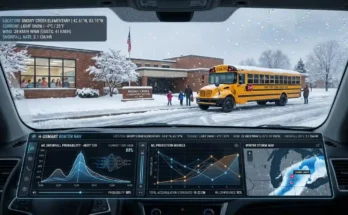
Families can use the Snow Day Calculator to explore the likelihood of a weather-related closure. Present the result as a prediction rather than a guarantee.
You might say:
“This tool estimates the chance of a snow day based on weather information. We still need to wait for the official school announcement.”
This approach can make weather discussions educational while teaching children the difference between an estimate and a confirmed decision.
Helping Children Cope With Stress
Most children adjust after receiving a simple explanation and a clear plan. Some children, however, may continue to feel anxious.
Watch for Behavioral Changes
Stress in young children may appear as:
- Clinginess
- Irritability
- Sleep problems
- Stomachaches
- Headaches
- Repeated questions
- Fear of returning to school
- Changes in appetite
- Regression in toileting or independent habits
- Unusual withdrawal
One difficult day does not necessarily indicate a serious problem. Pay attention to the intensity, duration, and effect on daily life.
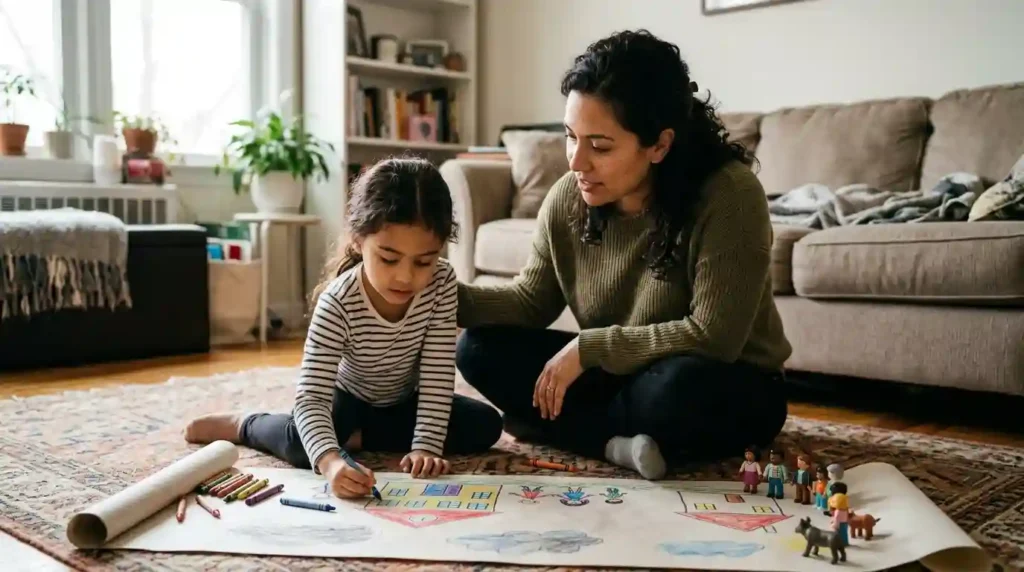
Encourage Expression Through Play
Young children often communicate through play rather than direct conversation. They may pretend that a toy school is closed, line up vehicles in the snow, or act out a safety announcement.
Join the play without taking control. You can gently introduce reassurance:
“The toy school is closed today, and the teachers are making a plan for everyone to return safely.”
Drawing, storytelling, building blocks, dolls, and puppets can also help children express feelings they cannot yet name.
Name the Emotion
Give the child simple emotional vocabulary:
“You seem disappointed because you wanted to see your friends.”
“You are worried because today is different.”
“You feel excited about being home, but you are also wondering what will happen tomorrow.”
Naming an emotion helps the child understand that feelings can be recognized, discussed, and managed.
Contact a Professional When Needed
Consider speaking with the child’s pediatrician, school counselor, teacher, or mental health professional when distress:
- Continues for an extended period
- Becomes more intense
- Interferes with sleep or eating
- Prevents the child from returning to school
- Causes severe physical complaints
- Significantly affects family life
- Follows a frightening or traumatic event
Professional support may be especially helpful when the closure is connected to a disaster, community emergency, violence, displacement, or the serious illness or death of someone the child knows.
Conclusion
Talking to a young child about a school closure does not require a perfect speech. Children need a calm adult, a truthful explanation, and a clear idea of what will happen next.
Begin with one simple reason for the closure. Explain that adults are working to keep students safe. Answer the child’s actual questions without adding frightening or unnecessary details. When the reopening date is uncertain, acknowledge the uncertainty and describe when the next update is expected.
A predictable home routine, emotional reassurance, play, and age-appropriate school activities can help children adjust to the disruption. Most importantly, keep the conversation open. A child who feels safe asking questions is less likely to rely on imagination, rumors, or incomplete information.
Frequently Asked Questions
What is the simplest way to explain a school closure to a young child?
State the reason in one sentence and follow it with reassurance. For example: “School is closed because the roads are icy. The school wants everyone to stay home safely today.”
Should parents tell children every detail about why school is closed?
No. Children need truthful information, but they do not need every technical, upsetting, or uncertain detail. Give information that matches the child’s age and answers the question being asked.
What should I say when I do not know why the school closed?
Say that you do not have the full information yet. For example: “I know school is closed, but I do not know the complete reason. We will wait for the school’s official message.”
How can I explain that school may also be closed tomorrow?
Focus on the current decision: “School is closed today. The school will check the situation again before deciding about tomorrow.”
What should I do if my child is frightened by the closure?
Listen to the specific fear, acknowledge the emotion, correct misunderstandings, and explain the family’s safety plan. Limit exposure to alarming news coverage and maintain a predictable routine.
How do I explain a snow day without promising one in advance?
Tell your child that weather forecasts and prediction tools provide estimates, but only the school can confirm a closure. This teaches the difference between possibility and certainty.
Should children complete homework during a school closure?
Follow the teacher’s or district’s instructions. Some closures are traditional days off, while others are remote learning or independent study days.
What if my child repeatedly asks the same question?
Answer calmly and consistently. Repeated questions are common when young children are processing an unexpected event or checking that the situation has not changed.
How can I help my child feel connected to school while it is closed?
Arrange a supervised call with a classmate, participate in virtual activities, read a school-related book, complete a teacher-provided assignment, or encourage the child to create something for the teacher.
When should I seek professional help for school-closure anxiety?
Consult a pediatrician, school counselor, or qualified mental health professional when anxiety is severe, continues for an extended period, becomes worse, disrupts sleep or eating, or prevents the child from returning to normal activities.