Summary
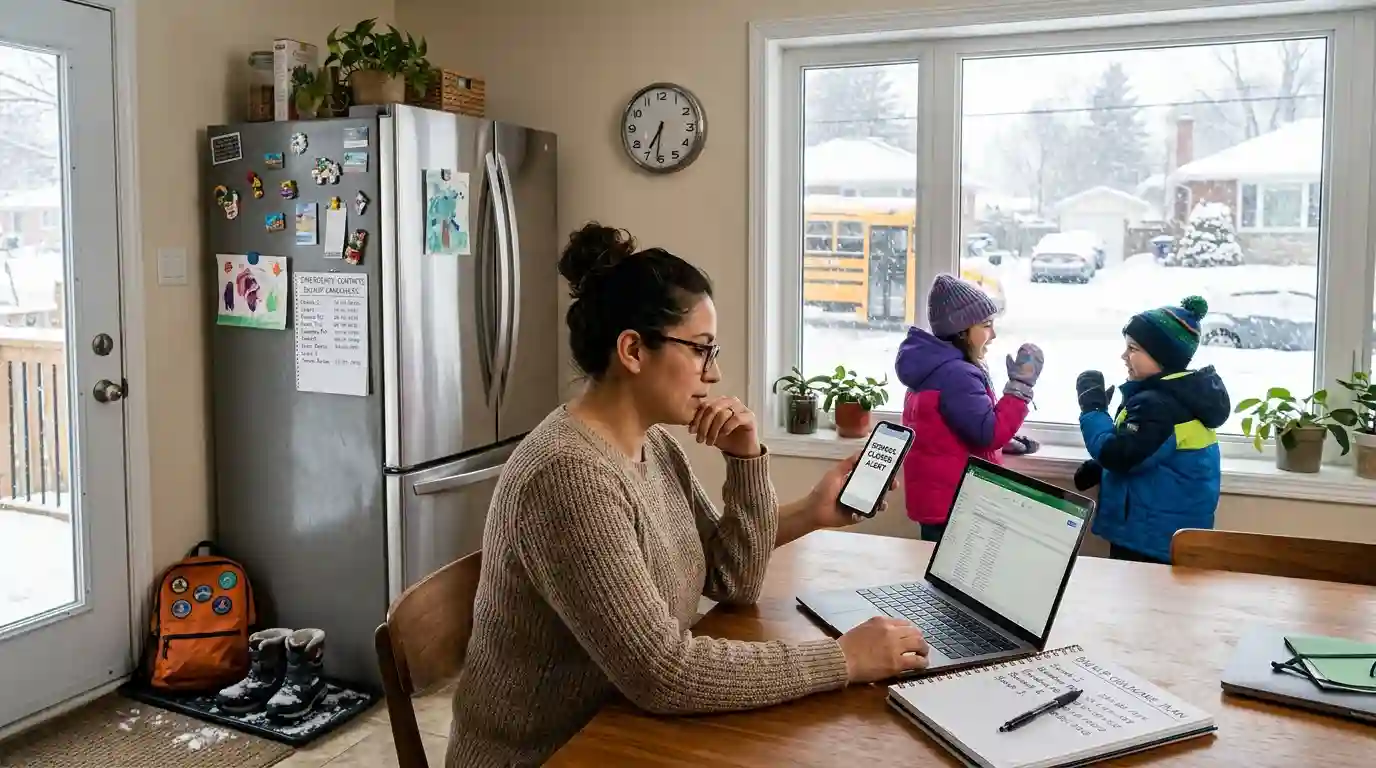
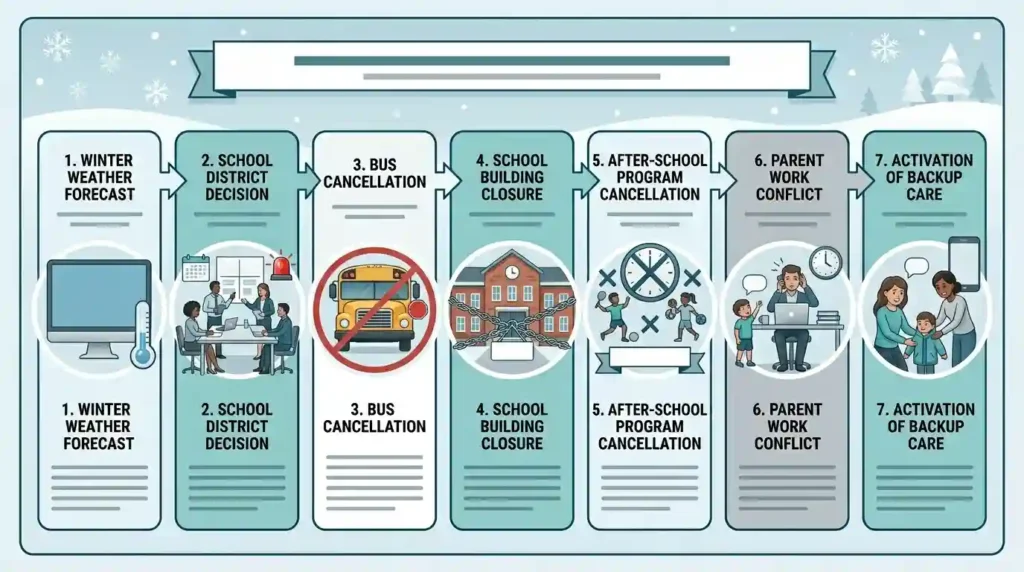
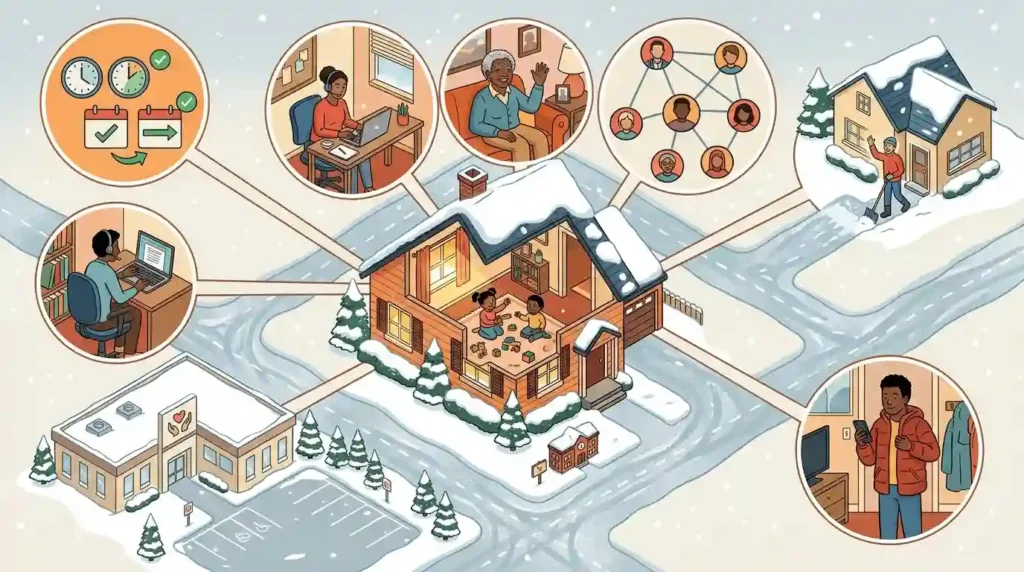
Understanding how Snow Days Affect After-School Childcare Plans is essential for families that depend on school-based programs, community centers, babysitters, relatives, carpools, or daycare providers to cover the hours between dismissal and the end of the workday. A school closure can remove several pieces of a family’s routine at once: transportation may stop, an after-school site may lose access to the school building, caregivers may be unable to travel, and parents may have little time to rearrange work.
The most reliable response is not a single backup babysitter. It is a layered winter childcare plan that accounts for full-day closures, delayed openings, early dismissals, remote-learning days, extreme cold, road conditions, power outages, and changing provider policies. Families should know who makes closure decisions, where official updates appear, how each childcare provider responds, who is authorized to pick up the child, and what work arrangements are available. This guide explains the main disruptions, the risks parents often overlook, and the practical steps that make snow-day childcare safer and more predictable.
Table of Contents
- Why snow days disrupt more than the school schedule
- The closure scenarios families need to plan for
- Why after-school programs may follow different policies
- The effect on working parents and caregivers
- Transportation, pickup, and handoff risks
- Safety considerations during winter weather
- How to build a layered backup childcare plan
- Age-specific snow-day strategies
- A practical family snow-day checklist
- Common planning mistakes
- Conclusion
- Frequently asked questions
Why Snow Days Affect After-School Childcare Plans So Quickly
A snow day is often described as a simple school closure, but families experience it as a chain reaction. The school day is usually the anchor around which transportation, meals, work schedules, therapy appointments, sports, clubs, and after-school care are organized. When that anchor moves, every connected arrangement may move with it.
For many households, the after-school period is covered through a combination of services rather than one provider. A child might ride a district bus to a community center, attend a school-based enrichment program, join a neighborhood carpool, or stay with a grandparent until a parent finishes work. Snow, freezing rain, dangerous wind chill, poor visibility, or untreated roads can interrupt each part of that sequence independently.
This is why the impact is rarely limited to the hours between 3:00 and 6:00 p.m. A full-day closure may create an eight- to ten-hour care gap. A delayed opening may leave parents without morning supervision. An early dismissal can require immediate pickup in the middle of a work shift. A transition to remote learning may keep instruction running while still placing the burden of supervision, meals, technology, and learning support on the household.
A Closure Removes Infrastructure, Not Just Classroom Time
Schools provide more than instruction. They may provide a heated and supervised building, breakfast and lunch, nursing support, special education services, internet access, transportation, and a predictable handoff to an after-school program. When the building closes, these supports may disappear at the same time.
The effect can be especially significant for families with younger children, children with disabilities, children who take medication during the day, or children who rely on school meals. A backup plan must therefore address the child’s full set of needs, not merely identify an adult who can remain in the same room.
The Timing of the Announcement Matters
Districts may announce a closure the evening before, early in the morning, or after conditions deteriorate during the school day. Each timing creates a different childcare problem.
An evening announcement gives families time to contact caregivers and employers, but available sitters may be booked quickly. A 5:00 a.m. announcement may require parents to make decisions before a caregiver is awake. An early dismissal may be the hardest scenario because children are already distributed across schools, buses, and activities while parents are at work.
Families should plan for the timing of a decision as carefully as they plan for the decision itself. A useful question is not only, “Who can watch my child on a snow day?” It is also, “Who can respond within 30 minutes if school closes early?”
Common Snow-Day Scenarios and Their Childcare Consequences
A strong winter childcare plan should cover several types of schedule changes. Planning only for a full closure leaves families exposed to the situations that often require faster action.
Full-Day School Closure
A full closure eliminates the normal school day and may also cancel school-based aftercare, athletics, tutoring, and transportation. Independent childcare centers may remain open, open late, or close entirely. Parents need to confirm policies rather than assume that an after-school provider will offer full-day care.
Some providers offer snow camps or emergency full-day programs, but these may require advance registration, additional fees, packed meals, or separate transportation. Capacity can be limited because the provider must maintain appropriate supervision even when employees face unsafe commutes.
Delayed Opening
A one- or two-hour delay primarily creates a morning childcare gap, but it can also affect the afternoon. Bus schedules, preschool sessions, meal service, and after-school staffing may shift. A parent who starts work early may need care before school, while a caregiver who usually handles pickup may have a conflicting schedule later in the day.
Families should verify whether the after-school program keeps its normal closing time after a delayed start. Some programs do, while others reduce hours because staff schedules or building access have changed.
Early Dismissal
Early dismissal requires a rapid, coordinated response. Children may be sent home on buses, held for pickup, transferred to an after-school provider, or released according to emergency instructions. Problems arise when parents have not updated authorized pickup lists, phone numbers, or the child’s destination plan.
Every family should know what happens if no authorized adult reaches the school on time. Parents should also explain the plan to the child in age-appropriate language, especially if the child’s normal routine changes.
Remote-Learning Day
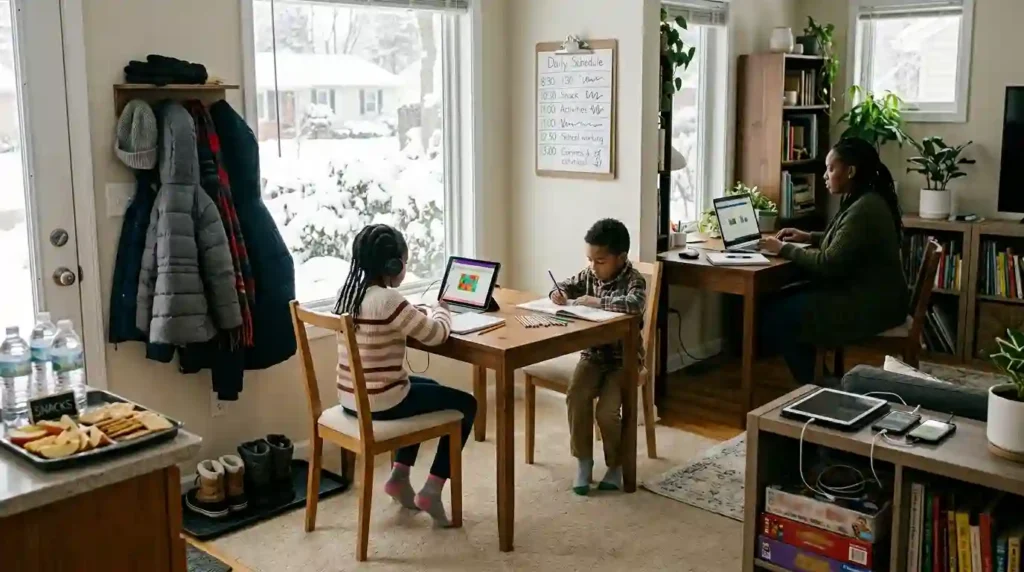
Remote learning is not the same as a traditional snow day. The child may need a device, internet access, login credentials, live attendance, assignment support, and a quiet place to work. A babysitter who is comfortable supervising play may not be prepared to manage a full online school schedule.
Parents should discuss academic expectations with backup caregivers in advance. The goal is not to turn the caregiver into a teacher, but to make sure the child can log in, follow the basic schedule, take breaks, eat meals, and ask for help when needed.
Extreme-Cold or Cold-Day Closure
Schools sometimes close even when snowfall is limited because wind chill, frostbite risk, mechanical problems, or unsafe bus-wait conditions make attendance hazardous. These closures can surprise families who look only at snow accumulation.
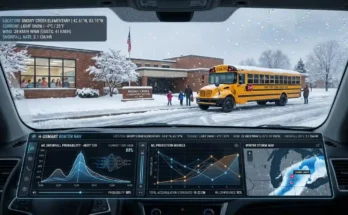
Forecasting tools can help families recognize when a disruption is becoming more likely. A resource such as the Cold Day Predictor can support advance planning, but it should be treated as an early planning aid rather than a substitute for official school district announcements and local weather alerts.
Closures Caused by Ice, Power Loss, or Building Problems
Freezing rain and ice can be more disruptive than deep snow because roads and sidewalks may become dangerous quickly. A school may also close because heating systems fail, electrical service is interrupted, pipes freeze, or buildings cannot be safely occupied.
These events may affect childcare sites and private homes as well. A relative who is usually available may lose power. A daycare may have heat but no safe route for staff. Backup planning should account for the condition of the destination, not only whether someone is willing to provide care.
Why After-School Programs May Not Follow the School District
Parents often assume that an after-school program will make the same decision as the school district. That may be true for a program operated directly by the district, but it is not universal.
A school-based program run by a nonprofit organization may close because it cannot access the building. A private childcare center may remain open even when schools close. A recreation center may follow municipal facility rules. A faith-based program may use its own weather policy. A home-based provider may decide based on neighborhood road conditions and staff availability.
Building Access Can Determine Whether Care Is Available
Many after-school programs rent or share school space. If the district closes buildings, the provider may be unable to enter even if its staff members are available. The closure may also affect kitchens, gymnasiums, security systems, custodial support, and emergency exits.
Parents should ask whether the program has an alternate location and whether children are automatically transferred there. An alternate site is useful only when families know the address, transportation plan, operating hours, fees, and pickup procedure.
Staffing Rules Still Apply During a Storm
Licensed childcare providers cannot simply operate with any number of available adults. They must maintain the supervision and staffing levels required for their program. During severe weather, employees may be unable to travel, need to care for their own children, or face school closures in another district.
A center may therefore close even when its building is safe. It may also limit enrollment to families that reserved emergency care in advance. Parents should ask how the provider prioritizes spaces and when it will make a final decision.
Each Organization Uses Different Information
School districts consider road conditions, bus routes, forecasts, building readiness, staffing, and local circumstances. Other organizations may evaluate a smaller service area or operate under different risk thresholds. This can lead to different decisions without either organization acting irresponsibly.
Families who want to understand the school-closure decision process can read Why Superintendents — Not Mayors — Decide Snow Days. Knowing where authority sits helps parents follow the right communication channels instead of relying on rumors or unofficial social media posts.
How Snow-Day Childcare Disruptions Affect Working Parents
For working parents, a school closure can create an immediate conflict between caregiving duties and job responsibilities. The difficulty depends on the parent’s role, schedule flexibility, commute, leave balance, and access to trusted backup care.
Remote Work Does Not Eliminate the Care Gap
Working from home may reduce the need to travel, but it does not automatically solve childcare. Young children need active supervision. School-age children may need help with meals, devices, assignments, conflict resolution, and safe outdoor play. Meetings and deadlines can become difficult when both work and childcare require continuous attention.
Parents who expect to work remotely should create a realistic snow-day schedule. Blocks of focused work can be aligned with independent activities, screen time, reading, quiet play, or the child’s remote-learning periods. Important calls may need to be moved to times when another adult can supervise.
Essential and On-Site Workers Have Fewer Options
Healthcare workers, emergency responders, utility employees, transportation workers, retail staff, manufacturing employees, and many service workers cannot move their duties home. Their workplaces may be busiest during severe weather, precisely when schools and childcare providers are most likely to close.
These families benefit from a larger backup network and earlier activation. A plan that depends on one caregiver is fragile because that person may also face hazardous travel or a closure affecting their own children.
Single-Parent and Shift-Work Households Face Added Pressure
A single parent may have no second adult available to trade shifts or divide supervision. Shift workers may need childcare before dawn, overnight, or beyond the hours offered by emergency programs. Families with irregular schedules should identify which contacts can provide care during specific time windows rather than asking generally who is available.
Employers can reduce disruption by publishing inclement-weather policies, allowing shift swaps, identifying emergency leave options, and communicating early. Parents should understand these policies before winter rather than waiting until a closure occurs.
Transportation, Pickup, and Handoff Require Their Own Plan
Childcare is not fully arranged until the child can reach the caregiver safely and the caregiver is authorized to receive the child. Transportation failures are one of the most common weak points in snow-day planning.
Bus Cancellations Can Change the Entire Afternoon
A district may cancel school, cancel only certain bus routes, dismiss early, or alter transportation based on road conditions. An after-school program that normally receives children from a school bus may have no way to collect them. A caregiver who can supervise at home may be unable to drive.
Parents should create separate plans for supervision and transportation. “Grandmother can watch the children” is incomplete unless the family also knows whether she will drive, whether the children will be brought to her, and what happens if roads are unsafe.
Authorized Pickup Information Must Be Current
Schools and childcare providers may release children only to approved adults. Families should update emergency contacts, phone numbers, custody information, medical instructions, and pickup authorizations before winter.
The child should also know the names of approved adults. However, children should be taught that changes must come through the school or parent, not through an unfamiliar person claiming that plans have changed.
Older Children Still Need Clear Boundaries
Some preteens or teenagers may be allowed to stay home alone, but snow-day conditions create additional risks. Power outages, heating problems, icy steps, sledding injuries, unfamiliar visitors, and internet use can complicate an otherwise routine period of self-care.
Parents should establish check-in times, emergency contacts, approved activities, cooking rules, outdoor boundaries, and instructions for power or heat loss. Legal requirements and maturity standards vary, so families should use local rules and the child’s actual readiness rather than relying only on age.
Winter Safety Must Remain the First Priority
The purpose of a backup childcare plan is not merely to preserve a work schedule. It is to keep children and caregivers safe while maintaining reliable supervision.
Travel Decisions Should Be Based on Conditions
A caregiver’s willingness to drive does not make the trip safe. Families should consider road treatment, visibility, ice, local warnings, vehicle readiness, distance, and the possibility that conditions may worsen before pickup.
Official winter weather preparedness guidance from Ready.gov can help households plan for hazardous travel, extreme cold, power outages, and emergency supplies. Parents should combine that broader preparedness with school and childcare policies.
The Backup Location Should Be Winter-Ready
A safe childcare location should have reliable heat, working smoke and carbon monoxide alarms, food, drinking water, necessary medication, charged communication devices, and a plan for outages. Emergency contacts and health information should be accessible.
Caregivers should know whether the child has asthma, allergies, sensory needs, mobility limitations, or medication requirements. They should also know when to contact the parent, when to call emergency services, and where the child’s supplies are stored.
Outdoor Play Needs Specific Rules
Snow play can be valuable, but supervision and time limits matter. Children need dry layers, gloves, hats, waterproof footwear, and a place to warm up. Caregivers should check for hidden ice, traffic, snowplows, frozen water, unsafe sledding slopes, and reduced visibility.
A clear plan should state whether outdoor play is allowed, where it may occur, who supervises, and how frequently children return indoors. Wet clothing should be replaced promptly to prevent prolonged cold exposure.
How to Prepare When Snow Days Affect After-School Childcare Plans
Preparation works best when it is written, shared, and tested. A plan held only in one parent’s memory may fail when another adult needs to act quickly.
Step 1: Map the Normal Childcare Chain
Write down every step from school dismissal to the parent’s return. Include the school, bus route, after-school site, caregiver, activity, pickup person, closing time, and transportation method.
Then identify which parts depend on school being open. This reveals hidden vulnerabilities, such as an after-school program that uses district transportation or a caregiver who is available only after the regular dismissal time.
Step 2: Build Three Levels of Backup Care
A practical plan can use three levels.
Level one: Household adjustment. One parent works remotely, uses leave, changes hours, or trades responsibilities with another adult in the household.
Level two: Trusted personal network. A relative, neighbor, family friend, or parent from the child’s school provides care or shares supervision.
Level three: Formal emergency care. A licensed center, community program, snow-day camp, vetted babysitter, or employer-supported childcare service provides care when personal options are unavailable.
Each level should include transportation, hours, cost, food, medication, and communication details.
Step 3: Confirm Provider Policies in Writing
Ask the school and after-school provider the following questions before winter:
- Does the program close whenever the district closes?
- Does it provide full-day care on snow days?
- What happens after a delayed opening or early dismissal?
- How and when are families notified?
- Are emergency spaces limited?
- Is advance registration required?
- Are additional fees charged?
- Does the program provide transportation?
- What is the latest pickup time?
- What happens if weather prevents a parent from arriving?
Save the answers with enrollment documents and emergency contacts. Policies may change from one winter to the next, so review them annually.
Step 4: Create a Family Communication Protocol
Decide which parent or guardian monitors district alerts and who contacts the caregiver. Use one reliable group message for adults involved in the plan. Avoid parallel conversations that can produce conflicting instructions.
The communication protocol should state:
- Who confirms the official school decision
- Who activates backup care
- Who tells the child
- Who notifies the employer
- Who handles transportation
- Who remains available if the plan changes
Families should rely on the district website, automated messages, official apps, or verified accounts for closure information. Screenshots and neighborhood posts can be outdated or incomplete.
Step 5: Discuss Winter Flexibility With Employers
Parents should review remote-work rules, emergency leave, paid time off, shift swaps, schedule changes, and attendance expectations. A brief conversation before winter is easier than negotiating during a storm.
It can help to prepare a simple statement: “If school closes, I will activate backup care first. If that is unavailable, I may need to work remotely, adjust my hours, or use leave.” This gives the employer a clear sequence rather than an uncertain last-minute request.
Step 6: Prepare a Snow-Day Care Kit
A portable kit can make it easier to transfer care to a relative, neighbor, or program. It may include:
- Emergency contacts and pickup authorization
- Medical information and medication instructions
- A change of clothes and winter gear
- Snacks and a water bottle
- Device, charger, and headphones
- School login details stored securely
- Books, games, and quiet activities
- Comfort items for younger children
- The child’s routine and behavioral supports
Review expiration dates, clothing sizes, and contact details at the start of each winter.
Step 7: Run a Short Practice Drill
A practice drill does not need to be dramatic. Choose a weekend and walk through the plan. Ask the child where they would go, who might pick them up, how they would contact a parent, and what they should do if the first caregiver is unavailable.
Adults should test group messages, confirm travel times, and verify that emergency contacts still agree to help. The drill often identifies practical issues that a written list misses.
Age-Specific Strategies for School-Age Childcare
Children at different developmental stages need different forms of supervision. A single plan may not work equally well for a first grader and a teenager.
Early Elementary Children
Younger school-age children need close supervision, help with meals and clothing, simple explanations, and predictable routines. They may feel anxious when plans change suddenly. Parents should provide the caregiver with familiar activities, comfort items, allergy information, and a basic schedule.
Remote-learning expectations should be realistic. Short work periods, movement breaks, snacks, and play may be more successful than trying to reproduce a full classroom day.
Older Elementary and Preteen Children
Older children may work independently for longer periods but still need an adult nearby. They can help prepare snacks, follow a checklist, and communicate through a family device. However, they may take risks outdoors or online if rules are unclear.
Parents should specify screen-time boundaries, approved websites, outdoor areas, cooking restrictions, and check-in times. A neighbor may be able to provide periodic supervision if local rules and the child’s maturity make that arrangement appropriate.
Teenagers
Some teenagers can safely remain home for part of the day and may help supervise younger siblings. That responsibility should not be assumed. Parents should consider maturity, sibling dynamics, emergency judgment, duration, and the teenager’s willingness.
A teenager providing sibling care should have clear authority, emergency contacts, meal instructions, and limits. The arrangement should not interfere unreasonably with the teenager’s own remote learning or safety.
A Practical Snow-Day Childcare Plan Template
Families can use the following structure to create a one-page plan.
Official Information Sources
- School district alert system:
- School website or app:
- After-school provider contact:
- Local weather alert source:
- Parent responsible for monitoring updates:
Primary Plan
- Caregiver:
- Location:
- Available hours:
- Transportation:
- Cost:
- Supplies needed:
- Employer arrangement:
Backup Plan A
- Caregiver or program:
- Contact number:
- Trigger for activation:
- Transportation:
- Pickup deadline:
Backup Plan B
- Caregiver or program:
- Contact number:
- Trigger for activation:
- Transportation:
- Pickup deadline:
Early Dismissal Plan
- First authorized pickup adult:
- Second authorized pickup adult:
- Child’s destination:
- School release instructions:
- Parent responsible for confirmation:
Remote-Learning Plan
- Device and charger location:
- Login information location:
- Adult responsible for setup:
- Meal plan:
- Break and activity plan:
Safety Information
- Medications:
- Allergies:
- Emergency contacts:
- Heating or power outage destination:
- Outdoor play rules:
- Check-in schedule:
Keep a copy on the refrigerator, in the parent’s phone, and with any regular caregiver. Sensitive information should be stored securely and shared only with people who need it.
Common Mistakes That Make Snow-Day Childcare Harder
Even organized families can overlook small details that become important during a storm.
Assuming the After-School Program Will Be Open
Never treat school closure and childcare availability as the same decision. Confirm the provider’s policy and alternate-site arrangements.
Relying on One Backup Caregiver
One person may become unavailable because of illness, travel conditions, work, or their own child’s closure. A layered network is more resilient.
Ignoring Early Dismissal
A full-day closure often provides more warning than an early release. Families need a rapid pickup plan with current authorizations.
Treating Remote Work as Full-Time Childcare
Remote work can be part of the plan, but parents should adjust expectations, divide the day, and communicate with employers.
Forgetting Transportation
A caregiver is not a complete solution when no safe travel arrangement exists. The supervision plan and transportation plan should be documented separately.
Failing to Update the Child
Children cope better when they know what to expect. Explain who may pick them up, where they will go, and how they can reach a parent.
Waiting Until the Forecast Is Certain
By the time a closure is confirmed, sitters and emergency programs may be full. Families can place tentative holds, check availability, and notify employers when the risk becomes meaningful, then cancel unnecessary arrangements promptly.
The Broader Equity Challenge
Snow days do not affect all families equally. Households with paid leave, remote-work flexibility, a second vehicle, nearby relatives, and spare income can assemble alternatives more easily. Families with hourly jobs, limited transportation, unstable housing, language barriers, or children with specialized needs may have fewer choices.
Schools, employers, and childcare providers can reduce this gap through early communication, translated alerts, clear emergency policies, flexible attendance rules, accessible registration, meal continuity, and partnerships with community organizations. Emergency care options should also account for children with disabilities, medication needs, and individualized supports.
Parents cannot solve every structural problem through personal planning. Still, a written plan can make available resources easier to activate and can reveal where additional support is needed before a storm arrives.
Conclusion
Snow days change far more than the classroom schedule. They can interrupt transportation, after-school programs, meals, work shifts, special services, and the carefully timed handoffs that keep a family’s day functioning.
The strongest response is a layered plan built before the first major storm. Families should prepare for full closures, delays, early dismissals, remote-learning days, dangerous cold, and power disruptions. They should confirm each provider’s policy, separate transportation from supervision, keep pickup authorizations current, discuss flexibility with employers, and give children clear instructions.
No forecast tool or backup caregiver can remove every uncertainty. Preparation does, however, reduce last-minute confusion and unsafe decisions. When families know where official information comes from and have more than one realistic care option, a snow day becomes a manageable disruption rather than an emergency.
Frequently Asked Questions
Do After-School Programs Automatically Close When Schools Close?
Not always. District-operated programs often follow the school system, but private centers, nonprofits, recreation programs, and home-based providers may use separate policies. A school-based provider may also close because it cannot access the building. Parents should request the program’s inclement-weather policy in writing.
How Early Should Parents Arrange Backup Childcare for Winter?
Families should build the plan before winter weather begins and confirm availability when a meaningful storm risk appears. Permanent arrangements, such as authorized pickup contacts and emergency program registration, should be completed well in advance. A specific caregiver can then be placed on notice before the district makes its final decision.
What Is the Best Backup Childcare Option for a Snow Day?
The best option is safe, reliable, affordable, reachable in current road conditions, and appropriate for the child’s age and needs. For some families, that is a nearby relative. For others, it is a licensed emergency program, a trusted neighbor, a vetted babysitter, or a parent working adjusted hours. A layered combination is usually stronger than one option.
Can a Child Stay Home Alone on a Snow Day?
That depends on local law, the child’s maturity, the length of time, the home environment, and the severity of the weather. Parents should consider emergency judgment, access to communication, heating safety, cooking rules, outdoor risks, and whether the child can follow check-in procedures. A child who manages a normal afternoon alone may not be ready for an entire storm day.
What Should Parents Do When School Dismisses Early?
Parents should follow the school’s official release instructions, contact the designated pickup adult, confirm the child’s destination, and notify the after-school provider. Schools should already have current authorized pickup information. Families should avoid sending conflicting messages through multiple adults.
Does Remote Learning Solve the Childcare Problem?
No. Remote learning continues instruction, but children may still need supervision, meals, technology support, movement breaks, and help staying on schedule. The level of support depends on age, independence, disability, and the school’s expectations.
What Should Be Included in a Snow-Day Childcare Kit?
Useful items include emergency contacts, medical instructions, medication, spare clothing, winter gear, snacks, water, a device and charger, headphones, secure school login information, books, games, and comfort items. The kit should match the child’s age and the planned care location.
How Can Parents Prepare Without Overreacting to Every Forecast?
Use a staged approach. Monitor reliable forecasts, identify the likely disruption, place backup caregivers on notice, review work options, and wait for official district confirmation before making final changes. Early preparation does not require assuming that every storm will close school.