Summary
Winter weather can shut down entire school districts overnight, but what actually decides whether classes are cancelled? Temperature Triggers Snow Day Decision in ways most parents and students never realize—it’s not just about how cold it is, but how temperature interacts with snowfall rate, wind chill, road conditions, and timing. School superintendents and transportation directors rely on a combination of forecasted lows, wind chill thresholds, and ground temperature to determine whether buses can safely run and sidewalks remain passable. This article breaks down the exact temperature ranges, wind chill values, and weather conditions that typically push administrators toward closing schools, delaying start times, or switching to remote learning days.
Table of Contents
- Introduction: Why Temperature Matters in Snow Day Decisions
- How Temperature Triggers a Snow Day Decision: The Core Factors
- Snowfall Rate and Accumulation Thresholds
- The Decision-Making Process Behind Closures
- Regional Variations in Temperature Thresholds
- Wind Chill, Ice, and Black Ice Risks
- How Temperature Triggers a Snow Day Decision for Remote Learning
- Using Predictive Tools to Plan Ahead
- Tips for Parents and Students During Cold Snaps
- Conclusion
- FAQs
Introduction: Why Temperature Triggers Snow Day Decision
Every winter, millions of parents wake up checking their phones, school district websites, and local news stations for one announcement: is school cancelled today? While snowfall totals often get the headlines, temperature plays an equally critical—and sometimes more decisive—role in these calls. A light dusting of snow at 35°F might melt by mid-morning, posing little risk. But that same dusting at 10°F, combined with overnight refreeze, can turn roads and sidewalks into sheets of ice.
School administrators, transportation supervisors, and local emergency management officials don’t look at a single number. Instead, they weigh a combination of air temperature, wind chill, dew point, and surface temperature readings from roads and parking lots. Understanding how these elements interact gives families a much clearer picture of why some districts close for what seems like “just a little snow,” while others stay open during what feels like a blizzard.
How Temperature Triggers a Snow Day Decision: The Core Factors
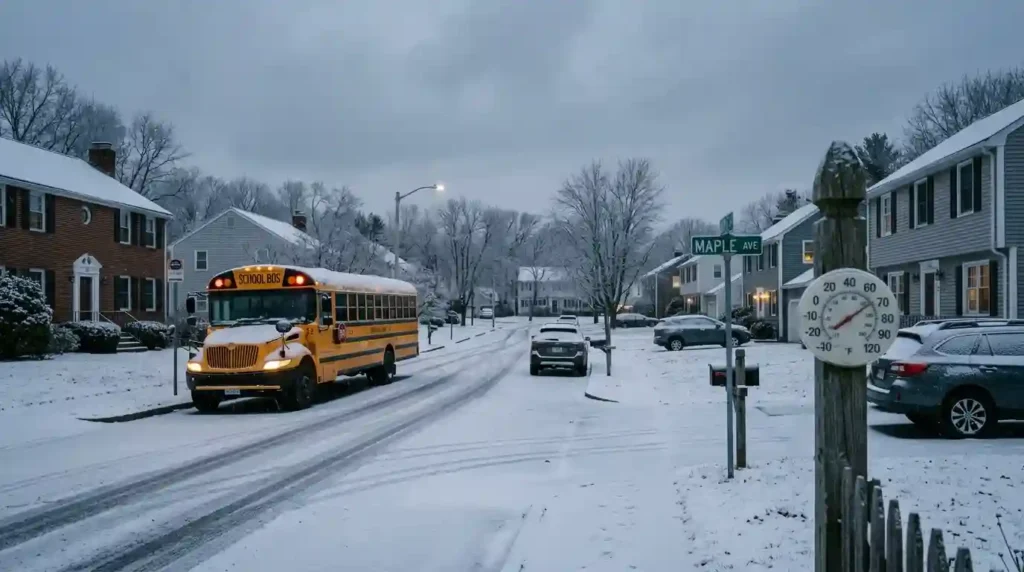
When officials evaluate winter weather, temperature isn’t viewed in isolation—it’s part of a broader risk equation. The most influential temperature-related factors include:
- Air temperature at ground level, typically measured at 32°F (0°C) or below, which determines whether precipitation falls as snow, sleet, or freezing rain.
- Overnight low temperatures, which affect whether roads refreeze after daytime melting.
- Wind chill index, which factors in wind speed to estimate how cold it actually “feels” and how quickly exposed skin can be affected.
- Dew point and humidity levels, which influence fog formation and visibility on roadways.
The Role of Wind Chill
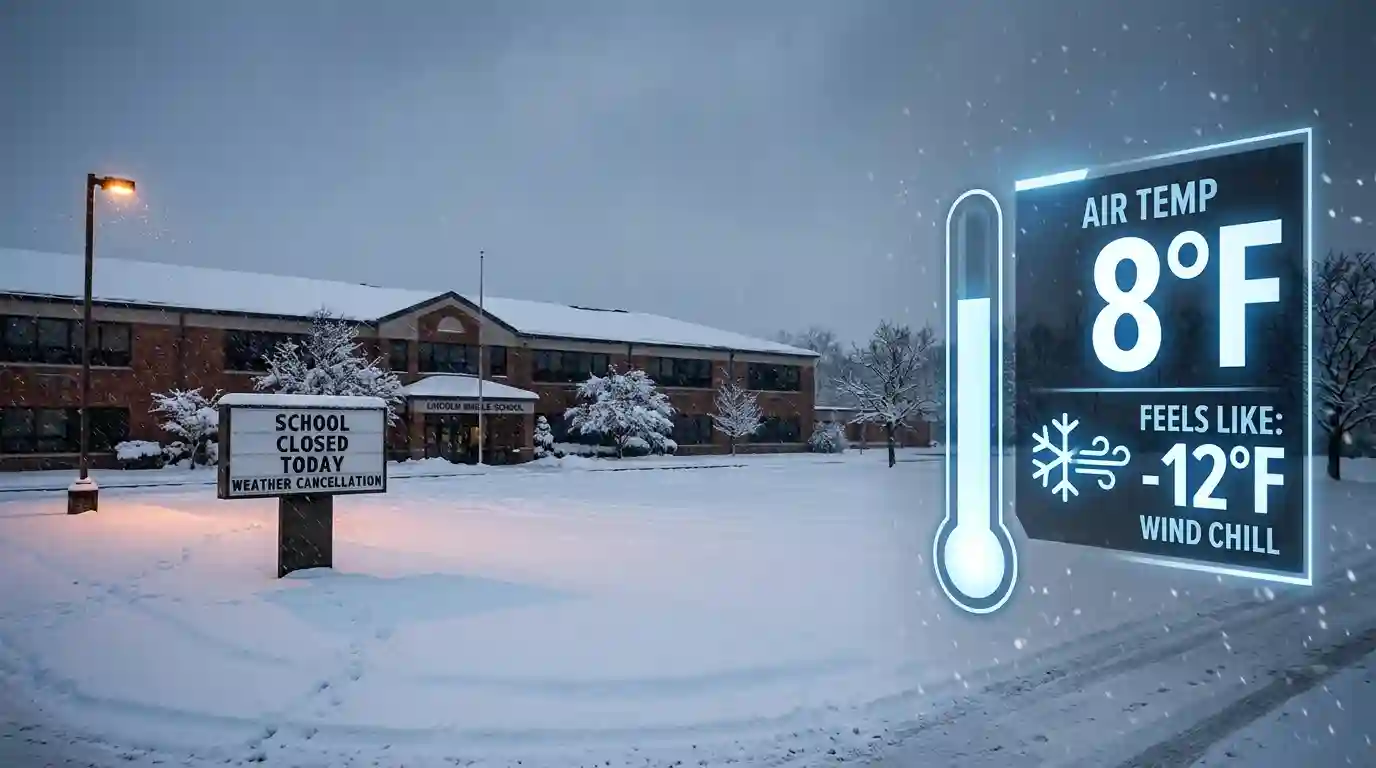
Wind chill is often the single biggest factor that pushes a “delay” decision into a full “closure.” The National Weather Service issues wind chill advisories and warnings based on specific thresholds—generally, a wind chill of -15°F to -24°F triggers an advisory, while values of -25°F or lower often prompt a warning. For school districts, a wind chill warning frequently means an automatic closure, since students standing at bus stops for even five to ten minutes could be at risk of frostbite.
According to the National Weather Service, exposed skin can experience frostbite in as little as 30 minutes when wind chill values drop to -19°F, and in just 10 minutes when wind chill reaches -53°F or lower. This data is a cornerstone for many districts’ cold-weather closure policies.
Ground Temperature vs Air Temperature
Many people assume that if the air temperature is above freezing, roads should be clear. However, ground and pavement temperatures often lag behind air temperature by several degrees, especially overnight. A road surface can remain at or below 32°F even when the air temperature reads 34°F or 35°F, leading to black ice formation—one of the most dangerous and unpredictable winter hazards. This is why transportation directors often send out scouts before dawn to physically drive routes and check for ice patches, regardless of what the thermometer says.

Snowfall Rate and Accumulation Thresholds
While this article focuses on temperature, it’s important to note that temperature and snowfall rate work together. Generally:
- 1-2 inches of snow with temperatures near freezing may only result in a delayed start.
- 3-6 inches combined with temperatures below 20°F often triggers full closures, as plowing becomes less effective and snow compacts into ice more quickly.
- Snowfall rates exceeding 1 inch per hour, paired with temperatures in the teens or single digits, almost always result in closures due to rapidly deteriorating visibility and road conditions.
The combination of cold temperatures and heavy snowfall creates a compounding effect: cold snow is drier and less likely to be cleared effectively by plows compared to wetter, warmer snow, which tends to clump and clear more easily but can also refreeze into dangerous ruts overnight.
The Decision-Making Process Behind Closures
Who Makes the Call?
Typically, school superintendents make the final decision, but they rely heavily on input from transportation directors, facilities managers, and local law enforcement or highway departments. Many districts also coordinate with neighboring districts to ensure consistency across a region, since families often have children attending different schools.
Timing of the Decision
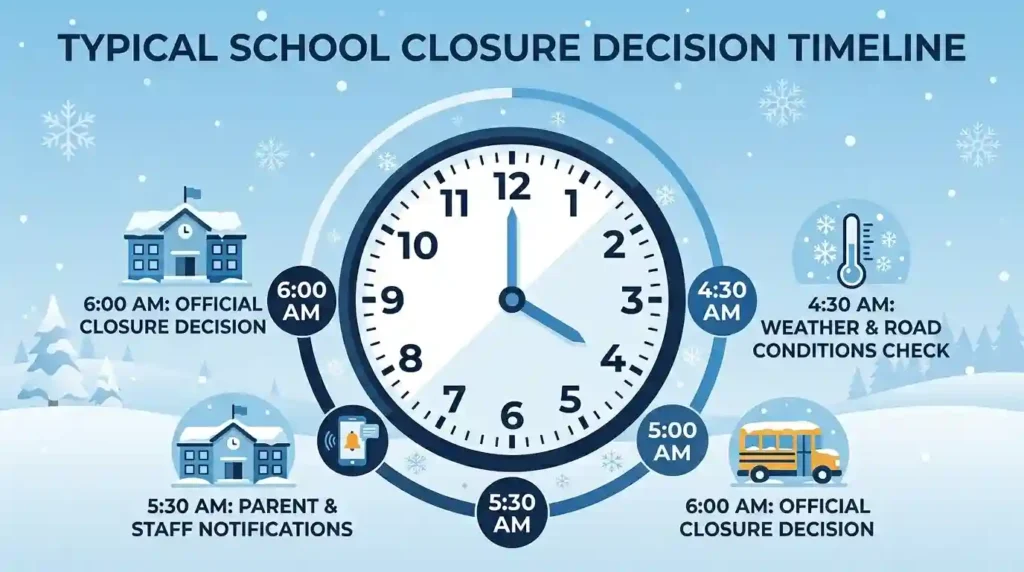
Most closure decisions are made between 4:30 AM and 6:00 AM, giving transportation staff time to assess overnight temperature drops and road conditions. This early-morning window is critical because temperatures often hit their lowest point just before sunrise—meaning a forecast that looked manageable at midnight can shift dramatically by 5 AM.
Regional Variations in Temperature Thresholds
What counts as “too cold” varies dramatically depending on geography. A school district in northern Minnesota may stay open at -10°F because students, families, and infrastructure are equipped for extreme cold—heated bus garages, insulated bus stops, and community familiarity with these conditions. Meanwhile, a district in the southern United States might close schools at temperatures as mild as 20°F, simply because roads, vehicles, and residents aren’t prepared to handle icy conditions safely.
This regional variation means that comparing snow day decisions across states or even neighboring counties can be misleading without understanding local infrastructure and historical norms.
Wind Chill, Ice, and Black Ice Risks
Beyond air temperature, the combination of moisture and cold creates secondary hazards that heavily influence closure decisions:
- Freezing rain and sleet, which occur when temperatures hover right around the freezing mark (30°F to 34°F), often create more dangerous conditions than snow itself.
- Refreeze cycles, where daytime melting is followed by overnight freezing, can turn slush into solid ice by morning.
- Bus stop safety, particularly for younger children who may wait outside for extended periods in extreme cold.
For families wanting to understand the difference between official alerts, it’s worth reading our detailed guide on Weather Watch vs a Weather Warning for Snow, which explains how these classifications directly influence school closure announcements.
How Temperature Triggers a Snow Day Decision for Remote Learning
In recent years, many districts have shifted from traditional “snow days” to remote learning days during extreme cold or heavy snowfall. This shift means temperature still plays a role, but the threshold may be different. Districts might choose remote learning over full closure when:
- Temperatures are dangerously cold (below -10°F wind chill) but roads themselves aren’t impassable.
- Power outages aren’t a widespread concern, allowing students to access devices and internet at home.
- The district wants to preserve instructional days without risking transportation safety.
This hybrid approach has become increasingly common, particularly in regions that experienced learning loss during extended traditional snow day closures.

Using Predictive Tools to Plan Ahead
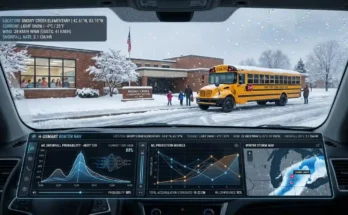
Given how many variables go into a snow day decision—temperature, wind chill, snowfall rate, timing, and regional norms—predicting closures with certainty can feel impossible. However, predictive tools that analyze historical weather patterns, current forecasts, and district-specific closure history can give families a reasonable estimate of closure likelihood.
For parents and students who want a head start on planning, using a Snow Day Free Prediction Tool can help estimate the probability of a closure based on local forecast data, helping families prepare childcare arrangements or adjust schedules the night before rather than scrambling at 5 AM.
Tips for Parents and Students During Cold Snaps
- Keep an emergency kit in vehicles, including blankets, gloves, and a phone charger.
- Dress children in layers, even for short waits at bus stops.
- Sign up for district notification systems (text, email, app alerts) to receive closure announcements as early as possible.
- Have a backup childcare plan ready for unexpected closures, especially during multi-day cold events.
Conclusion
Temperature Triggers a Snow Day Decision through a complex interplay of air temperature, wind chill, ground conditions, and timing—not through any single magic number. While freezing temperatures (32°F and below) set the stage for snow and ice formation, it’s often the wind chill, overnight refreeze, and road surface conditions that ultimately determine whether buses run, schools open, or districts shift to remote learning. Understanding these factors helps families anticipate decisions rather than be caught off guard, and using predictive tools can add another layer of preparation to winter mornings.
FAQs
Q1: At what temperature do schools usually close?
There’s no universal number, but many districts begin considering closures when wind chill drops below -15°F to -20°F, or when overnight temperatures cause significant road refreeze combined with snow or ice accumulation.
Q2: Does wind chill matter more than air temperature for snow days?
In many cases, yes. Wind chill determines how quickly exposed skin can be affected and influences bus stop safety, often weighing more heavily than the actual air temperature reading.
Q3: Can schools close even if it’s above freezing?
Yes. Freezing rain or sleet can occur at temperatures between 30°F and 34°F, creating extremely hazardous road conditions despite air temperatures being above the freezing point.
Q4: Why do some districts stay open during extreme cold while others close?
Regional infrastructure, historical norms, and community preparedness play major roles. Areas accustomed to extreme cold often have better-equipped buses, heated facilities, and residents familiar with safe winter practices.
Q5: How early are snow day decisions usually announced?
Most decisions are finalized between 4:30 AM and 6:00 AM, as overnight temperature drops and early-morning road conditions are critical to the final call.