Summary
Every winter, parents and students wait anxiously for that one notification: school is closed tomorrow. But have you ever wondered why Schools Announce Snow Days the Night Before instead of waiting until early morning? This article explores the science, logistics, and decision-making process behind early snow day announcements, helping parents, students, and educators understand exactly how and why these calls are made — and how you can use tools like a Snow day Estimator to predict closures yourself.
Table of Contents
- Introduction: The Mystery Behind Snow Day Announcements
- How Schools Announce Snow Days the Night Before
- The Role of Weather Forecasting in Early Decisions
- Who Makes the Final Call?
- Why Timing Matters: Night-Before vs. Morning-Of Decisions
- The Logistics Behind School Closures
- How Parents and Students Can Prepare in Advance
- Why Schools Announce Snow Days the Night Before — A Deeper Look at Communication Systems
- The Role of Technology and Snow Day Predictors
- Conclusion
- FAQs
Introduction: The Mystery Behind Snow Day Announcements
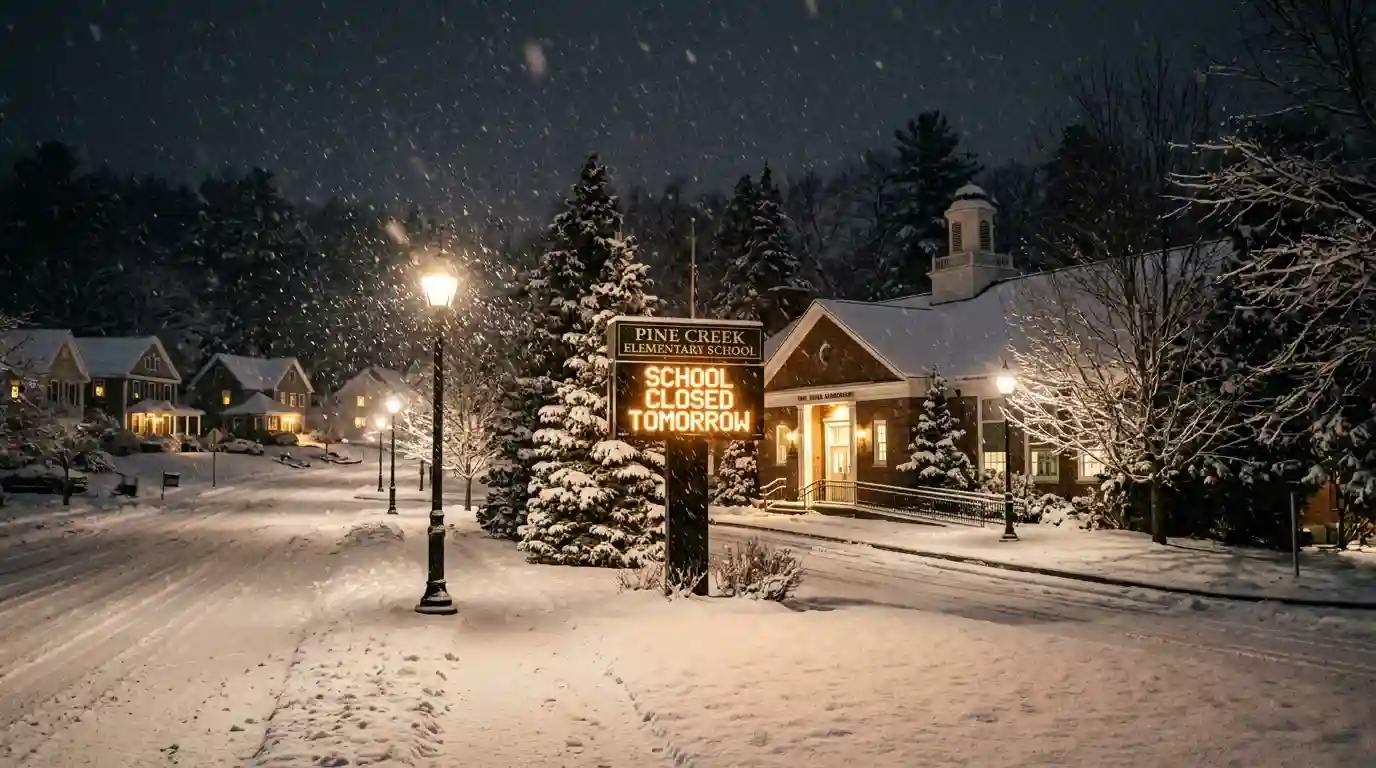
For many students, few things bring as much excitement as the possibility of a snow day. The night before a major winter storm, families across the country check their phones, scroll through local news, and refresh school district websites — all hoping for that one message: “School is closed tomorrow due to inclement weather.”
But why do districts often make this call the evening before, sometimes hours before the snow even begins to fall? The answer lies in a complex mix of meteorology, transportation logistics, staffing requirements, and communication strategy.

How Schools Announce Snow Days the Night Before
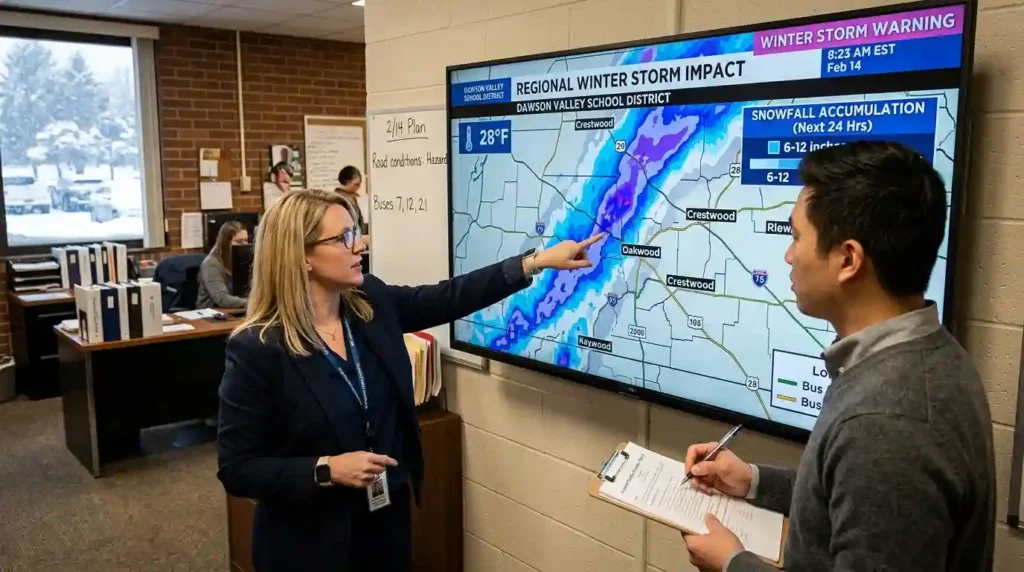
When schools announce snow days the night before, it’s rarely a spontaneous decision. School administrators, transportation directors, and superintendents work together with local weather services to evaluate incoming storm data. They look at snowfall accumulation predictions, ice forecasts, wind chill warnings, and road condition reports from the Department of Transportation.
Once enough data points toward a dangerous commute or unsafe walking conditions, the decision-making team often chooses to announce closures early — typically between 6 PM and 10 PM — to give families ample time to adjust their plans.
This proactive approach helps:
- Parents arrange childcare or work-from-home schedules
- Bus drivers and staff avoid unnecessary early morning commutes
- Students get a full night’s rest instead of waking up to uncertainty
The Role of Weather Forecasting in Early Decisions
Modern weather forecasting has become remarkably accurate, especially for short-term predictions (12–24 hours out). School districts often rely on the National Weather Service (NWS) for localized storm tracking, snowfall totals, and timing of precipitation.
According to the National Weather Service, winter storm warnings and advisories are typically issued 12 to 36 hours before a storm’s expected arrival — giving school officials a reliable window to make early decisions.
By using this data, districts can identify storms that are likely to bring:
- Heavy snowfall accumulation (typically 4+ inches)
- Freezing rain or black ice formation
- Dangerous wind chills below safe outdoor thresholds
- Poor visibility due to blowing snow
Who Makes the Final Call?
The decision to close school isn’t made by one person alone. Typically, a small team is responsible, including:
The Superintendent
The superintendent usually has the final authority, but they rely heavily on input from other departments.
Transportation Director
Since buses travel early in the morning, often before sunrise, the transportation director assesses road conditions on actual bus routes — not just highways.
Facilities and Maintenance Team
This team evaluates whether parking lots, walkways, and building entrances can be cleared and salted in time for student arrival.
Local Emergency Management
Some districts coordinate with city or county emergency management offices, especially during major winter storms or blizzard warnings.
Why Timing Matters: Night-Before vs. Morning-Of Decisions
While some districts wait until early morning (4–5 AM) to make a final call, many prefer announcing the night before — especially when forecasts show a high probability of a significant snow event.
Benefits of Night-Before Announcements
- Reduces last-minute chaos for working parents
- Improves safety by keeping families off icy roads during early morning hours
- Allows staff to rest instead of waking up at 4 AM only to find school is canceled
- Builds trust with the community through proactive communication
When Morning-Of Decisions Are Necessary
Sometimes, storms are unpredictable, and districts must wait until early morning to assess actual road conditions. This is common when:
- Snowfall timing is uncertain
- The storm is expected to be light to moderate
- Temperatures are borderline for ice formation
The Logistics Behind School Closures
Beyond weather, school closures involve significant logistical planning. Districts must consider:
Bus Route Safety
Rural and suburban districts often have hilly or winding roads that become hazardous quickly. Even a light dusting of snow can make these routes unsafe.
Staff Availability
Teachers, custodians, and cafeteria staff need time to arrange alternate transportation or childcare if schools remain open.
Building Readiness
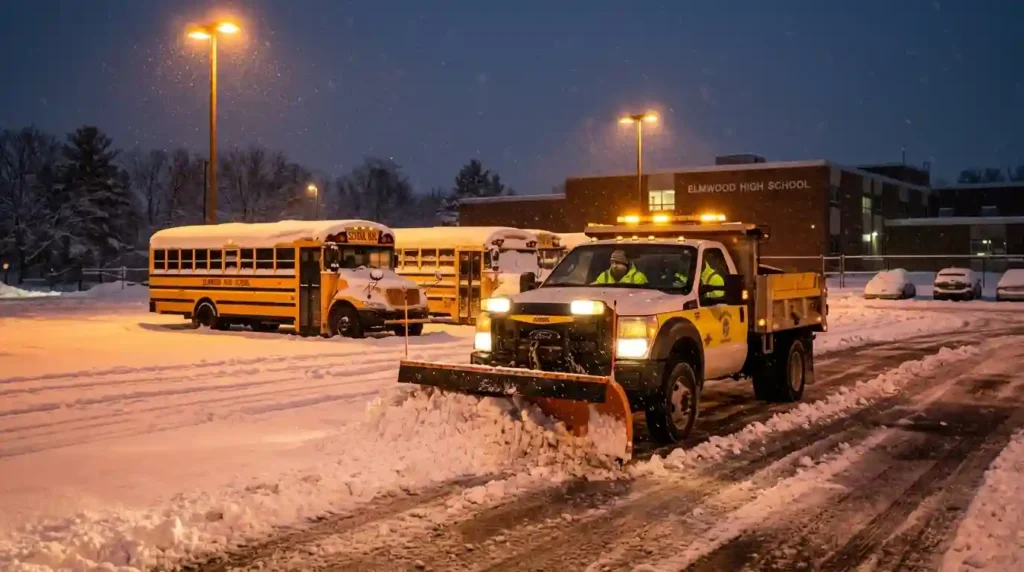
Maintenance crews need hours — sometimes overnight — to plow parking lots, salt walkways, and ensure heating systems are functioning properly.
State Attendance Requirements
Many states have minimum instructional day requirements, so districts must balance safety with academic calendars, often building “snow days” into their yearly schedules in advance.
How Parents and Students Can Prepare in Advance
Even though the final decision rests with school officials, families can take proactive steps to prepare for potential closures.
Stay Informed
Sign up for district text alerts, follow local news stations, and check school websites regularly during winter months.
Have a Backup Plan
Arrange backup childcare options in advance, especially for working parents who may need coverage on short notice.
Stock Up on Essentials
Keep pantry staples, batteries, and warm clothing ready in case of extended closures due to multi-day storms.
For more detailed guidance, check out this helpful resource: Ways to Prepare for an Unexpected Snow Day, which covers everything from emergency kits to keeping kids entertained during unexpected breaks.
Why Schools Announce Snow Days the Night Before — A Deeper Look at Communication Systems
Modern school districts use multi-channel communication systems to ensure announcements reach families quickly and reliably. These systems often include:
- Automated phone calls (robocalls)
- Text message alerts
- Email notifications
- Social media posts (Facebook, Twitter/X, Instagram)
- District website banners
- Local TV and radio station crawls
By announcing the night before, districts can stagger these communications, ensuring even families without instant notifications (like those relying on local news) have time to see the announcement before bedtime.
This also reduces the burden on customer service lines and front office staff the next morning, who would otherwise be flooded with calls from confused parents.

The Role of Technology and Snow Day Predictors
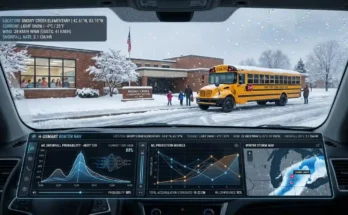
With advancements in predictive technology, many parents and students now turn to online tools to estimate the likelihood of school closures before official announcements are made.
These tools analyze:
- Current and forecasted snowfall totals
- Regional school closure history
- Temperature trends and wind chill factors
- District-specific closure patterns
If you’re curious about the probability of a snow day before your district makes an announcement, try using our Snow day Estimator — a fun and informative tool that uses weather data and historical trends to predict the likelihood of school closures in your area.
While these predictors aren’t official, they add an extra layer of excitement and preparation for families during winter weather season.

Conclusion
Understanding why schools announce snow days the night before helps families appreciate the careful planning and coordination that goes into every closure decision. From analyzing weather forecasts and assessing road conditions to coordinating multi-channel communication systems, school districts work diligently to balance student safety with educational continuity.
By staying informed, preparing in advance, and even using tools like the Snow day Estimator, families can navigate winter weather season with confidence and a little extra excitement — because let’s face it, there’s nothing quite like waking up to the news that school is canceled.
FAQs
1. Why don’t all schools announce snow days the night before?
Some districts prefer to wait until early morning when storm timing is uncertain, allowing them to assess actual road conditions before making a final decision.
2. How accurate are night-before snow day announcements?
Thanks to improved 12–24 hour weather forecasting, night-before announcements are generally quite reliable, especially for major storms with clear timing.
3. What factors influence a school’s decision to close?
Snowfall accumulation, ice formation, wind chill, road conditions, and staff/bus driver availability all play a role in closure decisions.
4. Can I predict if my school will close before the official announcement?
Yes! Tools like the Snow day Estimator analyze weather patterns and historical data to give you an idea of closure probability.
5. Do all schools follow the same snow day policy?
No, policies vary by district, state requirements, geographic location, and local infrastructure capabilities.