Summary
Parents in Cold Climates Do Differently because winter is not just a season for them. It affects school schedules, morning routines, transportation, clothing choices, home safety, food planning, and even how children spend time outdoors. In colder regions, parents prepare early because snowstorms, icy roads, power outages, frozen pipes, and sudden school closures can disrupt family life quickly. They do not wait until the first heavy snowfall to buy boots, check weather alerts, or plan childcare. They build systems before winter becomes difficult.
This guide explains what parents in snowy, freezing, and storm-prone climates do differently to protect their children, reduce stress, and keep daily life moving during harsh weather. It covers clothing layers, school planning, home preparation, winter driving, snow day routines, emergency supplies, child health, outdoor safety, and practical family habits that make cold seasons easier to manage.
Table of Content
- What Parents in Cold Climates Do Differently Before Winter Starts
- Why Parents in Cold Climates Do Differently With School Planning
- How Winter Changes Daily Family Routines
- Clothing Systems Cold-Climate Parents Use
- Home Preparation Before Snow and Freezing Weather
- How Parents Prepare for Snow Days and School Closures
- Winter Travel, Car Safety, and Commute Planning
- Food, Medicine, and Emergency Supplies
- Outdoor Play, Screen Time, and Indoor Activities
- Health, Sleep, and Emotional Readiness in Winter
- Mistakes New Cold-Climate Parents Often Make
- Conclusion
- FAQs
What Parents in Cold Climates Do Differently Before Winter Starts
Parents who live in cold climates usually begin winter preparation before winter officially arrives. This is one of the biggest differences between families in mild weather areas and families in places with snow, ice, and long freezing seasons.
In colder regions, waiting too long can create real problems. Winter coats sell out. Snow boots become harder to find in the right sizes. School buses may face delays. Roads can become unsafe overnight. A mild morning can turn into freezing rain by afternoon. Parents understand that preparation is not only about comfort. It is about keeping children safe and keeping the household organized.
Many cold-climate parents start checking winter gear in early fall. They look at last year’s coats, gloves, hats, thermal socks, and boots. Children grow quickly, so last season’s clothes may no longer fit. Parents also test zippers, check for holes in gloves, and make sure boots are waterproof.
They also think beyond clothing. They prepare cars, homes, calendars, school routines, and backup childcare plans. Winter affects every part of family life, so preparation has to be wider than simply buying warm jackets.
They Prepare Before the First Storm
Experienced parents know that the first big snowfall often exposes every weak point in a family routine. Missing gloves, wet boots, no windshield scraper, empty pantry, late school alerts, and unplanned childcare can all become stressful on the same day.
That is why parents in cold climates often prepare in layers:
- Clothing preparation
- School communication setup
- Home heating checks
- Car safety checks
- Food and medicine stock
- Snow day planning
- Childcare backup
- Weather alert setup
This early planning gives families more control when winter weather becomes unpredictable.
Why Parents in Cold Climates Do Differently With School Planning
School planning looks very different in cold climates. Parents cannot assume that every school day will happen on schedule. Snow, ice, freezing rain, wind chill, road conditions, bus delays, and power outages can all affect whether schools open, close, delay, or switch to remote learning.
Parents in cold regions often monitor school communication more carefully than parents in warmer areas. They sign up for text alerts, email updates, district apps, bus notifications, and local weather alerts. They also learn how their district usually makes closure decisions.
This is where school timing becomes a major issue. Parents often need closure decisions early because work schedules, childcare, transportation, and meals depend on it. Schools, however, may wait until early morning to evaluate road conditions and weather changes. This difference can create frustration, especially for working parents.
For a deeper look at this issue, read Why Parents and Schools Disagree on Snow Day Timing.
They Track Weather Like Part of the School Calendar
Parents in snowy areas often check the forecast the same way other families check homework folders. They look at overnight snow predictions, wind chill, ice warnings, and morning commute conditions.
They may also use tools like the Snow Day Calculator to estimate the chance of school closures. While no tool can guarantee a school decision, it can help parents think ahead and prepare for possible schedule changes.
Cold-climate parents usually ask practical questions before bed:
- Will school start on time tomorrow?
- Are buses likely to be delayed?
- Should lunches still be packed?
- Do the kids need snow pants for recess?
- Is there a backup plan if school closes?
- Can one parent work from home?
- Who can watch the children if both parents must work?
This planning prevents panic in the morning.
They Keep a Snow Day Plan Ready
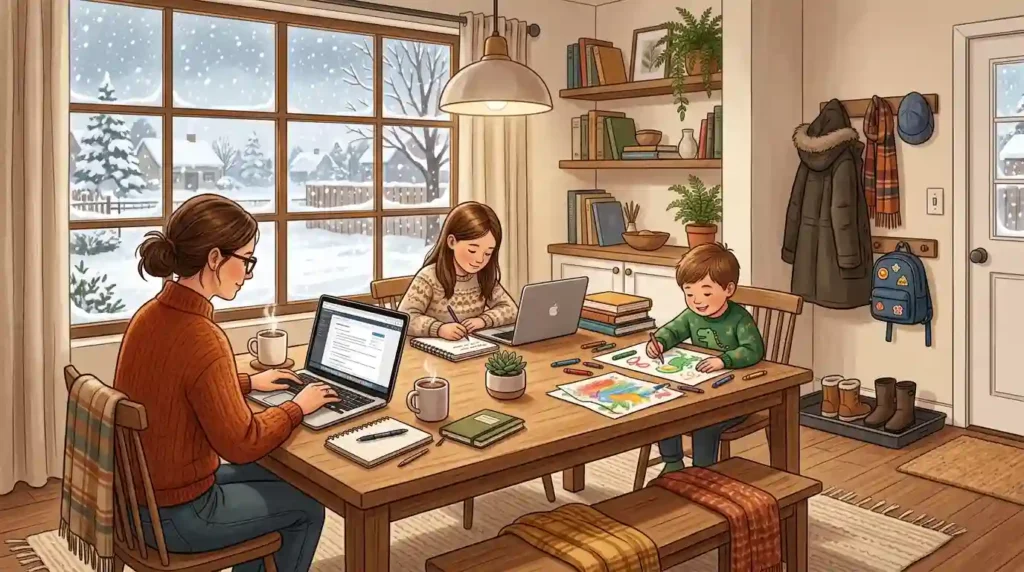
A snow day sounds fun for children, but it can be complicated for parents. Work meetings, deadlines, younger siblings, meals, screen time, and outdoor safety all need attention.
Parents in cold climates often create a basic snow day plan before they need it. It may include indoor activities, quick meals, outdoor play rules, backup childcare, and quiet time for remote work.
A snow day plan does not have to be perfect. It only needs to reduce confusion.
How Winter Changes Daily Family Routines
In cold climates, winter adds extra steps to almost every routine. Morning preparation takes longer. Bedtime may include checking wet gloves, drying boots, and charging devices in case of power outages. Weekend plans depend on road conditions. Even a simple trip to the store can require extra clothing and travel time.
Parents learn to build margin into the day. They do not schedule winter mornings too tightly because children need time to dress in layers, find gloves, put on boots, and get safely to the bus stop or car.
Mornings Start Earlier
Cold-weather mornings can be slow. Children may resist bulky clothes. Boots may be wet from the day before. Cars may need defrosting. Driveways may need shoveling. Sidewalks may be icy.
Parents who are used to cold climates often wake up earlier during winter. They check the weather, look for school alerts, warm up the car if needed, and give children more time to get ready.
A winter morning routine may include:
- Checking school status
- Reviewing the day’s temperature
- Choosing proper layers
- Packing gloves and backup socks
- Preparing hot breakfast
- Clearing snow from the car
- Leaving extra commute time
These steps become normal parts of family life.
Evening Routines Become More Practical
Evenings matter because they prepare the family for the next cold morning. Parents often dry gloves, place boots near heat-safe drying areas, refill water bottles, pack lunches, and lay out winter clothing.
They also check whether snow is expected overnight. If a storm is likely, they may charge phones, prepare flashlights, set out shovels, and confirm backup plans.
Winter parenting is often less stressful when the evening routine is strong.
Clothing Systems Cold-Climate Parents Use
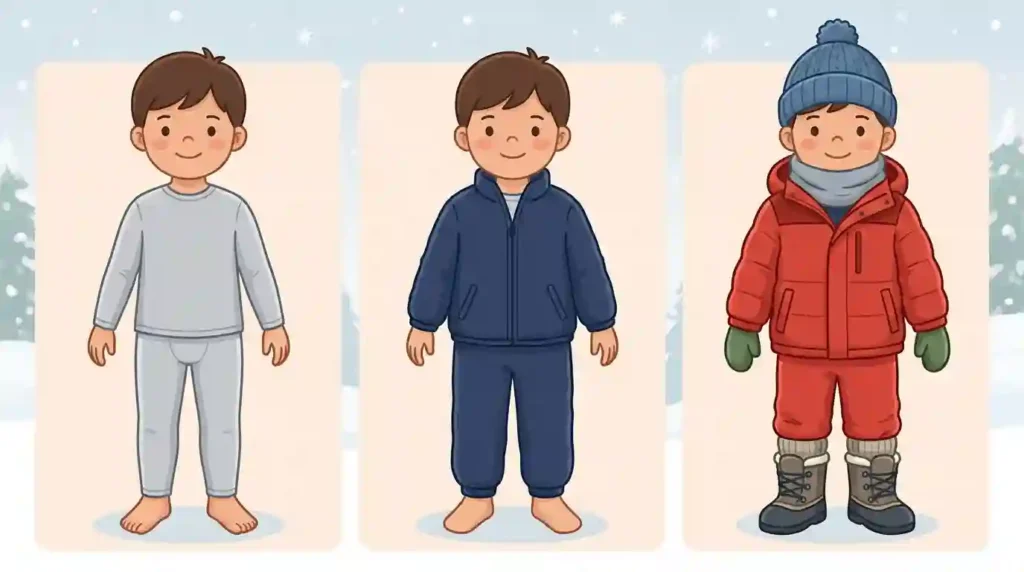
One major thing parents in cold climates do differently is treat winter clothing as a system, not a single outfit. A warm coat alone is not enough if a child has thin socks, wet gloves, or no face covering.
Cold-climate parents learn the importance of layering. Layers keep children warmer because they trap body heat and allow adjustments when children move between indoor and outdoor spaces.
The Three-Layer Rule
Many parents use a simple three-layer approach:
Base layer:
This sits close to the skin and helps keep the body dry. Thermal shirts, leggings, and moisture-wicking fabrics are common choices.
Middle layer:
This adds insulation. Fleece sweaters, wool jumpers, hoodies, or insulated tops are often used.
Outer layer:
This protects against snow, wind, and moisture. Waterproof or water-resistant coats and snow pants are important for outdoor play.
The goal is not to dress children in the thickest possible clothing. The goal is to keep them warm, dry, and able to move.
Parents Prioritize Dryness
In cold climates, wet clothing is a serious problem. Wet socks, damp gloves, and soaked boots can make children cold quickly. Parents often send extra socks and gloves to school because children may get wet during recess or while walking through snow.
Waterproof boots are often more useful than stylish boots. Mittens are often warmer than gloves for younger children because fingers stay together and hold heat better.
Labels Matter
Cold-climate parents often label everything. Hats, mittens, snow pants, scarves, and boots can easily get lost at school. Since many children have similar winter gear, labels save time and money.
A simple name label can prevent a child from coming home without gloves during freezing weather.
Home Preparation Before Snow and Freezing Weather
Parents in cold climates prepare the home before winter becomes severe. A warm home is not only about comfort. It is part of family safety.
Cold weather can bring frozen pipes, power outages, blocked driveways, icy steps, and heating problems. Families with children need to be ready because even a short disruption can affect meals, sleep, schoolwork, and health.
The CDC recommends preparing for winter storms by planning ahead, gathering supplies, and getting the home and car ready. You can review the official guidance here: CDC winter storm preparation guidance.
Heating Systems Are Checked Early
Parents often schedule furnace, boiler, fireplace, or heat pump checks before winter. They replace filters, test thermostats, and make sure vents are not blocked.
A heating problem during mild weather is inconvenient. A heating problem during freezing weather can become urgent, especially with babies, young children, elderly relatives, or anyone with health concerns at home.
Pipes and Drafts Get Attention
Frozen pipes are a common winter worry. Parents may insulate exposed pipes, keep cabinet doors open during extreme cold, and let faucets drip when advised by local guidance.
They also check windows and doors for drafts. Weather stripping, draft stoppers, heavy curtains, and basic insulation can help keep rooms warmer.
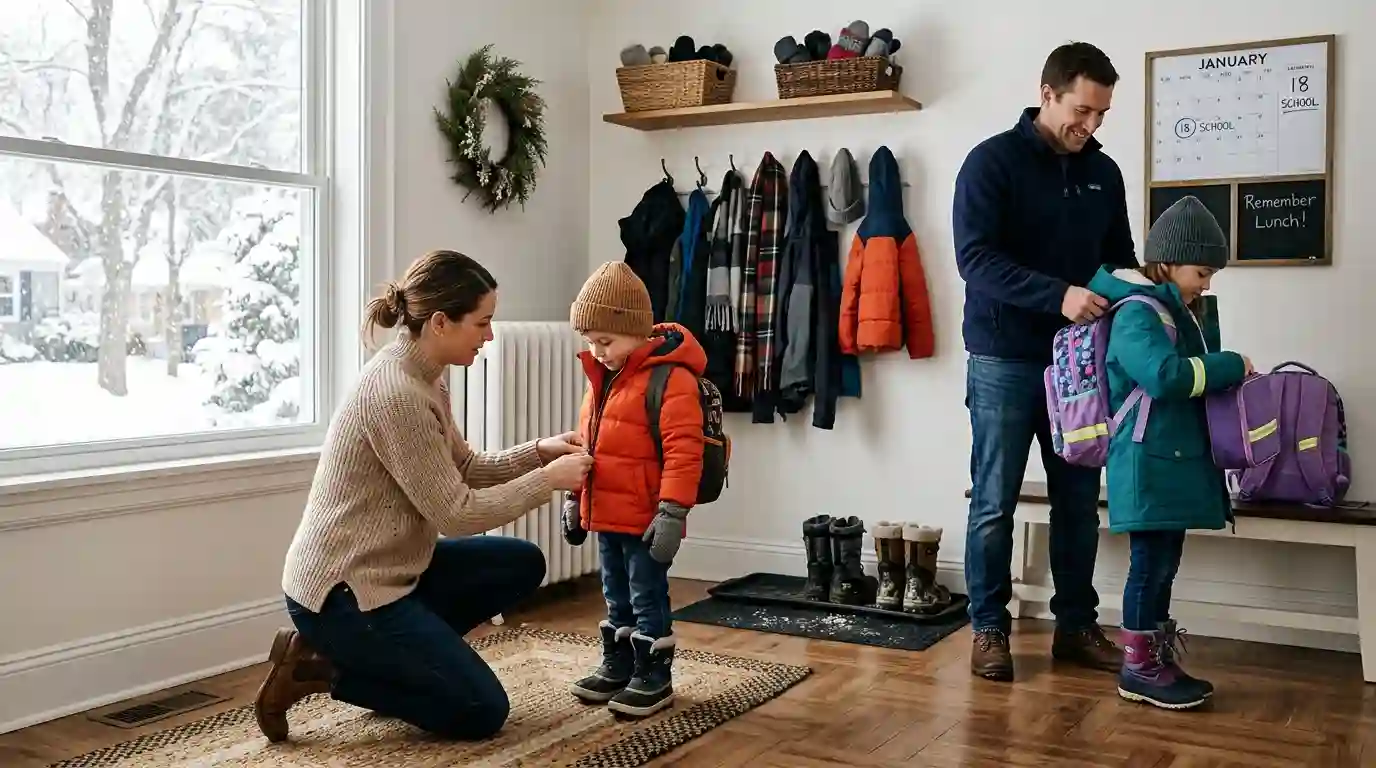
Entryways Become Winter Stations
In cold climates, the entryway often becomes a family command center. Parents create a place for boots, coats, wet gloves, backpacks, and snow gear.
A useful winter entryway may include:
- Boot trays
- Hooks at child height
- Baskets for gloves and hats
- A drying rack
- Extra socks
- Towels for wet floors
- A small bin for school papers
This reduces clutter and helps children become more independent.
Snow and Ice Supplies Are Ready
Parents often keep snow shovels, ice melt, sand, and windshield scrapers ready before the first storm. They also check outdoor lighting because winter mornings and evenings are darker.
Safe steps and walkways matter because children may be carrying backpacks, lunch bags, sports gear, or instruments while walking on icy surfaces.
How Parents Prepare for Snow Days and School Closures
Snow days are one of the biggest differences between parenting in cold climates and parenting in mild climates. Children may see a snow day as a surprise holiday, but parents often see it as a scheduling challenge.
The best-prepared parents do not wait for the closure message. They plan for the possibility before the storm arrives.
They Prepare Work and Childcare Backup
Working parents often need a clear plan for school closures. This may include remote work, flexible hours, help from relatives, babysitters, neighbors, or shared childcare with another family.
Some parents prepare a “snow day work plan” with low-focus tasks, early meetings moved if possible, and a quiet activity box for children.
The goal is not to make the day perfect. The goal is to make it manageable.
They Keep Children Busy Without Losing the Whole Day
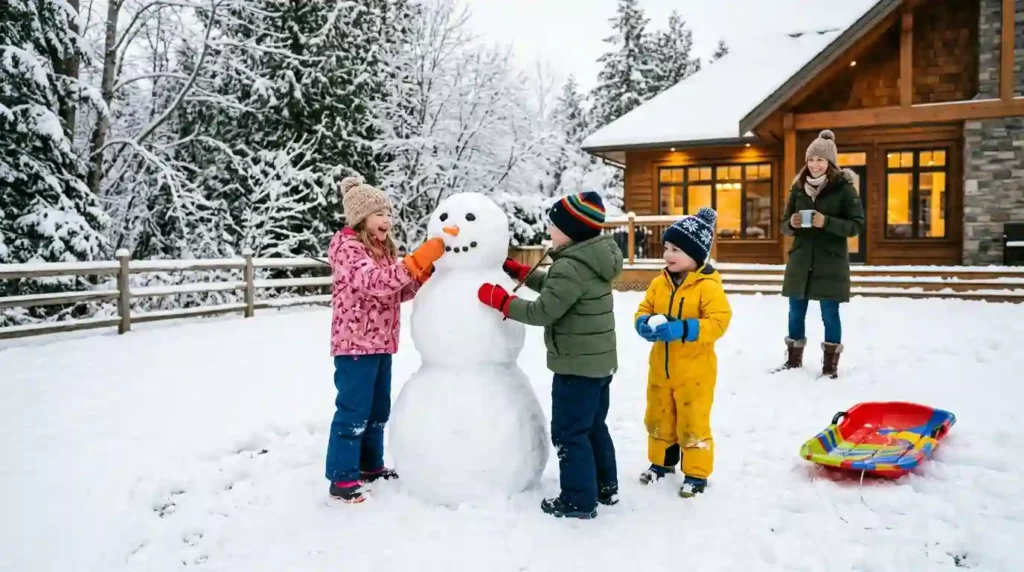
Cold-climate parents often prepare a mix of indoor and outdoor activities. A snow day may include sledding, snowman building, reading, puzzles, baking, crafts, board games, and limited screen time.
They may divide the day into simple blocks:
- Breakfast and morning cleanup
- Outdoor snow play
- Warm drinks and dry clothes
- Reading or quiet time
- Lunch
- Creative activity
- Screen time
- Homework or school packet
- Family dinner
Children usually do better when the day has some structure.
They Plan for Remote Learning
Some schools now use remote learning days instead of traditional snow days. Parents in cold climates often keep devices charged, know school login details, and make sure children have a quiet learning space.
This is especially important during long storms when schools may close for more than one day.
Winter Travel, Car Safety, and Commute Planning
Parents in cold climates treat winter travel seriously. Roads can become dangerous because of snow, ice, low visibility, and sudden weather changes. Even short trips can take longer than expected.
Parents often prepare their vehicles before winter starts. They check tires, brakes, wipers, washer fluid, battery health, and emergency supplies. They also learn to leave earlier and drive more slowly.
The Car Becomes a Safety Space
A winter car kit is common in cold-weather regions. Parents may keep blankets, gloves, snacks, water, a flashlight, jumper cables, a small shovel, ice scraper, phone charger, and basic first aid supplies in the car.
Ready.gov recommends keeping an emergency supply kit in the car with items such as jumper cables, sand, a flashlight, warm clothes, blankets, bottled water, and non-perishable snacks.
For families, the kit may also include:
- Diapers and wipes
- Formula or toddler snacks
- Extra socks
- Hand warmers
- A spare hat
- Child medication
- A small toy or book
- Tissues
- Plastic bags for wet items
These supplies matter if traffic stops, a car gets stuck, or a trip takes longer than planned.
Parents Avoid Unnecessary Trips
Cold-climate parents are often more willing to cancel plans when roads are unsafe. They know that a birthday party, shopping trip, or practice session may not be worth the risk during freezing rain or heavy snow.
They also check whether schools, sports clubs, tutoring centers, and daycare centers are closing early.
Bus Stops Need Planning Too
Children who ride school buses need warm clothing because delays can happen. Parents often check bus apps, wait with younger children, or arrange a safe indoor waiting option when possible.
A child standing at a bus stop in freezing wind needs more than a coat. They need warm boots, gloves, a hat, and sometimes a face covering.
Food, Medicine, and Emergency Supplies
Parents in cold climates often keep a better-stocked home during winter. This does not mean panic buying. It means keeping enough basics to get through a storm, power outage, or unsafe travel day.
Pantry Planning Becomes Practical
Families may keep extra shelf-stable foods, bottled water, baby formula, pet food, and easy meals. Parents also think about foods children will actually eat.
Useful winter pantry items may include:
- Soup
- Pasta
- Rice
- Oatmeal
- Canned beans
- Nut butter
- Crackers
- Shelf-stable milk
- Hot chocolate
- Tea
- Granola bars
- Baby food
- Applesauce
- Canned fruit
If roads are icy or schools are closed, having food at home reduces stress.
Medicine Is Checked Before Storms
Parents often check children’s medicine before winter storms. Fever reducers, prescription refills, inhalers, allergy medicine, thermometer batteries, and basic first aid supplies should be ready.
This is especially important for children with asthma, allergies, chronic conditions, or recurring winter illnesses.
Power Outage Supplies Matter
Winter power outages can be harder than summer outages because heat, lighting, cooking, and communication may all be affected.
Parents may prepare:
- Flashlights
- Batteries
- Portable chargers
- Battery-powered radio
- Extra blankets
- Warm sleepwear
- Non-electric meal options
- Emergency contact list
- Backup heat plan if safe and appropriate
Families should always follow local safety guidance for generators, fireplaces, and alternative heating. Unsafe heating methods can create carbon monoxide risks.
Outdoor Play, Screen Time, and Indoor Activities
Cold-climate parents usually do not keep children inside all winter. Outdoor play is important, but it needs rules and preparation.
Children can enjoy snow, sledding, skating, and winter walks when they are dressed properly and supervised. The key is knowing when it is safe and when it is too cold.
Outdoor Play Has Clear Rules
Parents often set rules before children go outside:
- Stay where adults can see you
- Come in if gloves or socks get wet
- Do not throw ice
- Stay away from roads and snowplows
- Avoid thin ice on ponds or lakes
- Take warm-up breaks
- Tell an adult if fingers, toes, or cheeks hurt
These rules help children enjoy winter without unnecessary risk.
Warm-Up Breaks Are Normal
In cold climates, outdoor play often happens in shorter sessions. Children may go outside, come in to warm up, change wet gloves, drink something warm, and then go back out.
Parents also watch for signs that children are too cold, such as shivering, pale skin, crying, numb fingers, or unusual tiredness.
Indoor Activity Plans Help Everyone
Long winters can feel tiring if children have nothing to do indoors. Parents in cold climates often keep puzzles, books, crafts, building toys, baking supplies, and board games ready.
Indoor movement also matters. Children may need dance breaks, hallway obstacle courses, yoga, stretching, or simple exercises to release energy.
Health, Sleep, and Emotional Readiness in Winter
Winter affects more than clothing and school schedules. It can also affect children’s sleep, mood, activity levels, and health.
Cold-climate parents often pay closer attention to routines because winter days can be short, dark, and physically tiring. Children may spend more time indoors, get less sunlight, and face more disruptions from school closures or illness.
Sleep Routines Stay Important
When snow days happen, bedtime can easily slide later. But children still need consistent sleep, especially during cold and flu season.
Parents often keep bedtime routines steady even when school is delayed or closed. This helps children return to normal schedules quickly.
Skin and Hydration Need Attention
Cold air outside and dry heated air indoors can affect children’s skin. Parents may use moisturizers, lip balm, humidifiers, and gentle soaps during winter.
Hydration is also important. Children may not feel as thirsty in cold weather, but they still need water.
Winter Mood Can Shift
Some children feel restless, bored, or low during long winters. Parents may plan regular outdoor time when safe, indoor movement, playdates, library visits, and family routines to keep children emotionally balanced.
A predictable winter rhythm can help children feel secure.
Mistakes New Cold-Climate Parents Often Make
Families who move from warmer areas to colder climates often underestimate winter. They may think a warm coat is enough, or they may wait until the first storm to prepare.
Here are common mistakes cold-climate parents learn to avoid.
Buying Fashion Boots Instead of Winter Boots
Many boots look warm but are not waterproof or insulated. Children need boots that can handle snow, slush, and freezing temperatures.
Forgetting Backup Gloves
Gloves get wet, lost, and left at school. Backup gloves are not extra. They are necessary.
Not Checking School Alerts Early
Parents who do not sign up for school alerts may miss delays, closures, or early dismissals.
Leaving Too Little Morning Time
Winter mornings require more time. Children need help dressing, cars may need clearing, and roads may be slower.
Ignoring Wind Chill
The temperature alone does not tell the whole story. Wind chill can make outdoor conditions feel much colder.
Waiting Too Long to Buy Gear
By the time the first major storm arrives, popular sizes in coats, boots, and gloves may be sold out.
Forgetting Car Supplies
A winter car kit can make a major difference during delays, breakdowns, or unexpected road closures.
What Parents in Cold Climates Do Differently With Children’s Independence
Another important difference is that parents in cold climates teach winter independence early. Children learn how to dress properly, manage wet gear, recognize unsafe cold, and follow snow rules.
This does not happen in one day. Parents teach it through daily routines.
Children Learn the Order of Winter Gear
Young children often need practice putting on snow pants, boots, coats, hats, and mittens. Parents may teach a simple order so children can get ready faster.
For example:
- Use the bathroom first
- Put on base layer if needed
- Put on snow pants
- Put on boots
- Zip coat
- Add hat
- Add neck warmer
- Put on mittens last
Mittens often go last because children need their hands to zip coats and adjust boots.
Children Learn to Speak Up
Parents teach children to say when they are cold, wet, numb, or uncomfortable. This is especially important for younger children who may keep playing even when their clothes are soaked.
Simple phrases help:
- “My socks are wet.”
- “My fingers hurt.”
- “I need a warm-up break.”
- “I lost my glove.”
- “My boots feel cold.”
These small communication habits help prevent bigger problems.
How Cold-Climate Parents Think About Community
Winter preparation is not only a private family task. In cold regions, neighbors, schools, local officials, and community groups often play a role.
Parents may know which neighbors can help shovel, which families can share childcare, which roads become icy, and which local pages post updates quickly.
They Build Local Information Networks
Parents often follow:
- School district alerts
- Local weather services
- City or county emergency pages
- Parent groups
- Road condition updates
- Daycare messages
- Utility company outage maps
This information helps families make better decisions during storms.
They Help Each Other
Cold climates often create a practical kind of community support. Parents may help each other with rides, shared snow day childcare, extra winter gear, or checking on families during power outages.
This support can be especially helpful for single parents, new families, elderly neighbors, and families with infants.
Winter Preparation Checklist for Parents
A simple checklist can help families stay ready without feeling overwhelmed.
Clothing Checklist
- Winter coat
- Snow pants
- Waterproof boots
- Warm socks
- Base layers
- Fleece or insulated middle layer
- Hat
- Mittens or gloves
- Neck warmer or scarf
- Backup gloves
- Backup socks
- Labels for school items
School Checklist
- Sign up for school alerts
- Save school closure page
- Know bus delay system
- Prepare remote learning login
- Keep backpack ready
- Pack winter recess gear
- Plan childcare backup
- Discuss snow day rules
Home Checklist
- Test heating system
- Replace filters
- Check windows and doors
- Prepare shovels
- Keep ice melt or sand
- Charge flashlights
- Stock batteries
- Keep blankets ready
- Protect pipes when needed
- Create entryway gear station
Car Checklist
- Check tires
- Check battery
- Fill washer fluid
- Keep gas tank reasonably full
- Add ice scraper
- Add blankets
- Add snacks and water
- Add flashlight
- Add jumper cables
- Add small shovel
- Add extra child supplies
Food and Medicine Checklist
- Shelf-stable food
- Easy meals
- Baby supplies
- Pet food
- Prescription refills
- Fever medicine
- Thermometer
- First aid kit
- Water
- Portable chargers
Conclusion
Parents in cold climates prepare differently because winter affects almost every part of family life. They plan before storms arrive, dress children in practical layers, watch school alerts closely, stock the home, prepare the car, and create backup routines for snow days.
The biggest lesson is simple: cold-weather parenting is easier when preparation happens early. Families do not need to be perfect or overprepared. They need systems that work when snow, ice, school closures, and freezing temperatures interrupt normal life.
Good winter preparation helps children stay warm, safe, confident, and calm. It also helps parents avoid last-minute stress. Whether a family is new to a snowy region or simply trying to become more organized, small habits can make the cold season much easier.
FAQs
1. What do parents in cold climates prepare first for winter?
Most parents start with winter clothing, including coats, boots, gloves, hats, snow pants, and warm socks. They also check school alerts, home heating, car safety, and pantry basics before the first major storm.
2. Why do parents in cold climates need a snow day plan?
A snow day can affect work, childcare, meals, transportation, and school assignments. A simple plan helps parents manage the day without confusion, especially when school closes suddenly.
3. How many clothing layers should children wear in cold weather?
Many parents use three layers: a base layer to keep skin dry, a middle layer for warmth, and an outer layer to block snow, wind, and moisture. The exact clothing depends on the temperature, wind chill, and activity.
4. What should parents keep in a winter car kit?
A winter car kit may include blankets, gloves, snacks, water, flashlight, batteries, jumper cables, phone charger, ice scraper, small shovel, first aid items, and extra child supplies like diapers or socks.
5. How do parents know if school might close because of snow?
Parents check school district alerts, weather forecasts, road conditions, local news, and school communication apps. They may also use a Snow Day Calculator to estimate possible closures.
6. What is the biggest mistake parents make in cold climates?
One common mistake is waiting too long to prepare. Winter gear, car supplies, home checks, and school backup plans should be ready before the first serious snow or ice event.
7. Are snow days only a problem for working parents?
No. Snow days can affect all families. Stay-at-home parents, remote workers, single parents, and families with young children all need food, activities, outdoor safety rules, and routine adjustments.
8. How can parents keep children active during long winters?
Parents can plan safe outdoor play, indoor movement games, crafts, reading, baking, puzzles, family walks, library visits, and structured screen time. A mix of physical and quiet activities works best.
9. Why is waterproof clothing important for children in snow?
Wet clothing makes children cold faster. Waterproof boots, snow pants, and gloves help children stay dry during recess, sledding, walking to school, and outdoor play.
10. How early should parents prepare for winter?
Many parents begin in early fall. This gives them time to check sizes, buy missing items, prepare the home, service the car, and create school closure plans before winter weather becomes serious.