Summary
Famous Snow Days in U.S. School History are more than just happy childhood memories. They are moments when powerful blizzards, lake-effect snow, wind chill, icy roads, and emergency school closure decisions changed daily life for millions of students, parents, teachers, and communities. From the deadly Children’s Blizzard of 1888 to modern school closures caused by massive winter storms, these events show why snow days are connected to safety, transportation, weather forecasting, and school planning.
Table of Content
- Why Famous Snow Days in U.S. School History Still Matter
- What Makes a Snow Day Historic?
- 10 Famous Snow Days in U.S. School History
- How Weather Forecasting Changed School Closures
- Why Wind Chill, Ice, and Timing Matter
- Lessons Schools Learned From Historic Snow Days
- Conclusion
- FAQs
10 Famous Snow Days in U.S. School History
Snow days are one of the most exciting words a student can hear during winter. A single announcement can turn an ordinary school morning into a day of sledding, hot chocolate, snowmen, and extra sleep. But behind every snow day is a serious decision involving student safety, road conditions, school buses, wind chill, snowfall totals, ice, visibility, and emergency planning.
Throughout American history, some snow days became much bigger than a simple day off. Certain winter storms forced entire cities to shut down, trapped students and teachers, closed schools for several days, delayed exams, changed academic calendars, and influenced how school districts respond to severe weather.
This article looks at 10 famous snow days in U.S. school history and explains why they still matter today. These events are not just about snowfall totals. They are about school closures, public safety, transportation challenges, weather warnings, and the way communities respond when winter weather becomes dangerous.
For families and students who want to estimate modern closure chances, tools like the Snow Day Calculator can help compare snowfall, temperature, wind, and local conditions before a school district makes an official decision.
Why Famous Snow Days in U.S. School History Still Matter
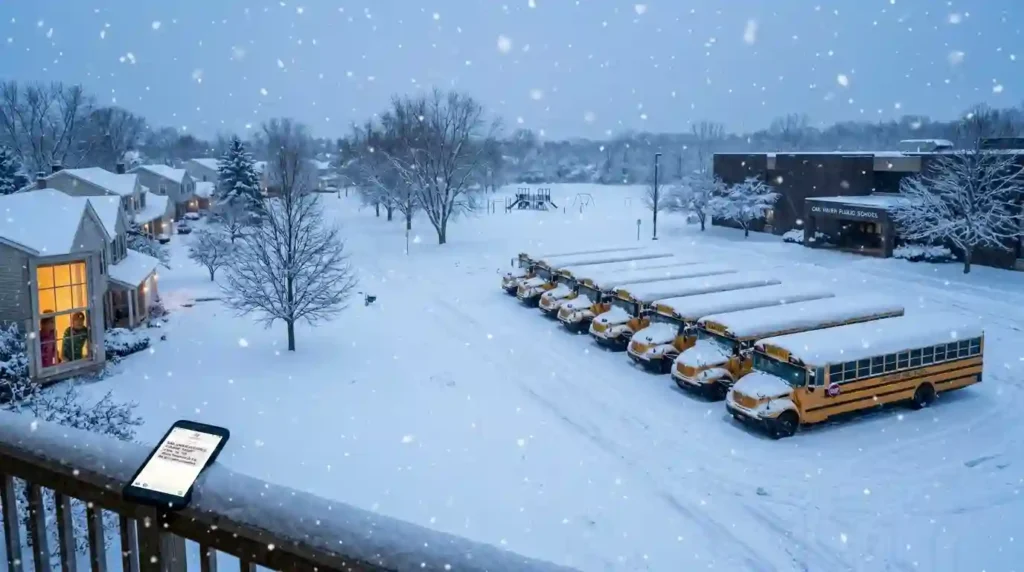
Famous snow days tell us how schools learned to protect students during extreme winter weather. In earlier decades, school closure decisions were often made with limited forecasting tools. Many families relied on radio announcements, newspaper updates, telephone chains, or local TV scrolls to know whether school was open.
Today, school districts use Doppler radar, National Weather Service alerts, road reports, bus route assessments, county emergency management updates, and communication platforms. But the main question remains the same: can students and staff travel safely?
A historic snow day usually becomes memorable because it includes one or more of these factors:
- Heavy snowfall in a short period
- Blizzard conditions and poor visibility
- Dangerous wind chill
- Ice-covered roads and sidewalks
- School bus transportation problems
- Power outages
- Extended school closures
- Make-up days added to the calendar
- Major regional disruption
Snow days are also emotional memories. Many adults remember waiting by the radio or television to hear their district name. For students, it felt like a surprise holiday. For parents, teachers, superintendents, and bus drivers, it was a safety challenge.
What Makes a Snow Day Historic?
A normal snow day may only affect one district. A historic snow day affects an entire city, region, or generation. These snow days become part of local memory because they interrupt everyday life on a large scale.
For example, a few inches of snow may not close schools in Buffalo, Minneapolis, or Denver because those areas are used to winter weather. But the same snowfall can close schools in Washington, D.C., Atlanta, Nashville, or parts of the Carolinas because road treatment, bus routes, and local driving conditions are different.
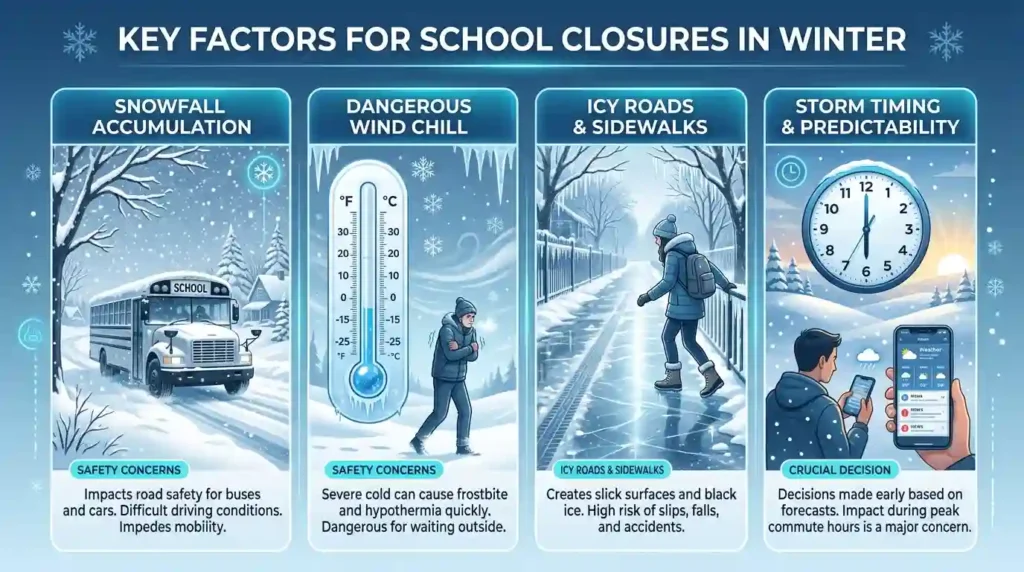
This is why snowfall alone does not decide school closures. Timing matters. A storm that starts at 4 a.m. can affect morning bus routes. A storm that begins during dismissal can create dangerous travel for students. Ice can be more disruptive than powdery snow. Wind chill can make outdoor waiting conditions unsafe, even when snowfall is low.
For a deeper explanation of how cold air affects school closures, read this related guide: Wind Chill Matters More Than Snowfall for School Closures.
10 Famous Snow Days in U.S. School History
1. The Children’s Blizzard of 1888
The Children’s Blizzard of January 12, 1888, is one of the most tragic school-related winter storms in American history. It affected the Northern Plains, including parts of Nebraska, Dakota Territory, Minnesota, and Iowa.
The storm became famous because it struck during the school day. The morning had seemed mild compared with the bitter winter weather before it. Many children went to school without heavy winter clothing. Then, conditions changed suddenly. Temperatures dropped, winds increased, and blinding snow created whiteout conditions.
Teachers in small prairie schoolhouses faced terrifying decisions. Should they keep children inside and risk running out of heat, or try to send them home through the storm? Some teachers became heroes for protecting their students. Others could not prevent tragedy because visibility and cold became deadly so quickly.
This snow day is remembered not as a fun school holiday but as a turning point in weather awareness, school safety, and winter preparedness. It showed how dangerous sudden temperature drops, wind, and poor communication could be for rural schools.
2. The Great Blizzard of 1888
The Great Blizzard of March 1888 struck the northeastern United States and became one of the most famous winter storms in American history. New York City, New England, and other parts of the East Coast were buried under massive snowfall and huge drifts.
Schools, businesses, railroads, streets, and communication systems were disrupted. In New York City, elevated trains stopped, telegraph lines failed, and many people were stranded. Although this storm is often discussed in terms of transportation and urban infrastructure, it also affected students, teachers, and school schedules across the region.
The Great Blizzard of 1888 helped cities understand the need for better emergency systems, underground utilities, improved public transportation planning, and more reliable weather communication. For school history, it represents an early example of how a major snowstorm could shut down urban education and daily life at the same time.
3. The Chicago Blizzard of 1967
The Chicago Blizzard of 1967 is one of the most famous snow days in Midwest school history. Chicago received a record-breaking amount of snow, and the city struggled to keep up with blocked roads, abandoned cars, stalled buses, and transportation chaos.
For students, this storm became unforgettable because many schools were affected by the rapid accumulation. Thousands of people were stranded across the city, and normal routines collapsed. Snow removal became extremely difficult because streets were filled with vehicles that could not move.
The storm showed how dangerous a major snow event can become in a dense urban area. School buses, public transit, teachers, and families all depend on roads being passable. When those roads fail, schools cannot operate safely.
This blizzard became a lesson for large city school systems: closing early or waiting too long can have major consequences.
4. The Great Blizzard of 1978
The Great Blizzard of 1978 affected the Ohio Valley and Great Lakes region and became one of the most legendary winter storms in U.S. school closure history. Ohio, Indiana, Kentucky, Michigan, and nearby areas experienced heavy snow, intense winds, deep drifts, and dangerous travel conditions.
Many schools closed before the worst of the storm hit, which helped prevent children from being stranded at school or on buses. In some areas, schools remained closed for several days because roads were blocked and cleanup was slow.
This storm is remembered not only for snowfall but also for wind. Blizzard conditions can make a moderate snowfall much more dangerous by reducing visibility and creating deep drifts. The Great Blizzard of 1978 proved that wind speed, road closures, and emergency access are just as important as snow depth.
For school districts, the 1978 blizzard became a powerful reminder that early closure decisions can save lives.
5. The Presidents’ Day Storm of 1979
The Presidents’ Day Storm of 1979 hit the Mid-Atlantic region, including Washington, D.C., Maryland, Virginia, and surrounding areas. Forecasts underestimated the event at first, and the storm became much more disruptive than expected.
Washington, D.C., and nearby school districts faced difficult closure decisions. Some school systems closed, others delayed, and many families dealt with confusion as snow and cold disrupted the region. The storm is especially important in school history because it highlighted the risk of late closure decisions.
When a district waits too long to cancel school, students may already be on the way, buses may already be running, and parents may already be at work. That can create confusion and safety risks.
The Presidents’ Day Storm showed that school closure communication must be fast, clear, and based on changing weather data.
6. The Storm of the Century in 1993
The March 1993 Superstorm, often called the Storm of the Century, affected a huge part of the eastern United States. It brought snow, blizzard conditions, severe winds, coastal flooding, thunderstorms, and power outages across many states.
Schools across affected regions closed as travel became dangerous. In mountain areas, communities were isolated. Highways and airports shut down, and millions of people lost power.
For students, this storm was memorable because it created widespread school cancellations across multiple states, not just one city. It also showed how one winter storm can impact both northern and southern states at the same time.
The Storm of the Century remains a strong example of how school closures are connected to regional emergency management. When highways close, power fails, and communities become isolated, schools cannot safely open even after the snow stops falling.
7. The Blizzard of 1996
The Blizzard of 1996 affected the Mid-Atlantic and Northeast and became one of the most remembered snow events for students in Washington, D.C., Philadelphia, New York, New Jersey, Maryland, Virginia, Pennsylvania, and surrounding areas.
Many schools and businesses closed for days. Some districts had to adjust academic calendars because the storm used up multiple snow days. Heavy snow, followed by additional winter weather and cold temperatures, made cleanup difficult.
The Blizzard of 1996 became famous partly because it gave many students an extended winter break. But for school officials, it created a difficult calendar problem. When schools close for too many days, districts may need make-up days, longer school days, shortened breaks, or extended school years.
This storm remains a classic example of how one major blizzard can affect education beyond the actual storm date.
8. Snowmageddon 2010
Snowmageddon 2010 is one of the most famous modern snow days in U.S. school history, especially in the Washington, D.C., Maryland, and Virginia region. Multiple storms hit the Mid-Atlantic in a short period, creating deep snowpack, blocked roads, and extended school closures.
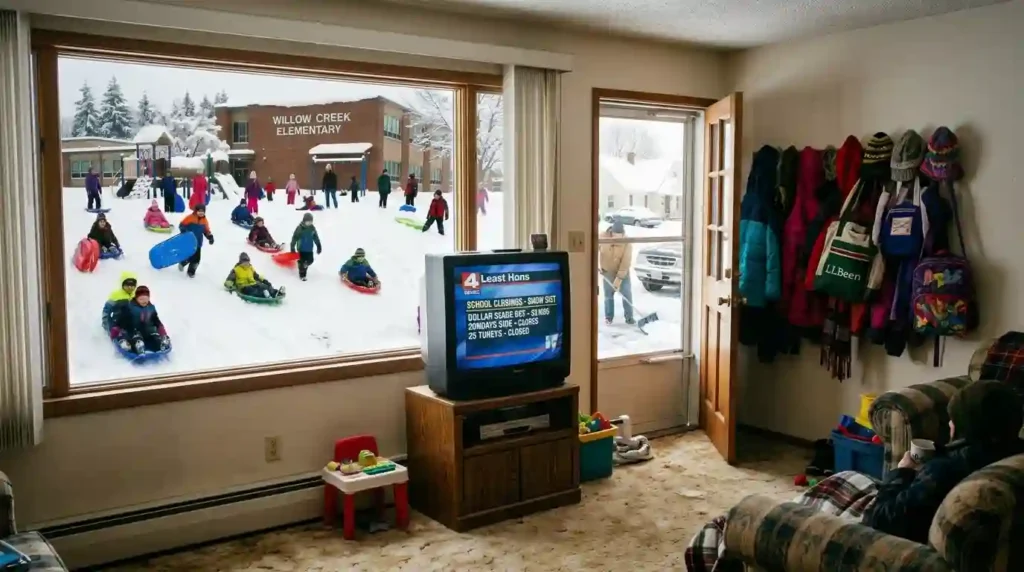
Many students were out of school for several days. Some communities struggled to clear residential streets, sidewalks, parking lots, and bus routes. The storm became a cultural memory because students experienced what felt like an unexpected second winter break.
Snowmageddon also showed how snow removal challenges can continue long after the storm ends. Even if main roads are cleared, school buses still need safe neighborhood access. Sidewalks must be passable for walkers. School parking lots and entrances must be safe for staff and students.
For modern school districts, Snowmageddon highlighted the importance of planning for back-to-back storms, not just one snowfall event.
9. The Groundhog Day Blizzard of 2011
The Groundhog Day Blizzard of 2011 affected a large part of the central and northeastern United States. Chicago was one of the most memorable locations because of intense snow, strong winds, and stranded vehicles.
Chicago Public Schools closed, and many universities and businesses also canceled activities. The storm became famous for images of cars trapped on Lake Shore Drive and for the major disruption it caused across the city.
For school history, this event is important because it showed how modern forecasting and early warnings can reduce risk. Compared with older storms, many people had more advance notice. Schools and businesses could close earlier, and families could prepare before conditions became impossible.
Still, the storm proved that even with better forecasting, urban transportation can break down quickly when snowfall, wind, and timing come together.
10. Buffalo’s Snowvember Storm of 2014
Buffalo and western New York are used to snow, but the Snowvember lake-effect storm of November 2014 was extreme even by Buffalo standards. Some areas received several feet of snow while nearby neighborhoods received much less. This sharp snowfall difference is typical of lake-effect snow.
Schools in Buffalo and surrounding districts closed for multiple days. Some districts remained closed through the Thanksgiving week because roads, buildings, roofs, and neighborhoods needed more time to recover.
Snowvember is a strong example of why local geography matters. Lake-effect snow can create intense snowfall bands that bury one town while another area nearby has far less snow. That makes school closure decisions complicated because one district may be safe while another is completely blocked.
For students in western New York, Snowvember became one of the most unforgettable snow weeks in recent memory.
How Weather Forecasting Changed School Closures
Historic snow days also show how weather forecasting has improved. In the past, many districts had limited information. A superintendent might rely on local observations, police reports, radio updates, or a basic forecast.
Today, schools can monitor:
- National Weather Service alerts
- Radar and satellite data
- Hourly snowfall predictions
- Wind chill forecasts
- Ice accumulation models
- Road treatment reports
- Bus route conditions
- Emergency management updates
- Power outage maps
The National Weather Service provides winter storm safety guidance that helps communities understand hazards such as heavy snow, blizzard conditions, snow squalls, lake-effect snow, ice storms, and extreme cold. For official winter safety information, readers can visit the National Weather Service winter storm safety guide.
Better forecasting does not remove the difficulty of school closure decisions. Weather can shift quickly. A storm may arrive earlier than expected, change from rain to snow, produce more ice than forecast, or create wind chills that make bus stops unsafe.
Why Wind Chill, Ice, and Timing Matter
Many people think snow days are based only on inches of snow. In reality, school closures depend on a mix of factors.
Wind Chill
Wind chill affects students waiting outside for buses or walking to school. Even with little snow, dangerous cold can create frostbite risk. This is especially important for younger children and rural students who may wait longer outdoors.
Ice
Freezing rain and sleet can be more dangerous than snow. Ice makes roads, sidewalks, parking lots, school entrances, and bus stops hazardous. A small amount of ice can cause more closures than several inches of dry snow.
Storm Timing
A storm that starts before morning pickup can close schools quickly. A storm that begins during dismissal is more dangerous because students, buses, and parents may already be on the road. This is why districts often cancel early when a storm is expected to hit during school hours.
Local Preparedness
Northern districts may have more snowplows, salt trucks, experienced drivers, and winter-ready buses. Southern districts may close with smaller amounts because roads and infrastructure are less prepared for snow and ice.
Lessons Schools Learned From Historic Snow Days
Historic snow days changed the way school systems think about winter weather. The biggest lesson is that safety must come before convenience. Missing one day of school is usually easier to manage than risking students being stranded, injured, or exposed to dangerous cold.
School districts learned to:
- Make closure decisions earlier when possible
- Communicate clearly with parents and staff
- Consider road conditions, not just snowfall totals
- Check rural and neighborhood bus routes
- Plan for make-up days
- Coordinate with local emergency officials
- Monitor wind chill and ice risks
- Prepare for power outages
- Use digital alerts, websites, texts, and apps
Another modern change is remote learning. Some districts now use virtual learning days instead of traditional snow days. However, this can be controversial because many families still value snow days as a break, and not every student has reliable internet access.
Traditional snow days remain important because severe weather can affect electricity, heating, internet, childcare, and family safety. A historic snowstorm is not always a good time for normal learning, even online.
Conclusion
Famous snow days in U.S. school history are more than fun memories of canceled classes. They are part of America’s weather, education, and community safety story. From the Children’s Blizzard of 1888 to Snowmageddon 2010 and Buffalo’s Snowvember storm, each event shows how winter weather can affect students, families, teachers, buses, roads, power systems, and school calendars.
The biggest lesson is clear: school closure decisions are about safety, not just snow depth. Wind chill, ice, visibility, storm timing, road conditions, and local preparedness all matter. Historic snow days remind us why accurate forecasting, clear communication, and early planning are so important.
For students, a snow day may feel like a surprise holiday. For school leaders, it is a serious decision that protects the entire community.
FAQs
1. What is the most famous snow day in U.S. school history?
The Children’s Blizzard of 1888 is one of the most famous and tragic school-related snow events in U.S. history because it struck while many children were at school on the Northern Plains.
2. Why do schools close during snowstorms?
Schools close when travel becomes unsafe for students, staff, buses, and families. Snowfall, ice, wind chill, poor visibility, and road conditions all affect the decision.
3. Do schools close only because of snowfall totals?
No. Schools may close because of ice, dangerous wind chill, blowing snow, bus route hazards, power outages, or storm timing. Sometimes a few inches of snow can be more dangerous than a larger snowfall if ice or wind is involved.
4. Which U.S. regions get the most snow days?
Snow days are common in the Midwest, Northeast, Great Lakes, Rocky Mountains, and parts of the Mid-Atlantic. However, southern states may close schools with smaller amounts of snow because they have less winter road equipment.
5. Why was Snowmageddon 2010 so memorable for students?
Snowmageddon 2010 brought multiple storms to the Mid-Atlantic, closing schools for several days in many areas. For students, it felt like an extended winter break, but for districts it created major transportation and calendar problems.
6. What is lake-effect snow?
Lake-effect snow happens when cold air moves over warmer lake water, picks up moisture, and drops heavy snow over nearby land. Buffalo and western New York often experience this type of snow.
7. Are snow days disappearing because of online learning?
Some districts now use remote learning days during bad weather, but traditional snow days still exist. Severe storms can cause power outages, internet issues, and unsafe home conditions, making normal learning difficult.
8. How do school districts decide on a snow day?
Districts review weather forecasts, road conditions, bus routes, wind chill, ice risk, emergency reports, and school facility safety before making a closure decision.