Summary
College Students Experience Snow Day Cancellations Differently because campus life, academic schedules, housing situations, transportation access, technology use, and personal responsibilities vary widely from one student to another. While a snow day may feel like a welcome break for some students, it can create stress, missed work hours, delayed exams, disrupted labs, food access issues, and travel challenges for others. This article explores how snow day cancellations affect college students in ways that are far more complex than the traditional idea of a simple day off from class.
Table of Contents
- Why College Students Experience Snow Day Cancellations Differently
- How College Students Experience Snow Day Cancellations Differently Across Campus Life
- Snow Days Are Not the Same as K–12 School Closures
- The Academic Impact of Snow Day Cancellations
- Commuter Students Face a Different Kind of Snow Day
- Dorm Students Often Experience Snow Days Socially
- Online Learning Has Changed the Meaning of Snow Days
- How Snow Days Affect Exams, Labs, Jobs, and Mental Health
- Conclusion
- FAQs
Why College Students Experience Snow Day Cancellations Differently
Snow day cancellations have always carried a certain magic. For younger students, they often mean sleeping in, building snowmen, watching movies, or escaping homework for a day. But in college, the situation is more layered. A snow day can be relaxing, stressful, confusing, expensive, or even academically risky depending on the student’s circumstances.
College campuses are mini-cities. They include dormitories, dining halls, research labs, libraries, health centers, athletic facilities, parking lots, bus routes, and thousands of people with different schedules. Because of this, a campus closure is rarely just a simple announcement that classes are canceled. It affects student workers, graduate assistants, athletes, commuters, international students, professors, campus safety teams, dining staff, and residential life employees.
The primary reason college students experience snow day cancellations differently is that college life is less uniform than high school life. In high school, most students follow a similar daily schedule. In college, one student may have one lecture at 9 a.m., another may have a chemistry lab from 2 p.m. to 6 p.m., another may work a campus job, and another may need to commute 45 minutes through icy roads.
Students can also use tools like the Snow Day Calculator to estimate the possibility of a snow day based on weather conditions, helping them plan ahead for classes, travel, assignments, and campus responsibilities.
How College Students Experience Snow Day Cancellations Differently Across Campus Life
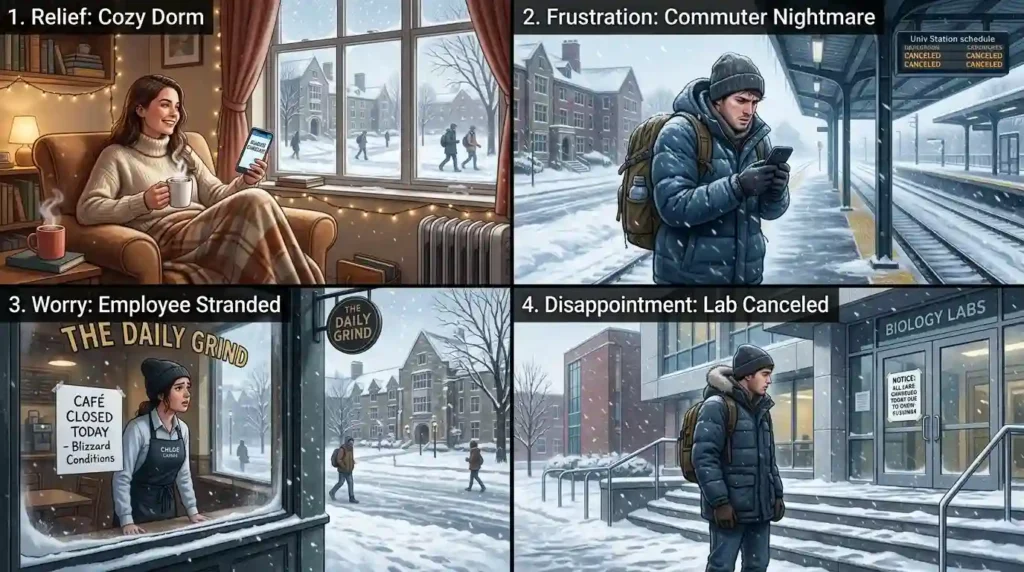
College snow days affect different groups of students in distinct ways. A residential student living five minutes from the lecture hall may see a cancellation as a cozy break. A commuter student may see it as relief from dangerous roads. A student athlete may lose a practice day. A nursing student may worry about clinical hours. A student worker may lose wages. A senior preparing for finals may feel panic because a missed class could compress the entire end-of-semester schedule.
The Same Weather Creates Different Problems
One campus-wide cancellation can create very different outcomes. For example, heavy snow may make sidewalks difficult but manageable for dorm students. For commuter students, the same snowstorm may make highways unsafe, delay buses, or shut down regional trains. For students with disabilities, snow-covered walkways, icy ramps, and inaccessible entrances can create major barriers even after a campus technically reopens.
Weather agencies often warn that winter storms can bring snow, sleet, freezing rain, dangerous roads, and travel disruptions. Students should follow campus alerts and review official winter safety information such as the National Weather Service winter weather safety guidance when preparing for severe winter conditions.
Snow Days Are Not the Same as K–12 School Closures
College snow days are different from elementary, middle, and high school snow days because colleges operate differently. Universities often have adult students, decentralized departments, flexible class schedules, online learning platforms, and campus services that may stay open even when classes are canceled.
College Students Manage Their Own Decisions
In K–12 schools, parents, school districts, and bus systems usually shape the snow day experience. In college, students are expected to make many decisions themselves. Should they drive to campus if only one class is canceled? Should they attend an optional review session? Should they email a professor about missed work? Should they go to their campus job? Should they leave early before roads freeze?
This independence is part of college life, but during winter weather it can become stressful. Some students may not have experience driving in snow. Others may not own proper winter clothing. International students from warm climates may be dealing with snow and ice for the first time.
Campus Closures Can Be Partial
Another difference is that college cancellations are often partial. A university may cancel in-person classes but keep dining halls, residence halls, libraries, and emergency services open. Some departments may move classes online. Some labs or clinical placements may still require attendance. Athletic teams may still practice if conditions allow. This creates confusion because “campus closed” does not always mean every responsibility disappears.
The Academic Impact of Snow Day Cancellations
For some students, the biggest snow day issue is academic disruption. College courses move quickly. A single missed lecture can affect a quiz, project, lab, presentation, or exam review. In compressed academic calendars, professors may have little room to adjust.
Lectures, Deadlines, and Missed Instruction
A canceled lecture can be easy to replace if the professor posts slides or records a video. But some classes depend heavily on discussion, demonstrations, performances, critiques, or hands-on practice. A missed seminar may weaken class participation. A missed studio session may delay feedback. A missed language class may interrupt speaking practice.
Deadlines can also become confusing. Some professors automatically extend due dates when campus closes. Others keep deadlines unchanged because assignments can be submitted online. Students may then spend their “snow day” refreshing email, checking the learning management system, and trying to figure out whether work is still due.
Labs and Clinical Courses Are Harder to Reschedule
STEM labs, nursing clinicals, education placements, art studios, and performance rehearsals are especially vulnerable to snow day cancellations. These courses often require specific rooms, equipment, safety supervision, or off-campus partners. Missing one session may mean waiting a week for the next available lab slot.
For students in programs with accreditation requirements, required hours matter. A snow day can cause more than a missed lecture; it can create a scheduling chain reaction.
Finals Week Can Become More Stressful
Snow cancellations near the end of a semester are especially difficult. Students may already be preparing for final exams, final papers, presentations, and graduation requirements. When weather interrupts the last week of classes or finals week, colleges may need to reschedule exams, shift deadlines, or move assessments online.
For a deeper look at this topic, read Snow Days Affect Exam Schedules and Finals Week.
Commuter Students Face a Different Kind of Snow Day
Commuter students often experience snow cancellations with relief, but also uncertainty. They may live at home, in off-campus apartments, or in nearby towns. Their ability to attend class depends on roads, parking lots, public transit, car reliability, fuel costs, and local snow removal.
Road Safety Comes First
For commuters, snow days are often about safety. A campus may be technically open, but a student’s neighborhood may have unplowed roads. A student may have to cross bridges, hills, rural roads, or highways that become dangerous in icy conditions. Even a short commute can become risky during freezing rain or blowing snow.
Some commuter students feel pressure to attend class even when travel is unsafe. They may worry that professors will count absences, that labs cannot be made up, or that group members will be frustrated. This is one reason clear communication from colleges is essential.
Parking Becomes a Hidden Problem
Even after snow is cleared, parking can become a major issue. Snow piles reduce parking spaces. Lots may be icy. Students may need extra time to walk from distant parking areas. A student who normally arrives five minutes before class may need 30 extra minutes during winter weather.
Public Transportation Delays Add Stress
Students who rely on buses, trains, or campus shuttles face another challenge. Transit delays may not match campus announcements. A college may reopen at noon, but bus routes may still be delayed. This can leave students stuck between official expectations and real-world transportation barriers.
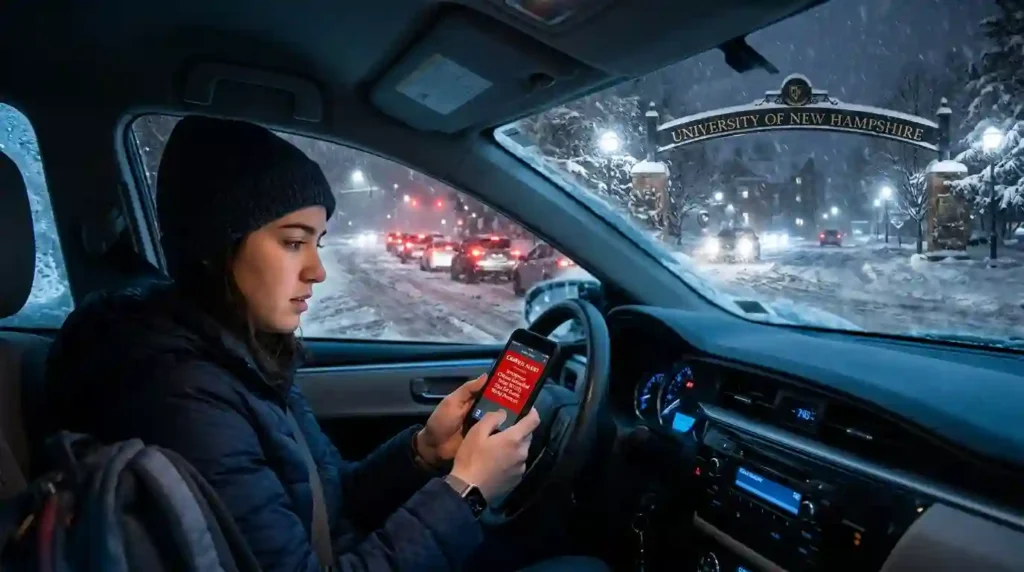
Dorm Students Often Experience Snow Days Socially
Students living on campus often experience snow days differently from commuters. They do not need to drive to campus because campus is their home. For them, a snow day may feel like a pause in the normal rhythm of college life.
A Break From the Routine
Dorm students may use snow days to sleep in, catch up on assignments, do laundry, watch movies, or spend time with friends. Residence halls can become lively during snow closures because many students are in the same place with fewer scheduled obligations.
Campus traditions sometimes emerge around snow days. Students may gather for snowball fights, sledding, late-night dining hall runs, or group study sessions. The snow day becomes a shared memory and part of campus culture.
Dining and Campus Services Still Matter
However, dorm students also depend on campus services. If dining halls reduce hours, students may need to plan meals carefully. If sidewalks are not cleared, walking to food, health services, or the library can be difficult. If power or heating problems occur, residential life staff must respond quickly.
Snow days may feel fun, but students living on campus are still affected by the university’s ability to maintain essential services.
Social Isolation Can Increase
Not every dorm student enjoys snow days. Students who already feel lonely, homesick, or stressed may experience snow closures as isolating. When routines stop, support systems can feel farther away. Students who rely on counseling appointments, study groups, campus jobs, or club meetings may lose important structure.
Online Learning Has Changed the Meaning of Snow Days
In the past, a snow day usually meant no class. Today, many colleges can shift to remote learning quickly. This has changed the meaning of snow cancellations.
Canceled Does Not Always Mean Free
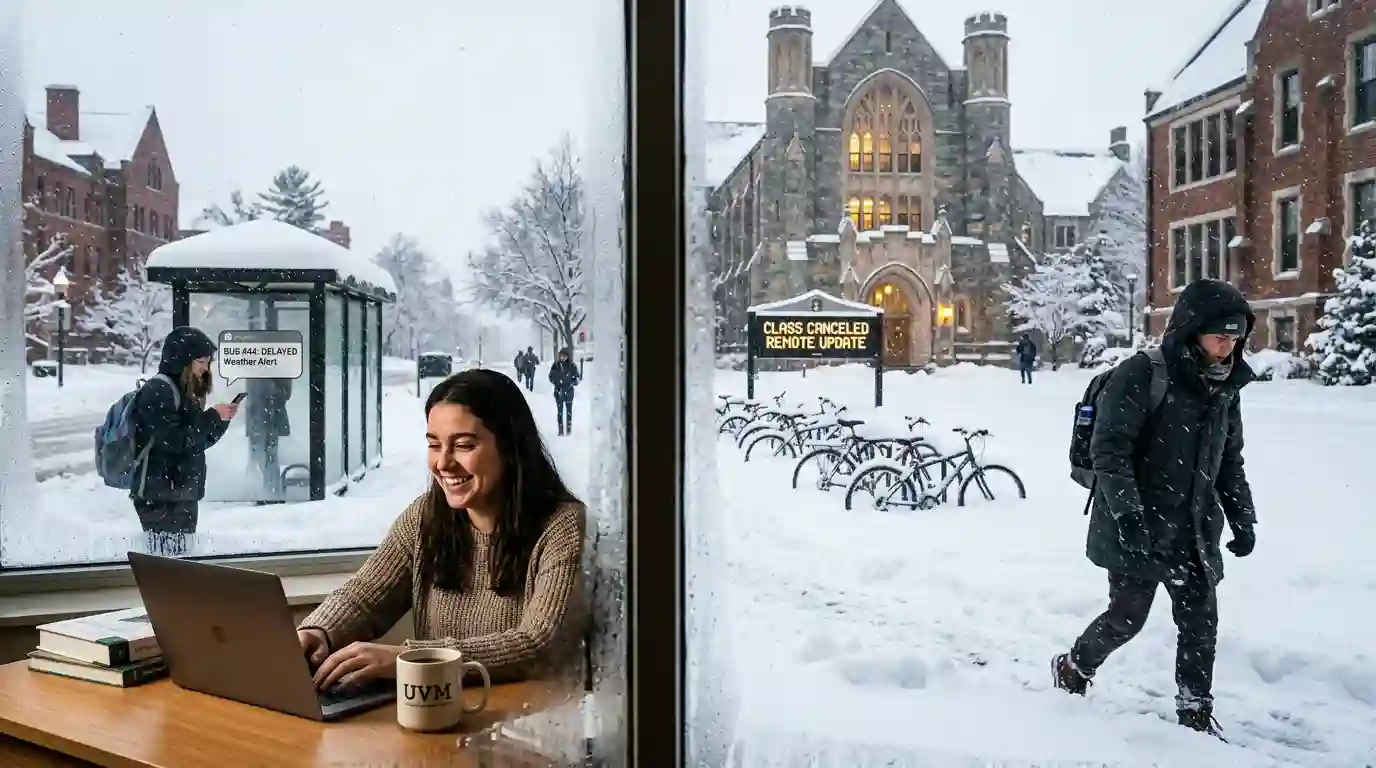
Students may receive an announcement that in-person classes are canceled, but online classes will continue. Professors may hold Zoom lectures, post recorded videos, assign discussion boards, or move exams online. As a result, students may not actually get a break.
This can be practical for academic continuity, but it can also reduce the mental relief that snow days once provided. Students may feel disappointed when a campus closure becomes a remote learning day instead of a true day off.
Technology Access Is Not Equal
Remote learning during snow days assumes students have reliable internet, a working laptop, a quiet space, and electricity. That is not always true. Some students live in areas where winter storms cause outages. Others share devices or rely on campus Wi-Fi. A student who planned to use the library may lose access if campus buildings close.
This creates equity concerns. When colleges move snow day classes online, they should consider students who may not have stable technology access.
Professors Also Face Disruptions
Faculty members are affected too. Professors may have children whose schools are closed. They may lose power, face their own commutes, or need to redesign lessons quickly. A snow day can disrupt teaching plans as much as student schedules.
How Snow Days Affect Exams, Labs, Jobs, and Mental Health
Snow day cancellations create ripple effects beyond the classroom. College students balance academics, work, social life, finances, health, and future planning. Winter weather can disrupt all of these.
Exams and Presentations
A canceled exam can be both good and bad. Some students appreciate extra study time. Others feel anxious because the delay extends stress. Group presentations may become harder to coordinate. Rescheduled tests may conflict with other assignments or work shifts.
Students with test anxiety may struggle when uncertainty increases. A clear rescheduling policy can reduce stress and help students plan.
Student Jobs and Lost Income
Many college students work part-time jobs. Some work in dining halls, libraries, gyms, offices, bookstores, or off-campus businesses. When snow closes campus or local roads, student workers may lose income. For students paying rent, buying groceries, or covering tuition costs, a missed shift matters.
Some essential student workers may still be expected to report during weather closures. Resident assistants, dining employees, and campus safety workers may have responsibilities even when other students are relaxing.
Athletics and Extracurricular Activities
Student athletes may have canceled practices, delayed travel, or postponed games. Clubs may cancel meetings. Music rehearsals, theater productions, debate tournaments, and volunteer events may be affected. These activities are part of the college experience, so their disruption can feel significant.
Mental Health and Winter Stress
Snow days can support mental health by giving students rest. But they can also increase stress if they create uncertainty, isolation, or academic pressure. Students who already feel overwhelmed may not experience a snow day as a gift. Instead, they may worry about falling behind.
Seasonal affective symptoms, shorter daylight hours, cold temperatures, and disrupted routines can also affect mood. Colleges can support students by communicating clearly, keeping mental health resources visible, and encouraging flexibility.
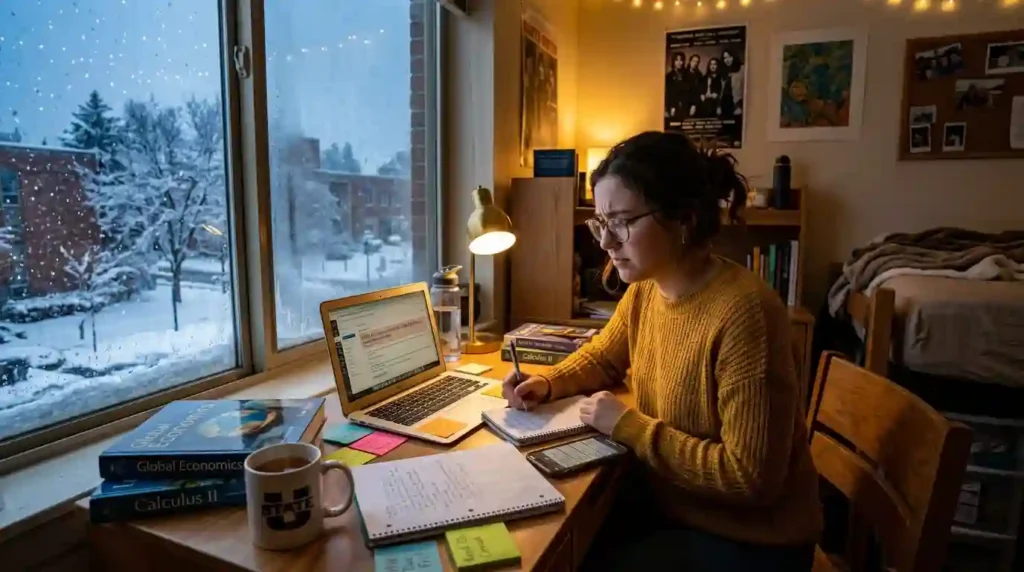
How Colleges Communicate Snow Day Decisions
A major part of the snow day experience is communication. Students need accurate, timely, and specific information. A vague announcement can create confusion across campus.
What Students Need to Know
A helpful snow day announcement should explain:
- Whether in-person classes are canceled
- Whether online classes continue
- Whether campus offices are open
- Dining hall hours
- Library and recreation center status
- Parking and shuttle updates
- Lab, clinical, and exam instructions
- Safety reminders
- When the next update will be sent
Students should not have to guess whether a deadline still applies or whether a campus service is open. Clear communication helps reduce anxiety and prevents unnecessary travel.
Multiple Channels Are Important
Colleges usually use email, text alerts, websites, social media, mobile apps, and learning management systems. This is important because students check different channels. A commuter may rely on text alerts. A dorm student may check Instagram. A graduate student may look for department-specific emails.
The best campus communication strategy repeats key information across multiple platforms without overwhelming students.
Why Location Matters So Much
A snow day in Minnesota is different from a snow day in Georgia. A campus in Buffalo may have snow removal systems, heated buildings, and students used to winter storms. A campus in a warmer region may close for a smaller amount of snow because roads, drivers, and local infrastructure are less prepared.
Regional Preparedness Changes Expectations
In colder regions, students may expect classes to continue unless weather is severe. In milder regions, even a small amount of ice can create major danger because roads may not be treated quickly and drivers may have less winter experience.
This is why snow day decisions are not based only on snowfall totals. Ice, wind chill, visibility, timing, road treatment, public transit, and campus terrain all matter.
Campus Layout Also Matters
Some campuses are compact and walkable. Others are spread across hills, city streets, or multiple campuses. A university with steep pathways may face greater pedestrian safety risks. A campus with many commuters may cancel earlier than a residential college.
The Role of Snow Day Calculators and Weather Planning
Students often try to predict closures before official announcements. They check weather apps, local news, campus alerts, and social media. A snow day prediction tool can help students understand the likelihood of cancellations and plan more responsibly.
Planning Ahead Reduces Stress
Students can prepare for possible snow cancellations by:
- Checking campus alert systems
- Charging laptops and phones
- Saving assignments offline
- Reviewing professor policies
- Planning meals and medication
- Avoiding unnecessary travel
- Communicating early with group members
- Watching for exam or lab updates
Even if a snow day does not happen, preparation makes winter weather less stressful.
Prediction Is Helpful, but Official Alerts Matter Most
Snow day calculators are useful planning tools, but students should always follow official campus announcements. Weather can change quickly, and colleges consider many factors beyond snowfall, including timing, road safety, staffing, and building operations.
How Students Can Make the Most of a Snow Day
A snow day can still be valuable, even when it creates disruption. The key is to use the time intentionally.
For Academic Success
Students can use snow days to review lecture notes, outline essays, study for exams, catch up on readings, organize digital files, or email professors with questions. Even one focused hour can reduce stress later.
For Rest and Recovery
College students are often tired. A snow day can be a rare chance to rest. Sleeping in, cooking a simple meal, stretching, journaling, calling family, or taking a break from screens can support well-being.
For Safety
Students should avoid unnecessary travel, wear proper footwear, dress warmly, and pay attention to icy sidewalks. Those living off campus should check heating, food supplies, and transportation updates.
Conclusion
College snow days are more complicated than they appear. While some students see them as a relaxing break, others experience academic pressure, lost wages, transportation problems, technology challenges, and uncertainty. The reason college students experience snow day cancellations differently is that college life is diverse, independent, and highly individualized.
A snow day can affect a commuter’s safety, a dorm student’s routine, a professor’s lesson plan, a student worker’s paycheck, a science major’s lab schedule, and a senior’s final exam timeline. That is why colleges need clear communication, flexible policies, and awareness of student circumstances.
For students, the best approach is to prepare early, follow official alerts, use prediction tools wisely, and balance productivity with rest. Snow days may interrupt the semester, but with planning and flexibility, they can also become moments of safety, recovery, and connection.
FAQs
1. Why do college students experience snow day cancellations differently?
College students experience snow day cancellations differently because they have different living situations, class schedules, transportation needs, jobs, academic responsibilities, and access to campus resources. A dorm student, commuter student, student worker, and graduate student may all be affected in different ways.
2. Do college snow days mean all classes are canceled?
Not always. Some colleges cancel only in-person classes while allowing online classes to continue. Others may close campus offices but keep dining halls and residence services open. Students should always check official university announcements.
3. How do snow days affect commuter students?
Commuter students may face icy roads, delayed public transportation, unsafe parking lots, and longer travel times. For many commuters, snow day cancellations are mainly about safety and transportation access.
4. Are online classes still held during college snow days?
Many colleges now shift to remote learning during snow days. This means students may still have lectures, assignments, quizzes, or discussions online, even when the physical campus is closed.
5. Can snow days affect exams and finals week?
Yes. Snow days can delay exams, compress review time, shift deadlines, or force finals to move online. This is especially stressful near the end of the semester when academic schedules are already tight.
6. How can students prepare for possible snow day cancellations?
Students can prepare by checking campus alerts, charging devices, saving assignments offline, reviewing syllabi, planning meals, avoiding risky travel, and communicating with professors or group members early.
7. Are snow day calculators useful for college students?
Yes. A snow day calculator can help students estimate the chance of cancellation and plan ahead. However, official college alerts should always be treated as the final source of information.
8. Why do some colleges stay open during snow while others close quickly?
Colleges consider local weather patterns, road conditions, campus layout, commuter population, snow removal capacity, public transportation, and safety risks. A small amount of snow may be manageable in one region but dangerous in another.