Summary
When winter weather approaches, families need more than a quick text alert from school. Parents Can Stay Ahead of Snow Day Announcements by watching local forecasts, understanding school district decision timelines, preparing backup childcare, and using helpful tools that estimate the likelihood of school closures. This guide explains how parents can create a reliable snow day plan, avoid last-minute stress, and keep children safe, informed, and ready for whatever winter brings.
Table of Content
- Why Parents Can Stay Ahead of Snow Day Announcements Matters
- How School Districts Decide on Snow Days
- Weather Signals Parents Should Watch Before a Snow Day
- Best Tools to Track Snow Day Possibilities
- How Parents Can Stay Ahead of Snow Day Announcements with Alerts
- Creating a Family Snow Day Communication Plan
- Preparing Childcare, Work, and Transportation in Advance
- Helping Kids Stay Productive and Safe on Snow Days
- Common Mistakes Parents Make During Winter School Closures
- Conclusion
- FAQs
Why Parents Can Stay Ahead of Snow Day Announcements Matters
Snow days can feel exciting for students, but for parents, they often create instant challenges. A school closure can affect work schedules, transportation, childcare, meals, remote learning, extracurricular activities, and even medical appointments. That is why staying ahead of school closure updates is not just convenient—it is part of smart family planning.
Winter weather can change quickly. A forecast that starts as light snow may become freezing rain overnight. A minor accumulation can still create hazardous roads if temperatures drop below freezing. School districts usually make decisions based on student safety, bus routes, road treatment, visibility, ice conditions, wind chill, and the ability of staff to arrive safely.
Parents who prepare early are less likely to be caught off guard. Instead of waking up to a surprise announcement and scrambling for childcare, they already have a backup plan. Instead of wondering whether buses will run, they know where to check official updates. Instead of relying on rumors in neighborhood chats, they understand which information sources are dependable.
The goal is not to predict every closure perfectly. The goal is to build a system that helps your family respond quickly, calmly, and safely.
How School Districts Decide on Snow Days
Many parents wonder why one school district closes while another nearby district stays open. The answer usually comes down to local conditions, transportation routes, and risk tolerance.
Road Conditions and Bus Safety
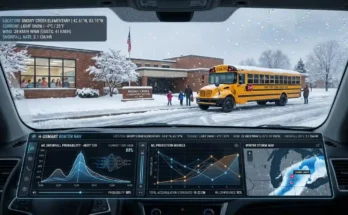
School buses are one of the biggest factors in snow day decisions. Even if main roads look manageable, rural roads, hills, bridges, side streets, and untreated neighborhoods may be dangerous. District transportation teams often check roads before sunrise to see whether buses can safely complete their routes.
Ice is often more concerning than snow. A few inches of powdery snow may be easier to manage than a thin layer of freezing rain. Black ice can be nearly invisible, especially during early morning pickup times.
Weather Timing
Timing matters as much as the total snowfall. Snow that falls overnight may give road crews time to clear streets before school starts. Snow that begins during the morning commute can create dangerous conditions while students are already on the road.
Districts also consider afternoon dismissal. If a storm is expected to intensify during the school day, administrators may choose to close school even if the morning looks manageable. Their responsibility includes getting students home safely, not just getting them to school.
Temperature, Wind Chill, and Visibility
Extreme cold can affect students waiting at bus stops. Strong winds can reduce visibility and cause drifting snow. In some areas, blowing snow can make cleared roads hazardous again within minutes.
The National Weather Service provides winter weather safety information, including guidance on winter storm watches, warnings, cold weather hazards, and safe preparation. Parents can review the official National Weather Service winter weather safety guide for authoritative winter preparedness information.
Staffing and Building Readiness
Schools also need enough teachers, bus drivers, cafeteria workers, custodians, and support staff to operate safely. Heating systems, parking lots, sidewalks, and building entrances must also be ready. A snow day decision is rarely based on only one factor.
Weather Signals Parents Should Watch Before a Snow Day
Parents do not need to become meteorologists, but learning a few winter weather signals can help you anticipate possible closures.
Snow Accumulation Forecasts
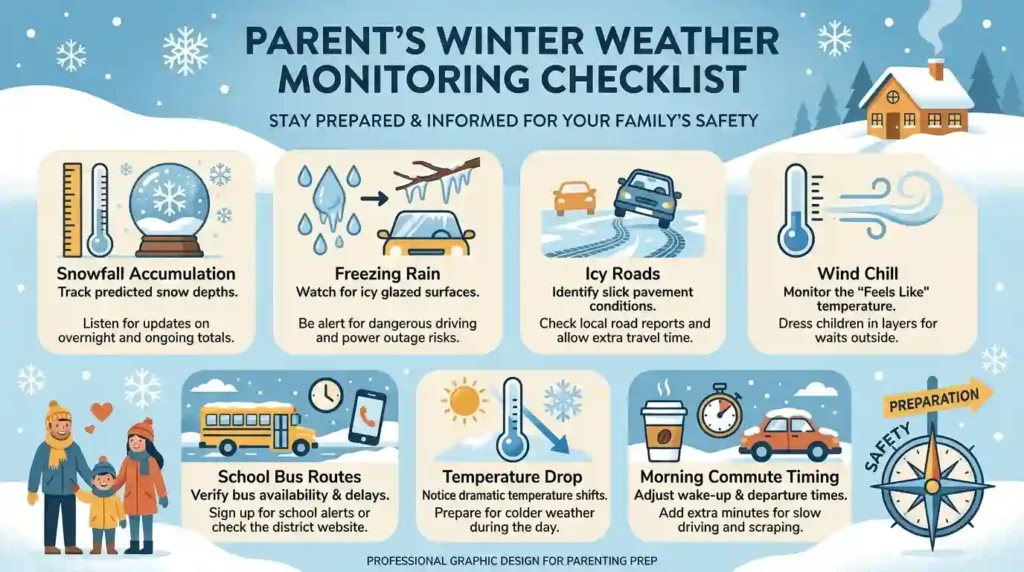
Snowfall totals matter, especially when forecasts show steady accumulation overnight or during commute hours. However, the number of inches alone does not tell the whole story. Wet snow, dry snow, sleet, freezing rain, and ice pellets all create different travel concerns.
A forecast of three inches may be manageable in a region with strong snow removal systems. The same forecast may cause closures in an area that rarely sees winter storms.
Freezing Rain and Ice
Freezing rain is one of the strongest signs that school closures may happen. Ice can make roads, sidewalks, driveways, and parking lots dangerous even when snowfall totals are low. Parents should pay close attention to terms like “ice accumulation,” “freezing drizzle,” “wintry mix,” and “glaze ice.”
Temperature Drops After Precipitation
Sometimes the most dangerous conditions happen after the snow stops. If roads are wet during the evening and temperatures fall overnight, refreezing can create slick morning travel. This is why schools may delay opening even after a storm appears to have passed.
Winter Storm Watches, Warnings, and Advisories
Weather alerts help parents understand the level of risk. A watch usually means winter weather is possible. A warning indicates that hazardous winter weather is expected or already happening. An advisory often means conditions may cause inconvenience or travel difficulty but may not reach warning level.
Parents should follow local meteorologists, official weather agencies, and district communication channels instead of depending only on social media speculation.
Best Tools to Track Snow Day Possibilities
Technology gives parents more ways than ever to prepare before official announcements arrive. The key is to use tools wisely and combine them with official district updates.
School District Websites and Apps
The most reliable snow day announcement source is your school district’s official communication system. This may include the district website, parent portal, mobile app, automated phone call, text alert, email notification, or social media account.
Make sure your contact details are current. Many parents miss closure alerts because an old phone number or outdated email address is still listed in the school system.
Local News and Meteorologists
Local news stations often track school closings in real time. Meteorologists can also explain storm timing, road risks, and changing forecast models. Local experts are especially helpful because they understand regional road systems, elevation changes, lake-effect snow patterns, and common winter trouble spots.
Snow Day Prediction Tools
Parents can also use prediction tools to estimate the possibility of school closures before districts make official decisions. A helpful option is the Snow Day Calculator, which can give families a quick way to think ahead when snow, ice, and winter weather are in the forecast.
Prediction tools should not replace official school announcements, but they can help parents prepare earlier. For example, if the chance of a closure looks high the night before, you may decide to charge devices, confirm childcare, prepare lunch options, and discuss the next day’s plan with your child.
Weather Apps and Radar
Weather apps are useful for tracking hourly forecasts, temperature changes, and storm movement. Radar can show when precipitation is approaching and whether snow bands are intensifying. Parents should compare a few reliable sources because winter forecasts can shift.
Look for hourly details rather than only the daily forecast. A daily snow icon does not tell you whether snow will arrive at 2 a.m., 7 a.m., or 3 p.m.—and that timing can make all the difference.
How Parents Can Stay Ahead of Snow Day Announcements with Alerts
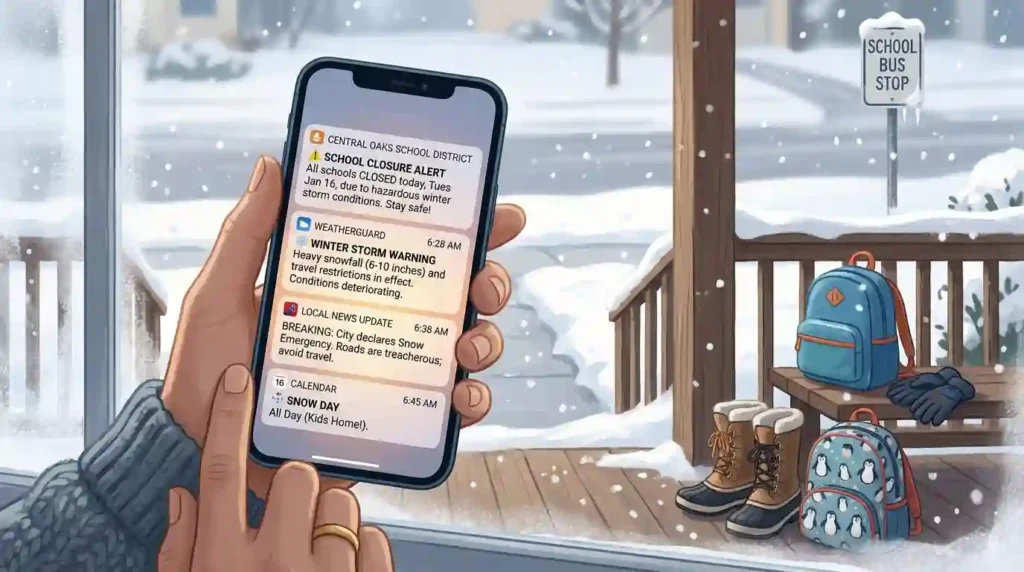
The best strategy is to build a layered alert system. Do not rely on one notification method. Phones can be muted, emails can go to spam, apps can glitch, and social posts can be delayed.
Turn On District Notifications
Start with official school alerts. Log into your parent portal or district communication platform and confirm that text, email, and phone notifications are enabled. If your district offers push notifications through an app, turn them on during winter months.
Also check whether your child’s school and the overall district send separate messages. Some closures, delays, and activity cancellations may come from different channels.
Follow Official Social Media Accounts
Many districts post closure updates on platforms like Facebook, X, or Instagram. Follow only verified or clearly official accounts. Avoid sharing screenshots unless they come from a trusted source, because old closure posts can recirculate and confuse families.
Set Weather Alerts by Location
Weather apps often allow alerts for specific locations. Set alerts for your home, school, workplace, and any caregiver’s location. A storm may affect one area more than another, especially in larger districts.
Create a Morning Check Routine
On potential snow days, create a simple routine:
Wake up a few minutes earlier than usual, check district alerts first, confirm road and weather updates, review childcare plans, and then communicate with your child. This prevents panic and reduces confusion.
Creating a Family Snow Day Communication Plan
A snow day plan should be simple enough for everyone in the household to understand. Children feel calmer when they know what to expect, and adults make better decisions when responsibilities are clear.
Decide Who Checks Announcements
Choose one or two adults responsible for checking official updates. This avoids confusion when one person hears a rumor and another has different information.
For co-parenting households, shared custody arrangements, or families with grandparents involved, decide how snow day updates will be shared. A quick group text can prevent missed pickups or duplicate plans.
Explain Delays, Closures, and Early Dismissals
Children may not understand the difference between a two-hour delay, full closure, remote learning day, and early dismissal. Explain these terms before winter weather arrives.
A two-hour delay may still require getting dressed and preparing for school. A remote learning day may mean logging into assignments. An early dismissal means parents must be reachable during the school day.
Keep Emergency Contacts Updated
Schools need current emergency contacts in case weather changes during the day. Make sure trusted adults are listed and available. If your district requires permission for someone else to pick up your child, complete that paperwork before winter.
Preparing Childcare, Work, and Transportation in Advance
Snow days often create the biggest stress for working parents. A little preparation can make closures much easier to manage.
Build a Backup Childcare List
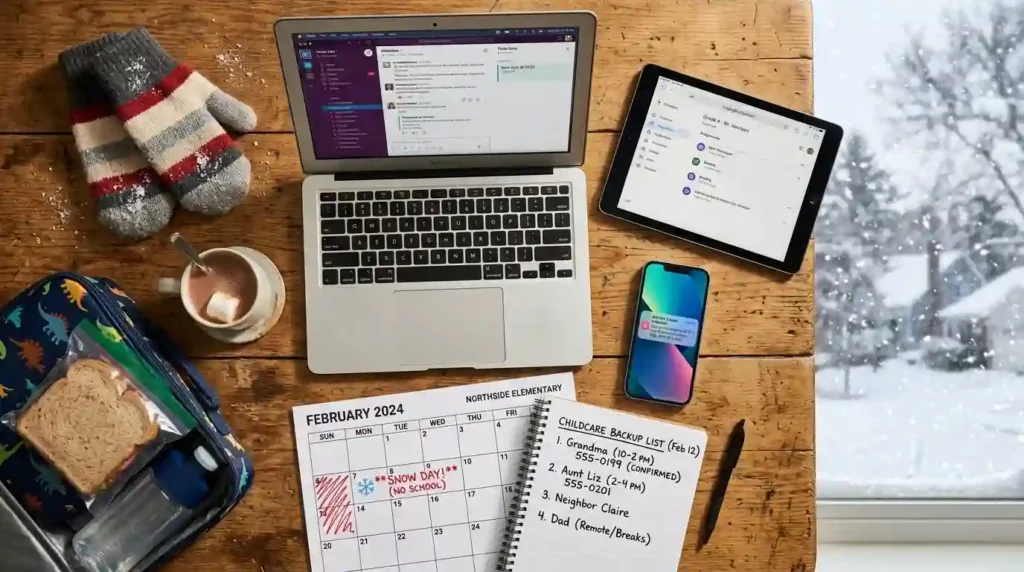
Create a list of trusted caregivers, relatives, neighbors, or parents from your child’s class who may be available during closures. Discuss expectations before a storm happens. Do not wait until 6 a.m. on a snow day to ask for help.
If your child is old enough to stay home alone, review safety rules, emergency contacts, meal options, screen time expectations, and how to reach you.
Talk to Your Employer Early
If your job allows remote work, flexible hours, or emergency leave, understand the policy before winter weather arrives. Parents who discuss possibilities with supervisors ahead of time are often better prepared when closures happen.
Keep essential work items ready during storm season. Bring your laptop, charger, documents, and access tokens home when a major storm is forecast.
Plan Transportation Carefully
If school remains open but roads are questionable, parents still need to decide how children will travel. Check bus updates, road conditions, and visibility. Give yourself extra time and avoid rushing.
Teen drivers need special guidance. Snow, ice, and low visibility can be dangerous for inexperienced drivers. If conditions are poor, consider whether your teen should drive at all.
Helping Kids Stay Productive and Safe on Snow Days
Once a snow day is announced, the next challenge is managing the day itself. Some children want to play outside immediately, while others may spend the whole day on screens. A balanced plan helps the day feel fun without becoming chaotic.
Create a Flexible Snow Day Schedule
A snow day does not need to be rigid, but structure helps. Consider a simple rhythm: breakfast, outdoor play if safe, reading or learning time, lunch, creative activity, quiet time, chores, and family time.
For remote learning days, check teacher instructions early. Make sure devices are charged, login details are available, and children know when assignments are due.
Prepare Outdoor Safety Rules
Snow play can be wonderful, but children need clear safety boundaries. Review where they can play, how long they can stay outside, what clothing they need, and when to come in. Younger children should be supervised, especially near roads, driveways, frozen ponds, or snow piles created by plows.
Make sure children wear layers, waterproof gloves, warm socks, hats, and boots. Wet clothing should be changed quickly to prevent chills.
Make Snow Days Educational and Fun
Snow days can become meaningful family memories. Children can read winter books, bake, build snow forts, make crafts, write journals, help shovel safely, or learn about weather patterns.
For a wider perspective, parents can also explore how children in different cultures spend winter school closures. This related article on What Do Students Do on Snow Days Around the World offers an interesting look at snow day traditions and student activities beyond one local community.
Common Mistakes Parents Make During Winter School Closures
Even organized families can make mistakes during snow day season. Avoiding these common problems can save time and stress.
Relying on Rumors
Neighborhood chats can be helpful, but they can also spread unconfirmed information. Always verify closures with official district channels before changing plans.
Ignoring Delayed Opening Details
A delay is not the same as a closure. Some districts cancel morning preschool, adjust bus times, change breakfast programs, or modify half-day schedules. Read the full announcement carefully.
Forgetting After-School Activities
School closure announcements may not automatically answer questions about sports, clubs, tutoring, daycare, or evening events. Check whether activities are canceled separately.
Waiting Too Long to Prepare
If a major winter storm is forecast, prepare the night before. Charge devices, pack work materials, check food supplies, place boots and coats near the door, and confirm backup childcare. Early preparation makes the morning smoother.
Underestimating Ice
Parents often focus on snow totals, but ice can be more dangerous. A light glaze can affect walking, driving, and bus travel. Watch for freezing rain, sleet, and refreezing after sunset.
Practical Snow Day Checklist for Parents
Use this checklist when winter weather is in the forecast:
The Night Before
Check the hourly forecast, review school communication channels, charge phones and laptops, prepare warm clothing, confirm childcare options, bring work materials home, and discuss possible plans with your child.
Early Morning
Check official district updates first, review local weather and road conditions, confirm whether school is closed or delayed, notify caregivers or employers if needed, and explain the plan calmly to your child.
During the Day
Monitor updates for remote learning, early dismissal changes, power outages, and road conditions. Keep children safe indoors or outdoors, maintain a flexible routine, and prepare for the next school day.
After the Storm
Check whether school will reopen on time, watch for refreezing overnight, clear walkways safely, dry winter gear, and reset your family plan for the next storm.
How to Teach Children About Snow Day Preparedness
Snow days are a great opportunity to teach responsibility. Children can learn that winter weather is not just about missing school—it is about safety, planning, and community readiness.
Younger children can help gather mittens, choose indoor activities, or pack a small snow day basket with books and games. Older children can check weather maps, help shovel carefully, prepare snacks, or support younger siblings.
Teenagers can learn about safe driving decisions, communication expectations, and how to manage remote assignments. These lessons build independence while keeping safety at the center.
Why a Snow Day Plan Reduces Family Stress
The uncertainty of winter weather is often what makes snow days stressful. Parents may not control the forecast or the school district’s decision, but they can control preparation.
A strong plan gives every family member a role. Children know what to expect. Parents know where to check announcements. Employers receive earlier communication. Caregivers are not contacted at the last possible second. Devices are charged. Meals are ready. Transportation decisions are safer.
Snow days will always bring surprises, but they do not have to bring panic.
Conclusion
Snow day announcements can disrupt routines, but they do not have to create chaos. Parents who monitor weather patterns, understand school decision-making, use reliable alert systems, and prepare backup plans are far better equipped for winter school closures.
The smartest approach is to combine official district updates, trusted weather sources, practical planning, and helpful tools. By doing so, parents can respond quickly and confidently when snow, ice, freezing rain, or extreme cold affects the school schedule.
A prepared family does not need to guess, panic, or rely on rumors. With the right system in place, snow days can become safer, smoother, and even enjoyable.
FAQs
1. How early do schools usually announce a snow day?
Some schools announce closures the night before, while others wait until early morning to check road conditions, updated forecasts, and bus route safety. Many announcements happen between 5 a.m. and 7 a.m., but timing varies by district.
2. What is the best way for parents to receive snow day alerts?
The best method is to use multiple official channels. Parents should enable school district text alerts, email notifications, app alerts, and phone calls. It also helps to follow the district’s official social media pages.
3. Can parents predict snow days before the school announces them?
Parents can estimate the possibility by watching snowfall forecasts, freezing rain alerts, wind chill, road conditions, and storm timing. Prediction tools can help, but the official decision always comes from the school district.
4. Why does one school district close while another stays open?
Different districts have different road conditions, bus routes, staffing levels, elevation, snow removal resources, and safety concerns. A nearby district may face worse ice, rural roads, or transportation challenges.
5. Should parents trust social media posts about school closures?
Parents should be careful with social media. Only trust posts from official school district accounts, verified local news sources, or direct school communication systems. Rumors and old screenshots can spread quickly.
6. What should parents prepare the night before a possible snow day?
Parents should charge devices, check forecasts, confirm childcare, prepare work materials, organize winter clothes, plan meals, and review the family schedule. Preparing early reduces morning stress.
7. Are snow days always full school closures?
No. Some districts use delayed openings, early dismissals, remote learning days, or activity-only cancellations. Parents should read the full announcement carefully to understand what is affected.
8. How can working parents manage unexpected snow days?
Working parents can prepare by discussing flexible options with employers, keeping remote work tools ready, building a backup childcare list, and coordinating with relatives, neighbors, or other trusted parents before storms happen.
9. What should kids do on snow days?
Kids can play outside safely, read, complete remote assignments, help with simple chores, bake, create crafts, or spend quality time with family. A flexible routine helps balance fun and responsibility.
10. What is the biggest snow day mistake parents should avoid?
The biggest mistake is relying on one source of information. Parents should verify announcements through official district channels and avoid making decisions based only on rumors or group chats.