Summary
Myths About Snow Day Predictions Debunked is an important topic for students, parents, teachers, and school communities because snow day decisions are often misunderstood. Many people believe that a certain number of inches of snow automatically closes school, or that snow day calculators can predict closures with perfect accuracy. In reality, school closing decisions depend on snowfall timing, road conditions, ice, wind chill, bus safety, local geography, district policies, and real-time weather updates. This article debunks five common myths about snow day predictions and explains what actually matters when winter weather threatens the school day.
Table of Content
- Introduction: Why Snow Day Predictions Are Often Misunderstood
- How Snow Day Predictions Really Work
- Myths About Snow Day Predictions Debunked: Why Snowfall Totals Are Not Everything
- Myth 1: A Certain Number of Inches Always Means School Will Close
- Myth 2: Snow Day Calculators Are Always 100% Accurate
- Myth 3: If One Nearby District Closes, Every School Should Close
- Myth 4: The Forecast the Night Before Tells the Whole Story
- Myth 5: Snow Is the Only Thing That Matters
- More Myths About Snow Day Predictions Debunked for Parents and Students
- What Actually Affects School Closure Decisions?
- How to Use Snow Day Tools the Smart Way
- Helping Image Prompts
- Conclusion
- FAQs
- Meta Title and Meta Description
Introduction: Why Snow Day Predictions Are Often Misunderstood
Few winter topics create as much excitement, confusion, and debate as snow day predictions. Students check the forecast every few minutes. Parents wonder whether they need to arrange childcare. Teachers prepare for both in-person and remote learning possibilities. School administrators monitor weather reports, transportation updates, and road conditions before making a final decision.
The problem is that many people treat snow day predictions like a simple yes-or-no math equation. They assume that if the forecast says six inches of snow, school must close. If snow starts falling at night, they expect a cancellation by morning. If a neighboring school district closes, they wonder why their own district is still open.
But snow day decisions are more complex than most people realize. A school closure is not based only on snowfall accumulation. It is based on safety, timing, transportation, road treatment, ice risk, temperature, visibility, wind chill, local terrain, and whether buses can safely complete their routes.
This is why two schools in the same county may make different decisions. One district may have hilly rural roads, long bus routes, and untreated back roads. Another may have shorter routes, better snow removal, and main roads that clear quickly. The same winter storm can affect both districts very differently.
Modern tools like a Free Snow Day Calculator can help families estimate the chance of a school closure, but they should be used as guidance, not a guaranteed official decision. Snow day prediction is a mix of weather science, local knowledge, and administrative judgment.
In this article, we will break down five common myths about snow day predictions and explain what really affects school closures during winter weather.
How Snow Day Predictions Really Work
Snow day predictions are not just about looking outside and seeing snow. They involve several layers of information that change throughout the storm.
Weather forecasters look at storm tracks, temperature profiles, precipitation type, radar trends, atmospheric pressure, wind speed, and timing. School officials look at road reports, bus routes, parking lots, sidewalks, staffing concerns, and communication deadlines.
A school district may ask questions such as:
- Will snow begin before buses pick up students?
- Will roads become icy during the morning commute?
- Will freezing rain make sidewalks dangerous?
- Can buses safely travel rural or hilly roads?
- Will temperatures be too low for students waiting outside?
- Can staff arrive safely?
- Will conditions improve or worsen by dismissal time?
This is why a forecast of three inches can sometimes close school, while a forecast of eight inches may only cause a delay. Timing and impact matter more than the number alone.
For example, eight inches of snow that falls on a Saturday afternoon may not affect school at all if roads are cleared by Monday morning. But one inch of freezing rain at 6:00 a.m. can create dangerous travel conditions and lead to closures.
The National Weather Service provides helpful winter weather safety guidance for understanding snow, ice, wind chill, and winter storm alerts. You can review their winter weather safety information here: National Weather Service Winter Weather Safety.
Myths About Snow Day Predictions Debunked: Why Snowfall Totals Are Not Everything
Many people focus only on snow totals because they are easy to understand. A forecast that says “5 to 8 inches” sounds more dramatic than a forecast that says “light ice accumulation possible.” But in school closure decisions, snowfall depth is only one part of the full winter weather picture.
A snow day prediction becomes more accurate when it considers:
- Snowfall amount
- Snowfall timing
- Ice accumulation
- Temperature before and after the storm
- Wind chill
- Road surface temperature
- Morning commute conditions
- Bus route safety
- Visibility
- School district policy
- Local snow removal capacity
For example, a district in northern Minnesota may be used to heavy snow and may stay open during conditions that would close schools in Georgia, Tennessee, or North Carolina. This does not mean one district cares more about student safety than another. It means local infrastructure, climate expectations, and winter preparedness differ.
That is the first major misunderstanding: snow day predictions are local. A prediction that makes sense in one region may not apply somewhere else.
Myth 1: A Certain Number of Inches Always Means School Will Close
The Myth
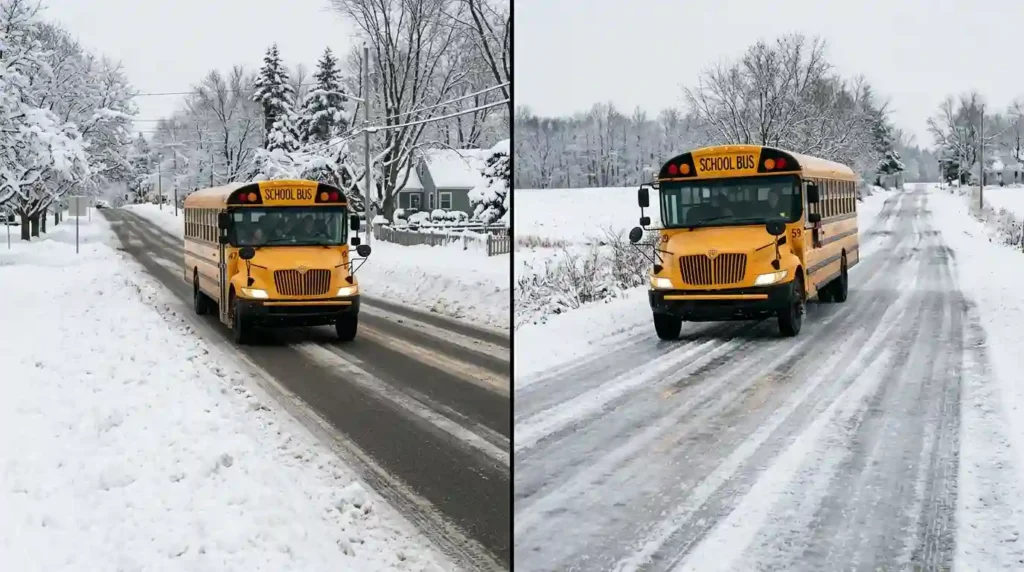
Many students believe there is a magic number. Some think three inches means a delay, five inches means cancellation, and eight inches means a guaranteed snow day. This belief is one of the most common snow day myths.
The Reality
There is no universal snowfall amount that automatically closes school. Every district has different conditions, policies, and safety concerns.
A district may remain open with six inches of fluffy snow if:
- Snow falls overnight and stops early
- Road crews clear main roads before morning
- Temperatures stay cold enough to prevent melting and refreezing
- Bus routes are mostly flat and manageable
- Visibility is good
- Parking lots and sidewalks can be treated
- On the other hand, a school may close with only one or two inches if:
- Snow begins during the morning commute
- Roads are untreated
- Ice forms under the snow
- Visibility becomes poor
- Buses must travel steep or rural roads
- Temperatures create dangerous wind chills
Why Timing Matters More Than Total Snow
Timing is often the biggest factor in school closure decisions. Snow that falls between midnight and 3:00 a.m. gives road crews time to respond. Snow that begins at 5:30 a.m. can create major problems because buses, parents, students, and staff are already preparing to travel.
The morning commute is one of the most important windows for school officials. If roads are slick when buses leave the depot, the district may choose a delay or closure even if snowfall amounts are low.
Dismissal timing also matters. A district may hesitate to open school if conditions are expected to worsen around 2:00 or 3:00 p.m. Getting students safely to school is only half the decision. Getting them home safely is just as important.
Example
Imagine two different storms:
- Storm A brings seven inches of snow from 6:00 p.m. to midnight. Road crews work overnight, and roads are mostly clear by 6:00 a.m.
- Storm B brings two inches of snow and sleet from 5:00 a.m. to 8:00 a.m., right during bus pickup.
- Storm B may be more likely to close school because it directly affects travel time. This is why snow day predictions should not focus only on inches.
Myth 2: Snow Day Calculators Are Always 100% Accurate

The Myth
Some people believe that if a snow day calculator gives a high percentage, the school closure is guaranteed. Others think that if a calculator predicts a low chance, there is no possibility of cancellation.
The Reality
A snow day calculator is a helpful prediction tool, but it cannot guarantee the final decision. School closure decisions are made by local officials, not by online tools.
A good snow day calculator can estimate the likelihood of a closure by considering weather conditions, location, snowfall, temperature, and other factors. However, no calculator can perfectly know every local detail, such as:
Exact road treatment progress
- Bus driver availability
- Sidewalk safety
- Power outages
- Local emergency reports
- School building conditions
- Last-minute forecast changes
- District leadership preferences
That does not mean calculators are useless. It means they should be used correctly.
How to Use a Snow Day Calculator Properly
A snow day calculator is best used as a planning tool. It can help you understand whether a closure is unlikely, possible, likely, or very likely. Parents can use it to prepare childcare options. Students can use it to manage expectations. Teachers can use it to plan flexible lessons.
But the final decision still belongs to the school district.
The smartest approach is to combine a calculator with other sources:
- Official school district announcements
- Local weather forecasts
- National Weather Service alerts
- Road condition reports
- Local transportation updates
- Real-time radar
When all of these sources point in the same direction, your prediction becomes stronger.
Why Predictions Can Change Quickly
Winter storms are difficult because small changes in temperature can change everything. A forecast of snow can become sleet. Sleet can become freezing rain. Rain can freeze on contact with cold roads. A storm track can shift 20 miles and change snowfall totals dramatically.
Because of this, a prediction made at 7:00 p.m. may look different by 5:00 a.m. Weather data updates constantly, and school officials often wait for the most recent information before making a call.
The Best Mindset
Do not treat a snow day calculator as a promise. Treat it as a smart estimate. It can be very useful, especially when combined with local knowledge, but it should not replace official communication from your school district.
Myth 3: If One Nearby District Closes, Every School Should Close
The Myth
When one school district announces a closure, families in nearby districts often expect the same decision. Students may say, “They closed, so why are we still open?” This is understandable, but it is not always accurate.
The Reality
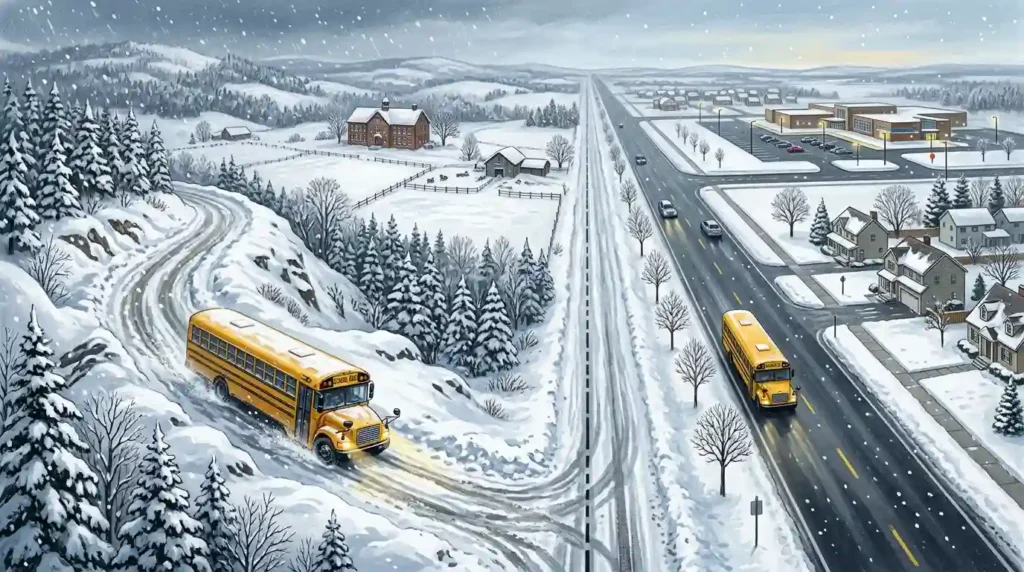
Nearby districts can have very different winter weather risks. Even schools only a few miles apart may face different road conditions, elevation changes, bus routes, and snow removal challenges.
One district may close because it has:
- Long rural bus routes
- Mountain roads or steep hills
- Poorly treated secondary roads
- More student walkers
- Older buildings with heating concerns
- A large geographic area
- Higher ice risk in certain zones
- Another district may stay open because:
- Roads are mostly main roads
- Bus routes are shorter
- Snow removal is faster
- Conditions are milder in that area
- The district has more flexible delay options
- The storm impact is lower locally
Geography Makes a Big Difference
Winter weather is often uneven. A storm may drop six inches in one town and two inches in another. A cold valley may develop icy roads while a nearby city stays wet. Higher elevations may see snow while lower areas see rain.
This is especially true in regions with hills, mountains, lakes, or coastal influence. Lake-effect snow can bury one community while leaving another nearly untouched. Elevation can cause snow to stick in one area but melt in another. Coastal areas may get rain while inland areas get ice.
District Size Also Matters
Large school districts face a harder decision because they must consider conditions across the entire service area. A district may have safe roads near one school but dangerous roads near another. If buses must travel through unsafe areas, the entire district may close.
Smaller districts may make more targeted decisions because their transportation area is easier to evaluate.
Why Comparison Can Be Misleading
Comparing one district’s closure to another can be frustrating, but it does not always reveal the full picture. A school district may have access to transportation reports, road crew updates, police information, and maintenance checks that families do not see.
This is why snow day predictions should consider district-specific conditions instead of relying only on nearby school decisions.
For a broader look at how snow days have shaped school communities over time, you can also read 10 Famous Snow Days in U.S. School History.
Myth 4: The Forecast the Night Before Tells the Whole Story
The Myth
Many people check the forecast before bed and assume the snow day decision is basically settled. If the forecast looks strong, they expect a closure. If it looks weak, they assume school will open.
The Reality
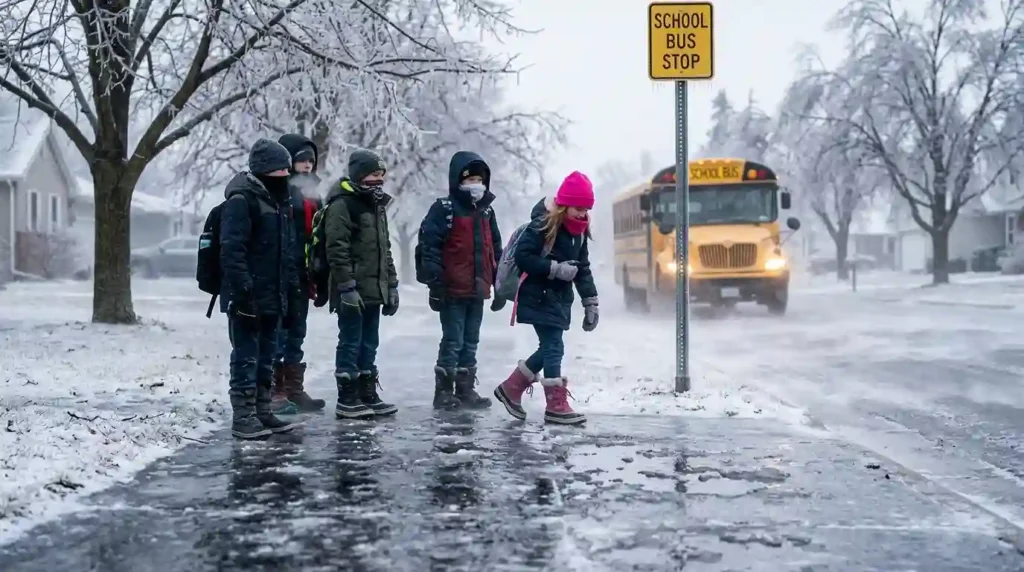
The forecast the night before is important, but it does not always tell the whole story. Winter storms can change overnight. School officials often need early-morning updates before making the final decision.
A night forecast may miss:
- A shift in storm track
- A change from snow to sleet
- Unexpected freezing rain
- Faster or slower storm timing
- Road temperature changes
- Stronger wind gusts
- Black ice development
- Lower-than-expected visibility
Why Early Morning Data Matters
Many school districts make final decisions between 4:00 a.m. and 6:00 a.m. because that is when they can evaluate the newest weather data and road conditions.
By that time, officials may know:
- How much snow actually fell
- Whether roads are icy
- Whether crews have treated key routes
- Whether buses can operate safely
- Whether temperatures are rising or falling
- Whether another round of snow is coming
A forecast is a prediction, but morning road conditions are real-world evidence.
The Role of Radar and Observation
Radar helps show where precipitation is moving, but observation confirms what is happening on the ground. Snow may appear on radar but not reach the surface. Rain may freeze on untreated roads. A forecast may say “light snow,” but strong winds can still reduce visibility.
That is why school officials do not rely on one forecast alone. They often review multiple weather models, local meteorologists, road crew reports, and district transportation feedback.
Delays vs. Closures
Sometimes the night forecast suggests a full closure, but morning conditions improve enough for a delay. Other times, the forecast looks manageable at night, but roads become icy by morning and schools close.
A delay is often used when conditions are expected to improve quickly. It gives road crews more time, allows daylight to improve visibility, and gives temperatures a chance to rise.
A closure is more likely when dangerous conditions are expected to continue into the school day or return during dismissal.
Myth 5: Snow Is the Only Thing That Matters
The Myth
The phrase “snow day” makes people think only snow matters. If there is not much snow, many assume school should stay open.
The Reality
Snow is only one part of winter weather. Ice, wind chill, freezing rain, sleet, visibility, and road temperatures can be even more important.
In many cases, ice is more dangerous than snow. A small amount of freezing rain can create slick roads, unsafe sidewalks, and hazardous parking lots. Buses are large vehicles that need extra stopping distance, especially on icy surfaces.
Ice Can Be More Dangerous Than Snow
Snow can often be plowed. Ice is harder to manage. Freezing rain can coat roads, steps, handrails, and sidewalks. Even a thin layer of ice can create serious safety concerns for buses, student drivers, walkers, and staff.
This is why a district may close even when there is little visible snow. Parents may look outside and say, “There is barely anything on the ground,” but roads and sidewalks may still be unsafe.
Wind Chill Also Matters
Wind chill can affect students waiting at bus stops or walking to school. In dangerously cold conditions, exposed skin can be at risk quickly. Districts must consider not only roads but also whether children can safely wait outside.
A school may delay opening because temperatures are expected to rise later in the morning. A closure may happen if extreme cold combines with snow, ice, or power concerns.
Visibility and Blowing Snow
Even after snow stops falling, strong winds can blow snow across roads and reduce visibility. Rural areas and open roads are especially vulnerable. A road may be plowed but still unsafe if blowing snow creates whiteout conditions or drifting.
This is another reason snowfall totals alone do not tell the whole story.
More Myths About Snow Day Predictions Debunked for Parents and Students
The five major myths above are the most common, but there are other smaller misunderstandings too.
“The Superintendent Just Wants to Avoid Closing”
Most school leaders understand that snow day decisions affect safety, family schedules, learning time, transportation, meals, and staff planning. They are not simply trying to avoid closures. They are balancing multiple responsibilities.
Closing school too early can create problems if the storm misses the area. Staying open during unsafe conditions can create serious safety risks. That is why the decision can be stressful and difficult.
“Remote Learning Means Snow Days Are Gone Forever”
Some districts use remote learning days during winter weather, but traditional snow days have not disappeared everywhere. Policies vary widely. Some schools still value snow days as part of the school year experience. Others use virtual learning to avoid extending the academic calendar.
The decision depends on state rules, district policy, technology access, teacher planning, and community expectations.
“Weather Apps Always Agree”
Different weather apps may use different data sources, update times, and forecast models. One app may show six inches while another shows three. One may emphasize hourly snow, while another focuses on alerts.
That is why it is better to look at trends rather than one single number. If multiple reliable sources show worsening conditions, the chance of closure increases. If forecasts disagree, uncertainty remains high.
What Actually Affects School Closure Decisions?
To understand snow day predictions better, it helps to know the real factors behind school closure decisions.
1. Road Conditions
Road safety is one of the biggest factors. School buses, student drivers, parents, and staff all rely on safe travel. Roads may be dangerous because of snow, ice, slush, drifting, or poor visibility.
2. Bus Route Safety
Bus routes are especially important because buses must travel through neighborhoods, rural roads, hills, bridges, and side streets. A main road may be clear while a bus route remains unsafe.
3. Timing of the Storm
A storm during the commute is more disruptive than one that ends overnight. Morning and afternoon travel windows matter most.
4. Ice Accumulation
Freezing rain and sleet can create dangerous surfaces even with low precipitation totals. Ice can affect roads, sidewalks, stairs, and parking lots.
5. Temperature and Wind Chill
Extreme cold can create safety concerns for students waiting outside or walking to school. Wind chill can also affect outdoor staff and transportation teams.
6. Visibility
Heavy snow, blowing snow, fog, or whiteout conditions can make travel unsafe even if accumulation is not extreme.
7. Local Preparedness
Some communities have more plows, salt trucks, and winter weather experience than others. A storm that is routine in one state may be disruptive in another.
8. School Building Conditions
Power outages, heating problems, frozen pipes, or unsafe sidewalks can affect whether schools open.
9. Forecast Confidence
If forecasters are confident that a storm will hit during school hours, closure becomes more likely. If uncertainty is high, districts may wait longer before deciding.
10. Dismissal Risk
Schools must consider whether students can get home safely. A storm that worsens in the afternoon can be more concerning than one that ends before sunrise.
How to Use Snow Day Tools the Smart Way
Snow day tools are most useful when you understand their limits. A calculator can give you a probability, but it should be combined with local information.
Step 1: Check the Forecast Trend
Do not focus only on one update. Look at how the forecast changes over several hours. Is the snow total increasing? Is ice becoming more likely? Is the storm timing shifting into the morning commute?
Step 2: Watch the Temperature
Temperature can decide whether precipitation falls as rain, snow, sleet, or freezing rain. A small temperature difference can change the entire outcome.
Step 3: Look at Timing
Ask whether the worst conditions will happen before school, during school, or after dismissal. Timing can change a prediction dramatically.
Step 4: Consider Your District’s History
Some districts close quickly. Others prefer delays. Some are more cautious because of rural roads or long bus routes. Past decisions can help you understand local patterns.
Step 5: Wait for Official Announcements
Use prediction tools for planning, but always trust the official school district announcement. Social media rumors, student group chats, and unofficial posts can spread quickly during winter storms.
Step 6: Prepare Either Way
Families should prepare for multiple outcomes: open, delayed, early dismissal, remote learning, or full closure. This reduces stress when decisions are announced early in the morning.
Conclusion
Snow day predictions are exciting, but they are often misunderstood. Many people believe school closures are based only on snowfall totals, but the reality is much more detailed. Timing, ice, road conditions, bus safety, wind chill, visibility, district size, local geography, and forecast confidence all play major roles.
The biggest lesson from these myths is simple: snow day predictions are about impact, not just snow. A small amount of freezing rain at the wrong time can be more dangerous than several inches of dry snow. A nearby district may close while another stays open because their roads, routes, and risks are different. A calculator may give a strong estimate, but official school decisions still depend on real-time local conditions.
Students, parents, and teachers can use snow day calculators, weather alerts, and local forecasts to prepare smarter. However, the best approach is to combine prediction tools with official school updates and local safety information.
When the next winter storm appears in the forecast, do not rely on myths. Look at the full picture: timing, temperature, roads, ice, wind, and district policy. That is the best way to understand snow day predictions and avoid disappointment when the final school decision is announced.
FAQs
1. Are snow day predictions always accurate?
No, snow day predictions are not always accurate because winter weather can change quickly. A prediction may shift if the storm track changes, temperatures rise or fall, or road conditions become better or worse than expected.
2. How many inches of snow does it take to cancel school?
There is no universal number of inches that automatically cancels school. Some schools may close with one or two inches if roads are icy, while others may stay open with several inches if roads are clear and safe.
3. Why do some schools close while nearby schools stay open?
Nearby schools may have different road conditions, bus routes, elevations, snow removal resources, and district policies. A storm can affect two nearby districts in very different ways.
4. Do snow day calculators really work?
Snow day calculators can be helpful for estimating closure chances, especially when they consider location and weather conditions. However, they cannot guarantee the official school decision.
5. Is ice more dangerous than snow for school travel?
Yes, ice can be more dangerous than snow because it creates slippery roads, sidewalks, steps, and parking lots. Even a thin layer of ice can make school transportation unsafe.
6. Why do schools sometimes delay instead of close?
Schools may choose a delay if conditions are expected to improve later in the morning. A delay gives road crews more time to clear roads and allows daylight or rising temperatures to improve safety.
7. Can wind chill cause a snow day?
Yes, extreme wind chill can contribute to delays or closures, especially when students must wait outside for buses or walk to school. Wind chill is an important safety factor.
8. Why do school districts wait until morning to decide?
Districts often wait until early morning because they need updated forecasts, real road reports, and transportation information before making a final decision.
9. Does remote learning replace snow days?
In some districts, remote learning may replace traditional snow days. In other districts, snow days still exist. It depends on school policy, state rules, technology access, and community expectations.
10. What is the best way to predict a snow day?
The best way is to combine a snow day calculator, local weather forecasts, National Weather Service alerts, road condition reports, and official school district updates.